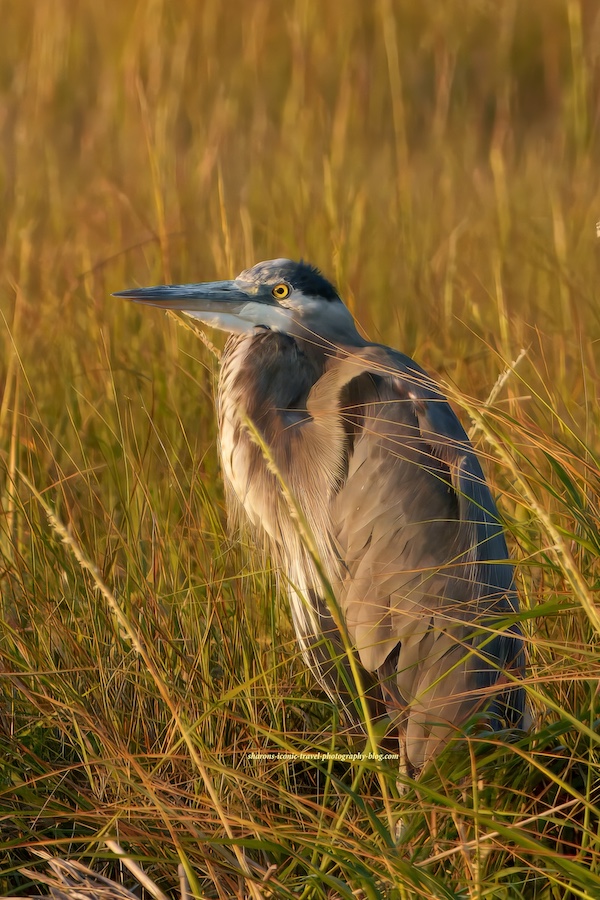
This great blue heron was not actively hunting, or did not appear to be. It may have been enjoying golden hour before sunset.
Great Blue Heron in Golden Light
This was taken in New Jersey on a previous trip from a great distance with a zoom lens. I wonder how the animals and birds are fairing in the Nor’Easter. Have a Happy Monday!
What bird is nocturnal, stocky, is a symbol for patience, and spends a lot of time motionless? It is the black-crowned night heron.
Black-Crowned Night Heron 2025- Daytime near nesting location
They have the word night in their name because they are nocturnal. Usually they are active at night and sleep during the day. They sleep with their eyes closed.
Black-Crowned Night Heron 2025
I actually saw some awake during the day because they had young still relying on them for food.
Black-Crowned Night Heron 2025
This is one is hunting near a culvert under a road. The tide was coming in and water was entering the wetlands from the ocean. The black-crowned night heron goes long periods of time seemingly motionless before it strikes.
Although I have seen this bird in New York I took these pictures in New Jersey. In New York these birds are more wary of people and keep a distance. Even kayaking I have not seen once this close. Have a Happy Friday!
I spotted this bird on a short trip to New Jersey in a pond near the ocean. New Jersey is in the breeding area of the yellow-crowned night heron. The Merlin app identified these birds as yellow-crowned night herons. I believe this is the first time I have seen this bird.
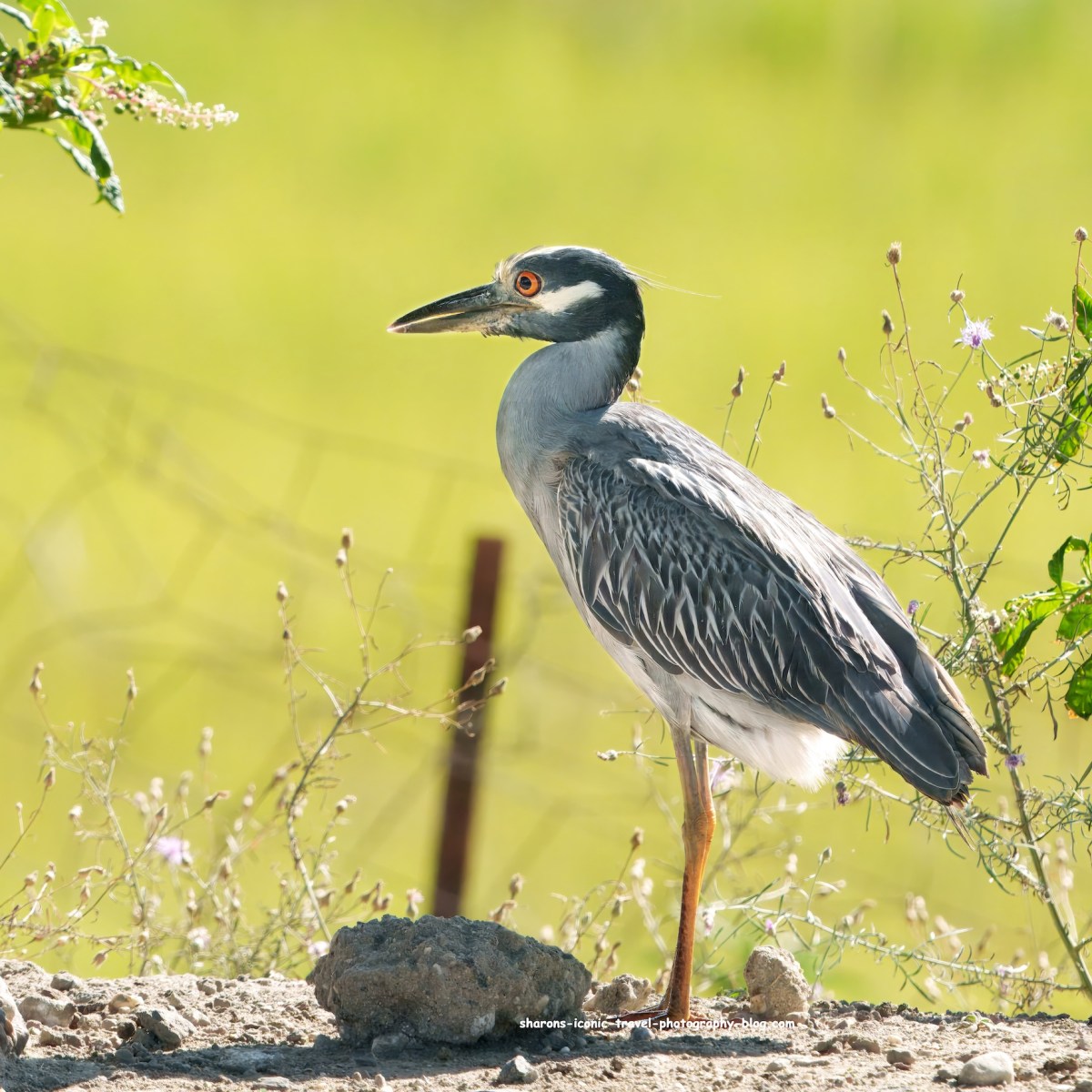
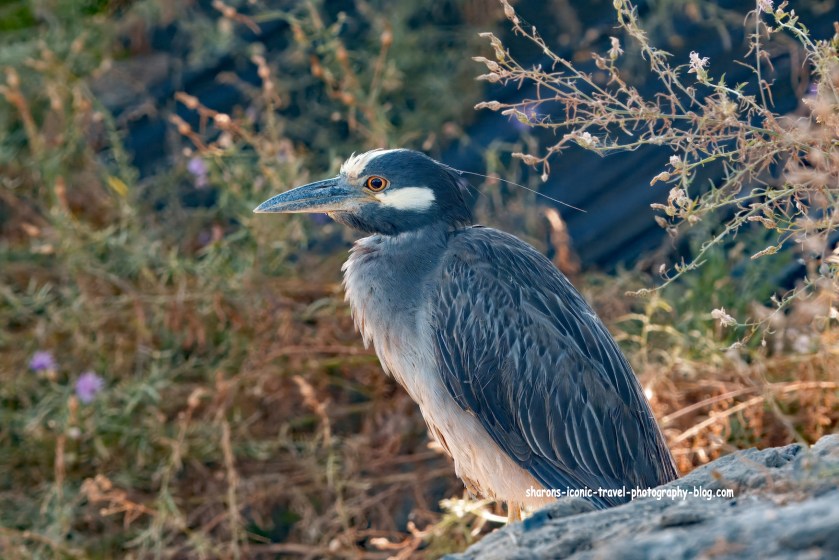
Yellow-Crowned Night Heron- Adult
The adults are grey with a black head and large white cheek patch, and a creamy yellow crown that sometimes appears more white.
According to All About Birds they are a wading bird that eat: marsh crabs, fiddler crabs, ghost crabs, mole crabs, mud crabs, blue crabs, lady crabs, green crabs, rock crabs, and toad crabs. They also eat mussels, insects, scorpions, frogs, tadpoles, fish, small snakes, turtles, young birds, and small mammals.
Juvenile
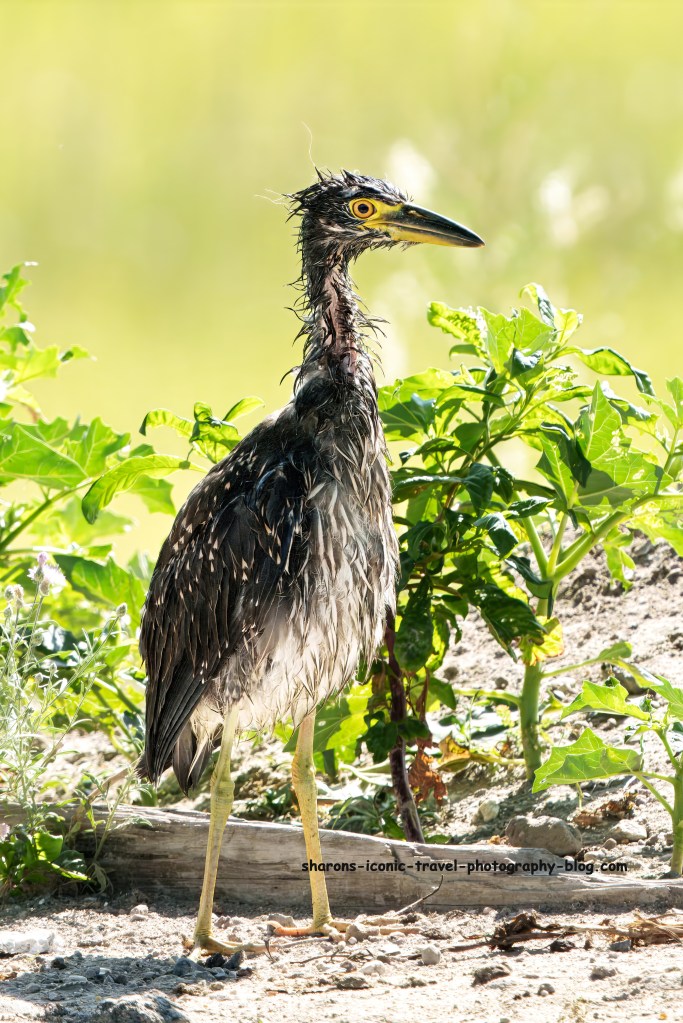
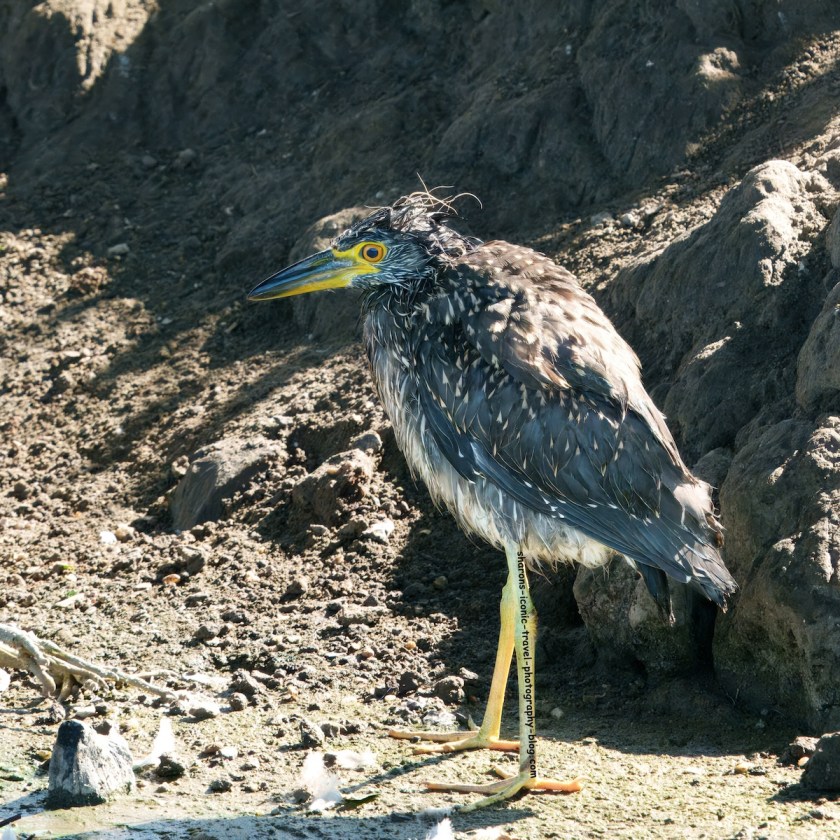
Yellow-Crowned Night Heron – Juvenile
Juveniles are brown with white spots on the back and wings. The legs are yellow to orange yellow.
Yellow-Crowned Night Heron – Juvenile
I saw the juvenile near the adult. When the adult went to the top of the bank, the juvenile followed shortly thereafter and stood near it. I did see some juvenile herons in a rookery, but could only see their heads and part of their bodies so I am not sure if they were black-crowned or yellow-crowned night herons. Happy Friday!
I saw an egret coexisting for a short while with a heron on a tree. Is this a little blue heron or a tricoloured heron?
These are not the best shots because of the direction of the light and cloud cover. I could not go elsewhere. It was facing land and I was in a kayak.
Looks like the heron is smaller than the Great Egret here.
Still looks smaller than the egret.
The great egret was not bothered by the heron sharing the tree.
In the above picture the heron appears to have a white underbelly. It looks like maybe a bit of a stripe down from its neck to its chest, but not the best angle to see. The eye seems reddish with yellow around it. The feathers around the head appear to be mostly grey with more purplish tones in the back of the head. The sun poked out from the clouds and we have a better view of its colours.
I am guessing this means this is a tricoloured heron. Correct me if I am wrong. What do you think? Either way it is the first time I have seen a tricoloured or a little blue.
Is this a baby? I had heard one baby was out of the nest. What do you think? The story is these herons fight a lot. One may have fallen out. If this is a baby it is doing better than its siblings still in the nest. Sink of swim it is feeding itself it appears. I did not see the parents drop anything off for this one. I visited this one by kayak.
It was at the water’s edge at low tide. It appeared to be about the same size as the ones in the nest. It did not fly, but stayed in the mud flats area at the water’s edge. It seemed unfazed by me.This may be the same one later on in the day. It stayed on a pile of wood at the water’s edge. It did not fly and spent most of the time preening.





 Sharon's Iconic Travel Photography Blog