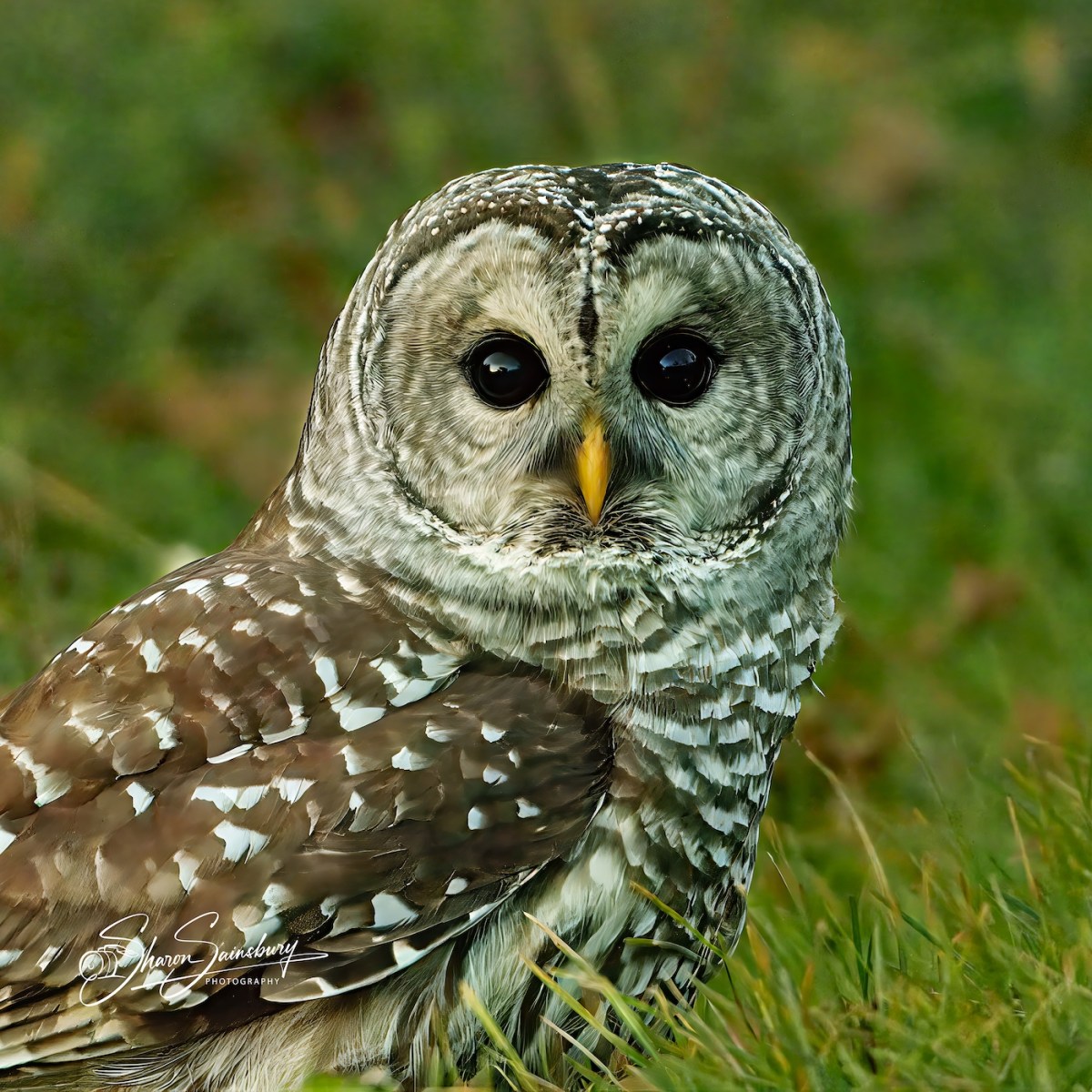
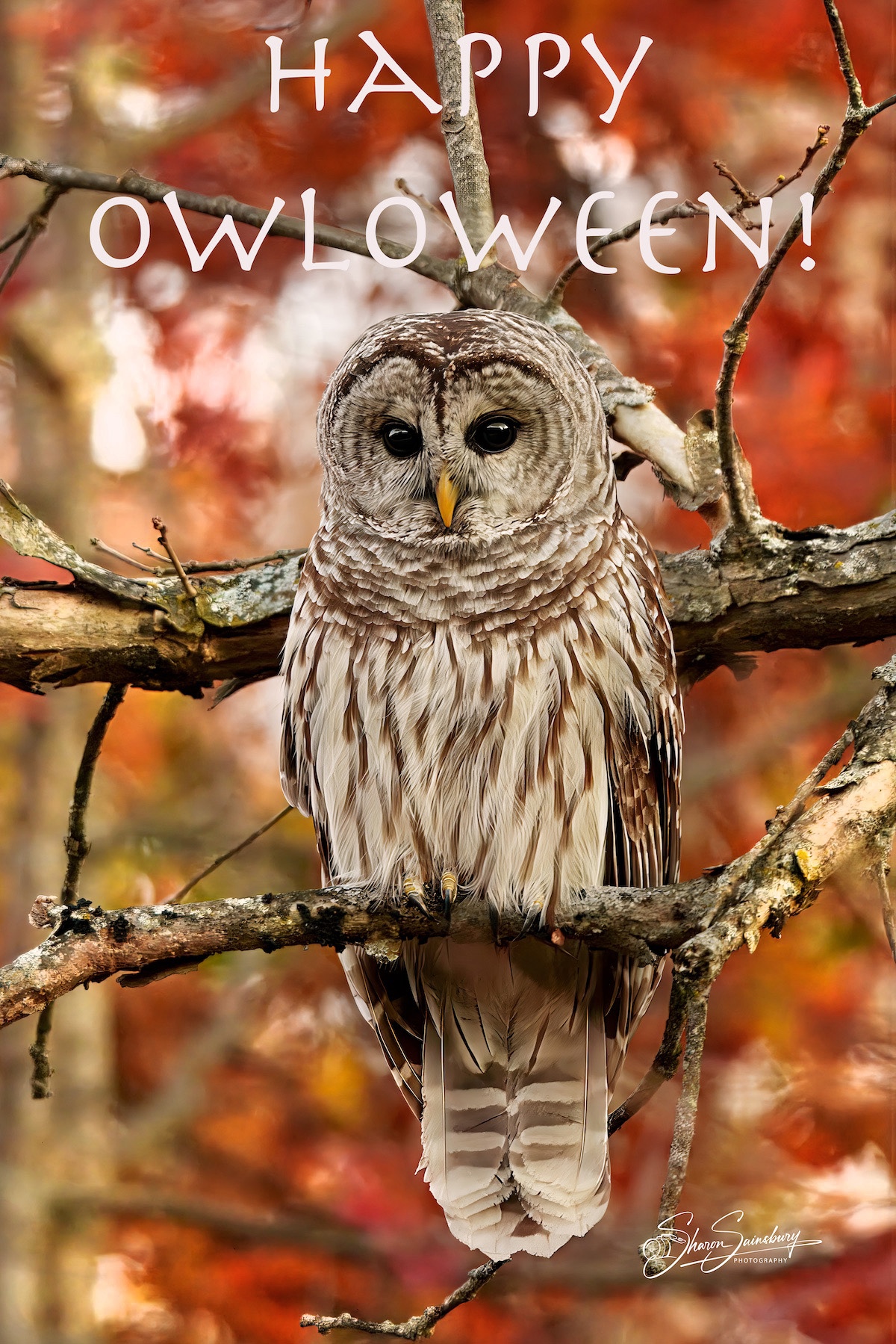
I saw this barred owl this morning. It was just after sunrise in low light. This photo was lightened a bit. Happy Owloween!
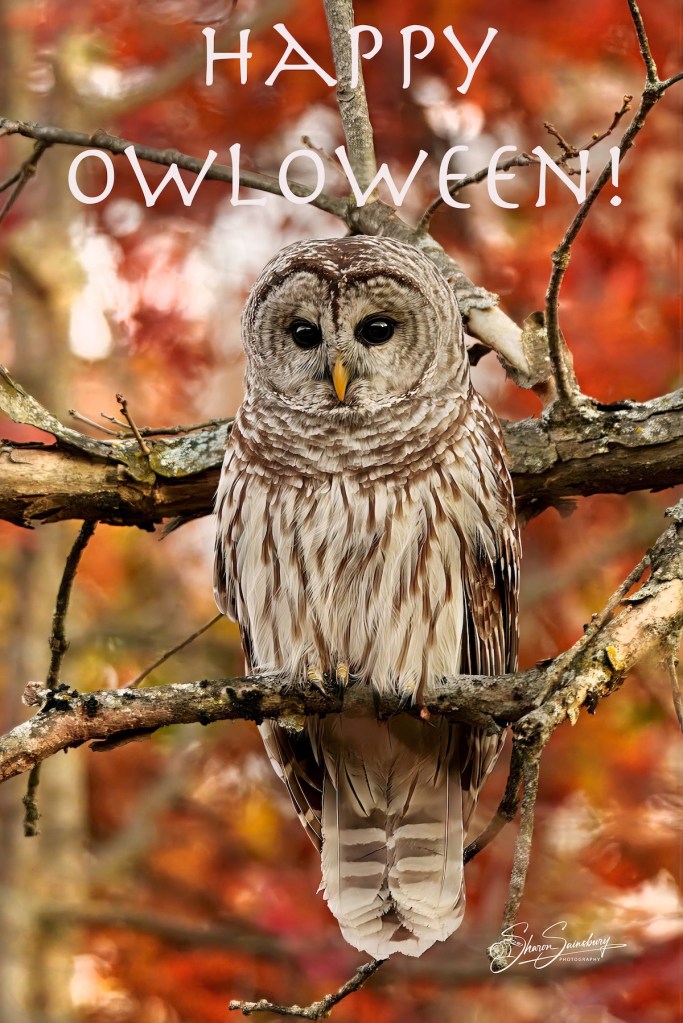
I saw this barred owl this morning. It was just after sunrise in low light. This photo was lightened a bit. Happy Owloween!
This is a new family for me. I only saw one owl on the side of a rural road when it was getting towards dark, but earlier I had heard two calling back and forth deeper in the woods in the same area. For a few days I have been witnessing the tell tale signs of their presence, but they appeared to be staying deep in the woods when I was there. Last night I was finally lucky.
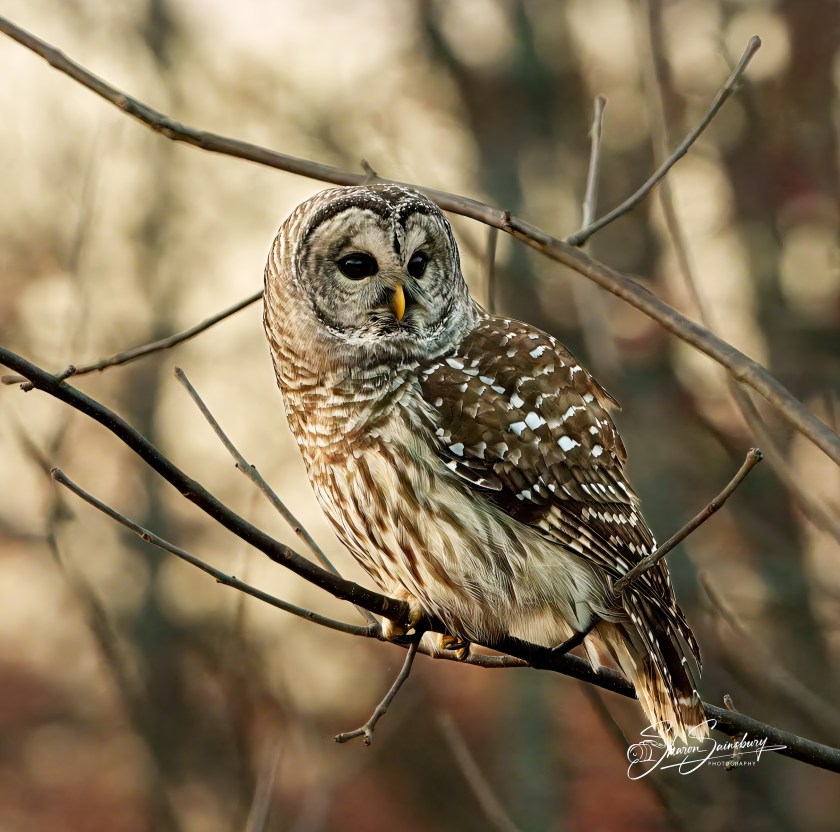
This was was pretty close to the edge of the road. All of these photos are lightened and cropped. I also use a zoom lens.
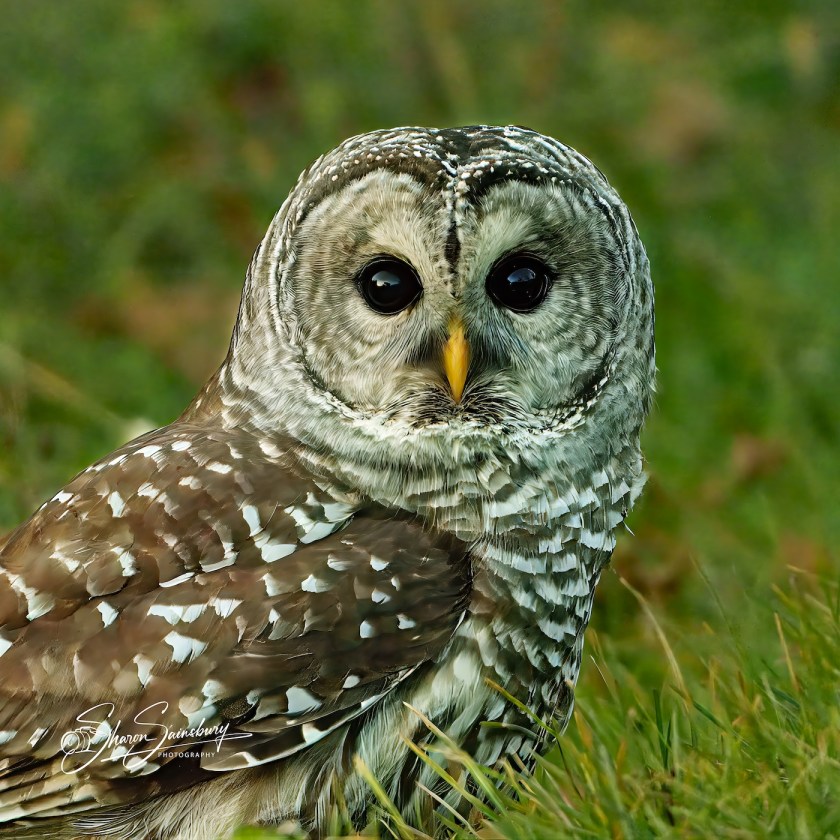
I could not believe how close this one flew behind my car which I was using as a blind. It seemed totally unfazed by me. I think it may be an owl born this past spring. By now they are the same size as their parents and indistinguishable from the older owls. In addition, by now they are on their own. They are hunting for themselves and will move further away, but usually within 8 miles of the nesting tree they were born in. Cornell University banded some owls and they found they did not move any farther away than 6 miles from the tree they were born in.
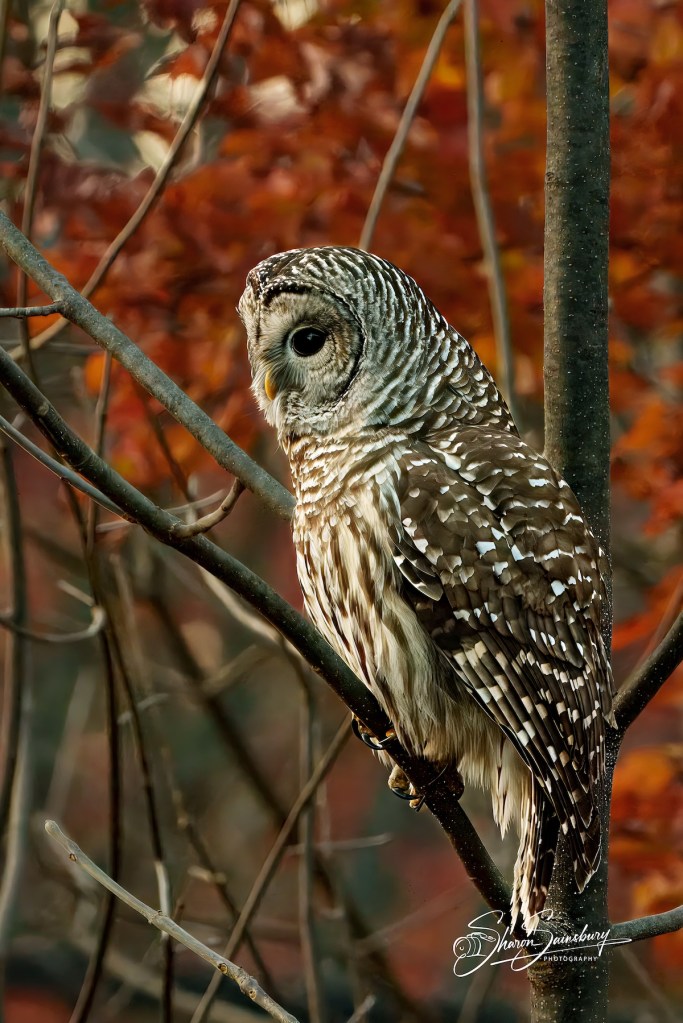
The owl flew back to the tree. Then another person who pulled over said when it flew eventually further away they saw another owl perched further back. If it was a juvenile, that might have been its sibling. These owls were flying low and luckily this road was in a farming area, so not a lot of traffic, but crossing roads is one of the biggest hazards for owls. Collision with cars are the leading cause of injury and death for owls. Happy Friday!
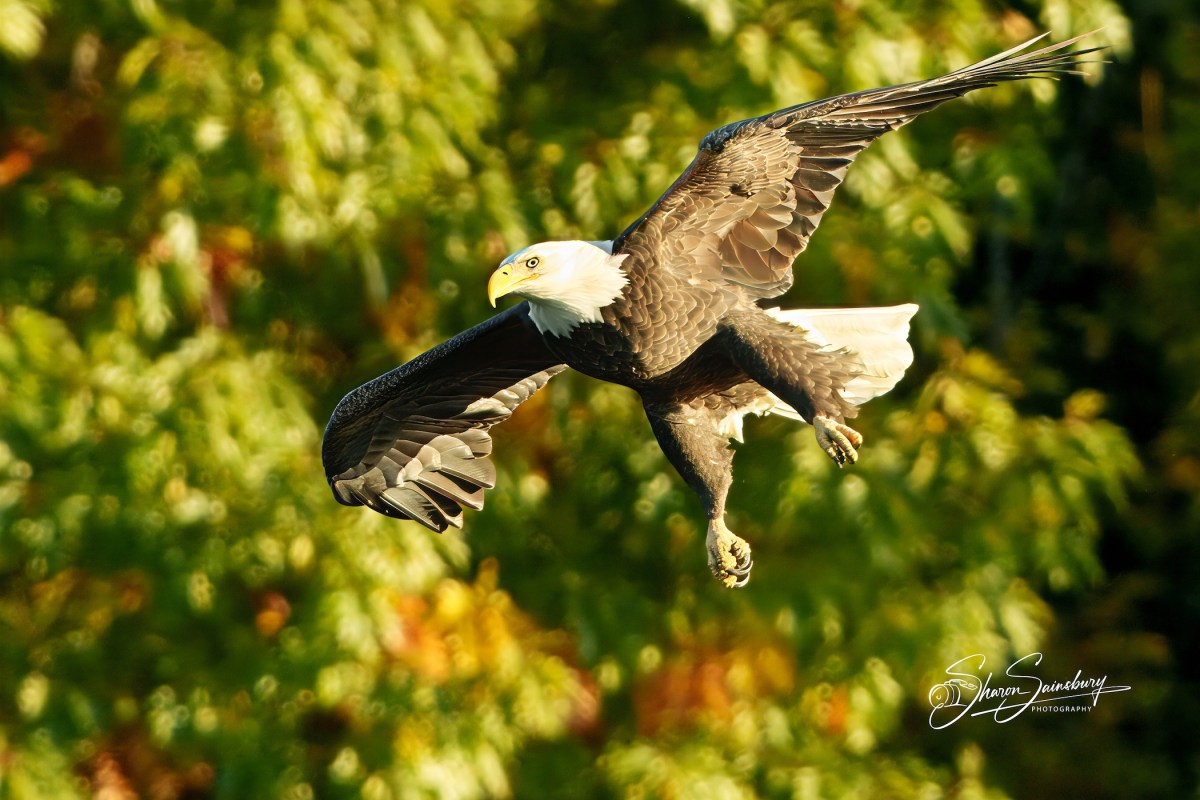
These pictures are part of a sequence. The eagle was perched in a tree. Then, it flew down to the water below the tree. Next, it immediately came up with a fish. Finally, it flew off to a tree further away where presumably it’s mate was.
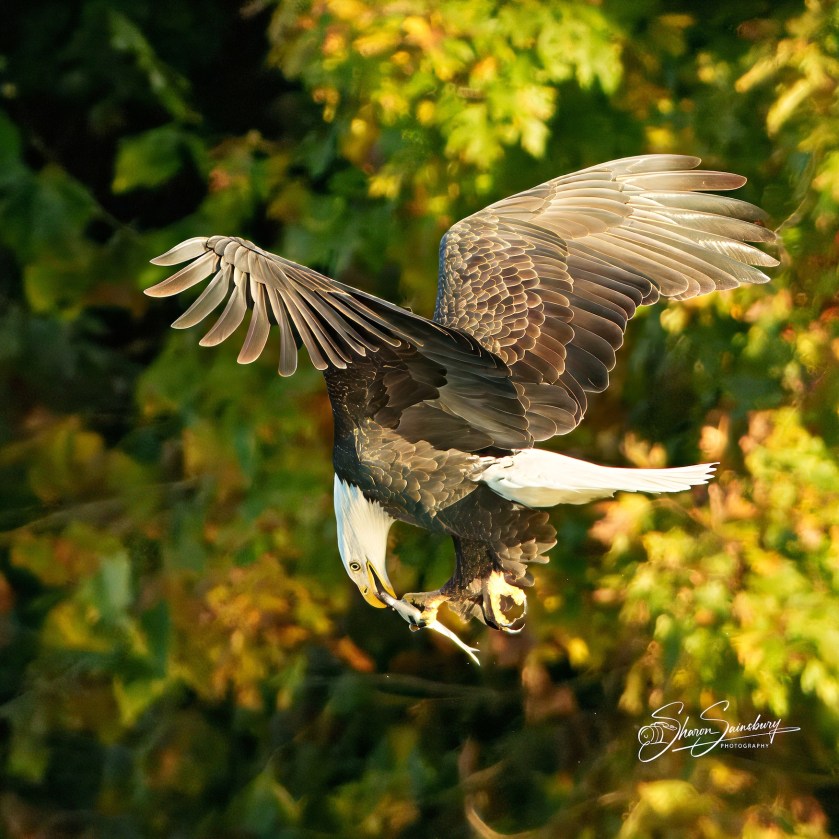
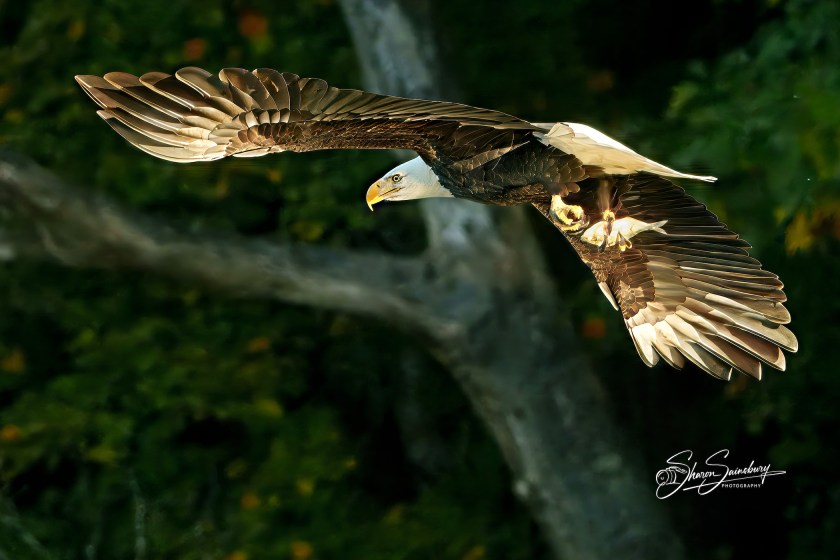
This all happened far away. I used a zoom lens and cropped these photos.
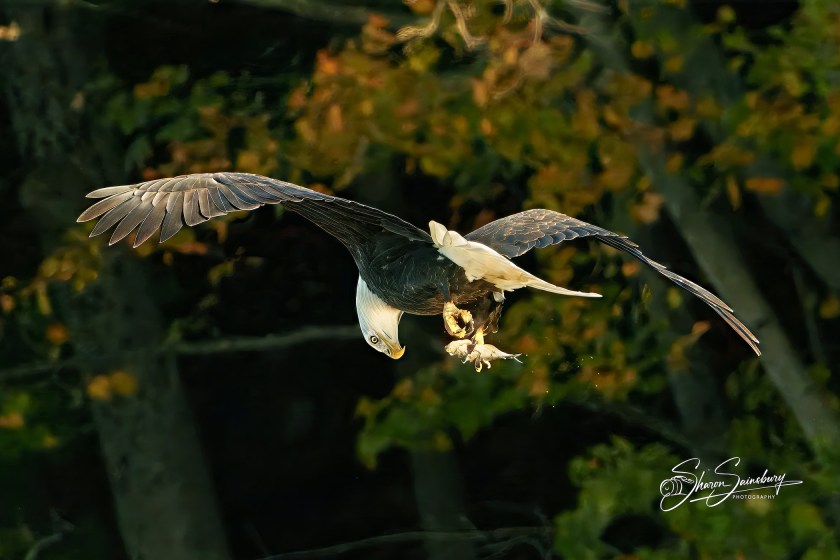
Unfortunately, something was blocking my view between the eagle and I, where it scooped the fish out of the water. I was lucky enough to see this much. Have a great weekend!
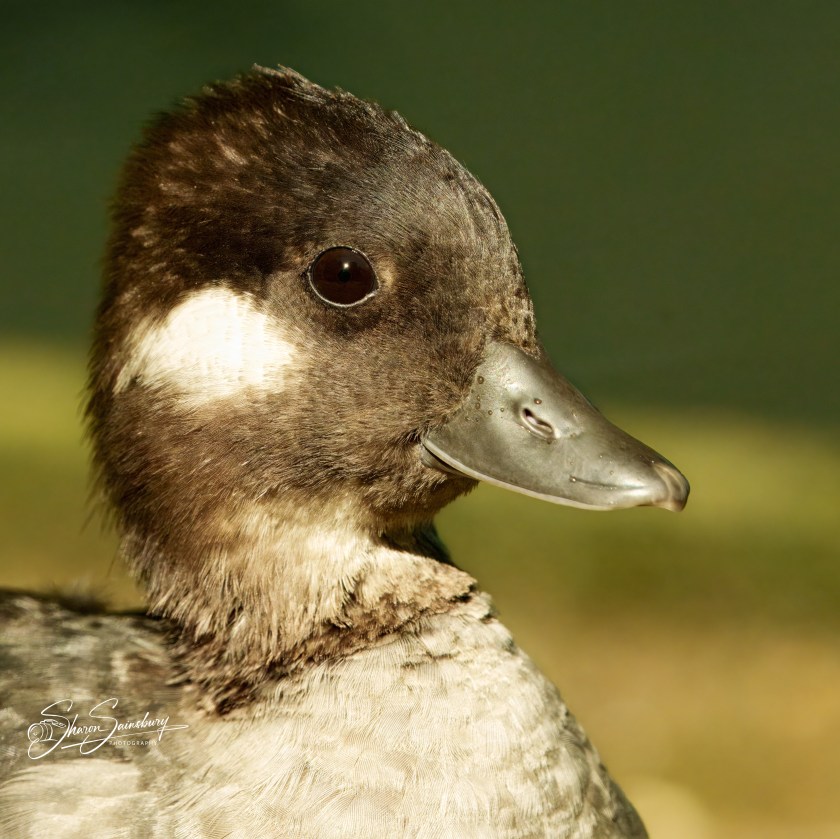
Buffleheads are my favourite duck. I love their personality. While I find most ducks to be shy, with the exception of mallards, sometimes buffleheads will swim close to you if you stay still for a while. I have seen them walk on shore within about 15 feet of me.
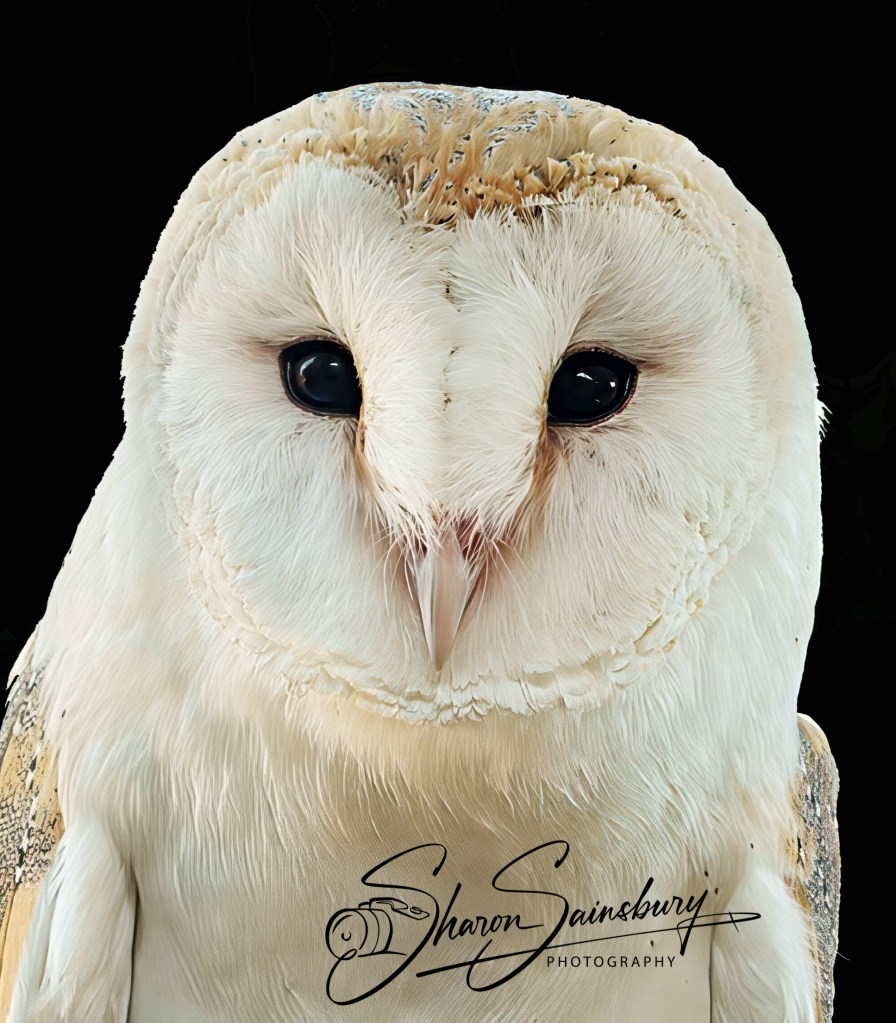
The background is changed to obscure the location. In New York, Massachusetts, and Pennsylvania Barn Owls are on the Species of Special Concern List. In Connecticut and Vermont they are on the Endangered List.
In England, Barn Owls are doing better population wise. in the mid 1990s there were around 4,000 breeding pairs. Today they estimate between 8,000-12,000 breeding pairs.
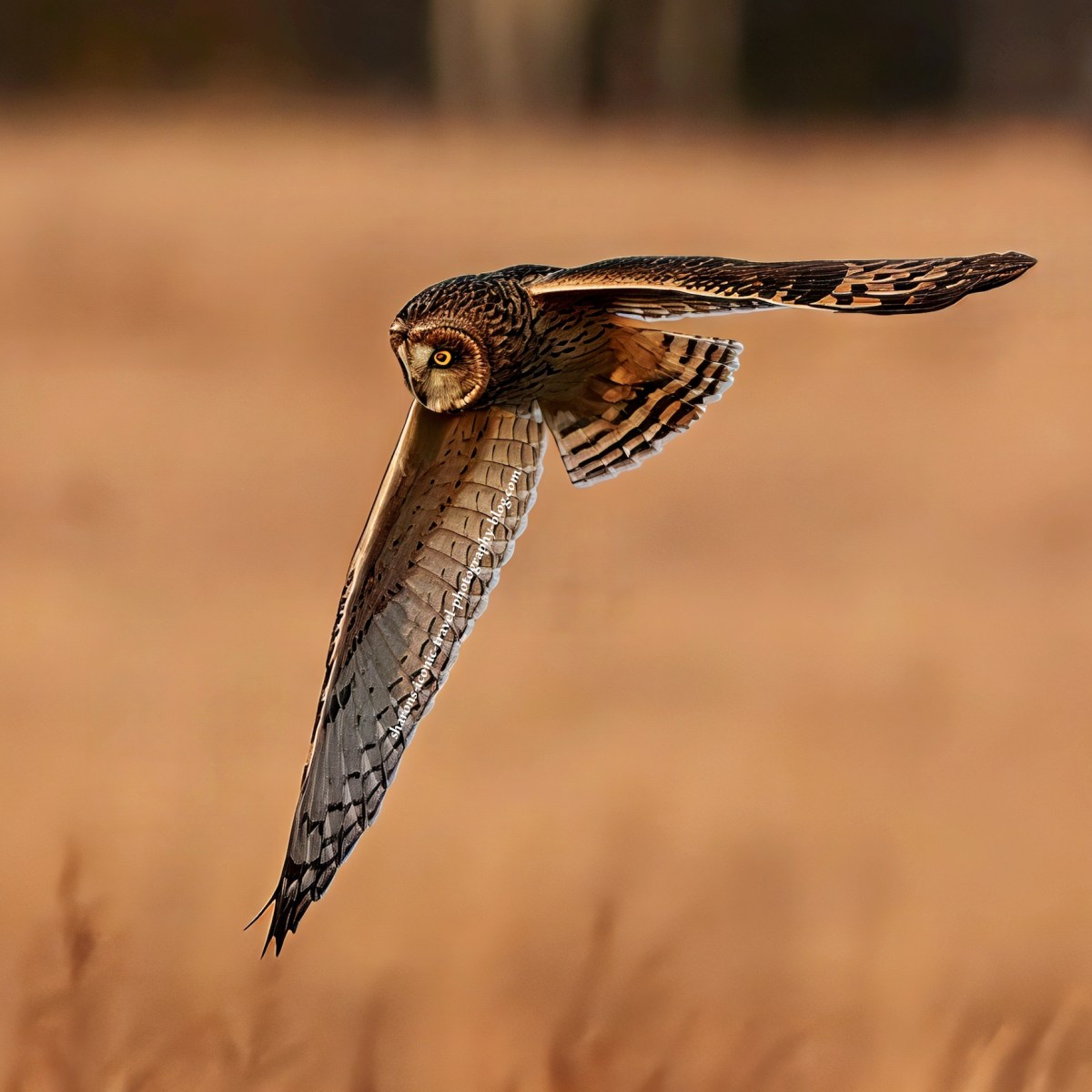
Short Eared Owls are winter visitors to New York. They spend the warmer months up in Canada and Alaska, but end up coming down south for the colder months. We have usually seen them between November and the beginning of March.
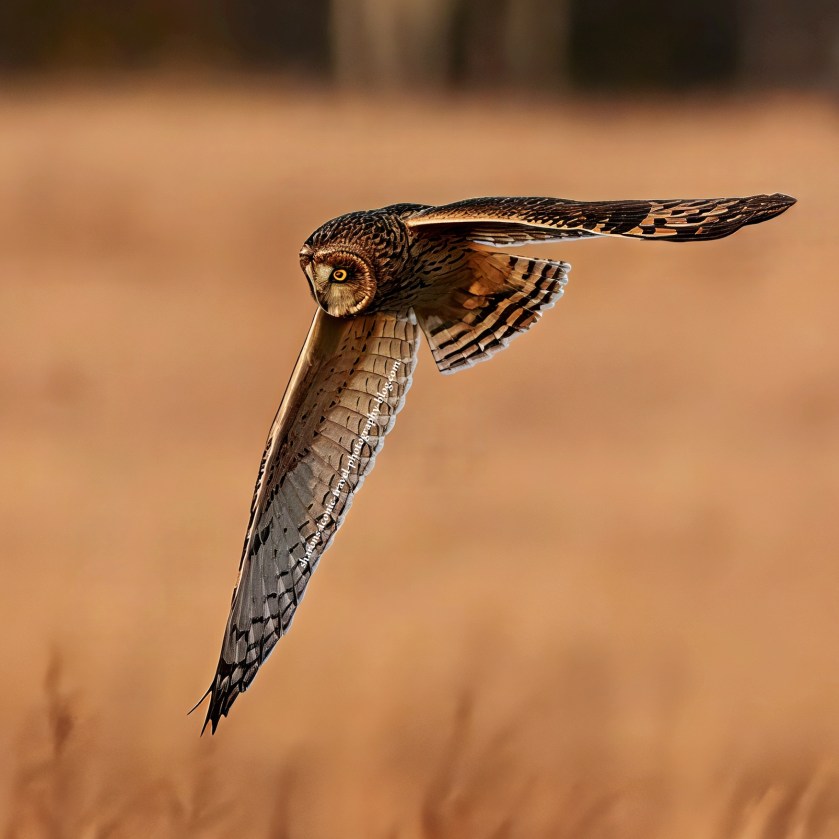
I did not expect to get any good images of the owl the day I was there. However, we had a brief window of light between the clouds and a cooperative owl who flew near me during that time period. Don’t you love it when they do that?
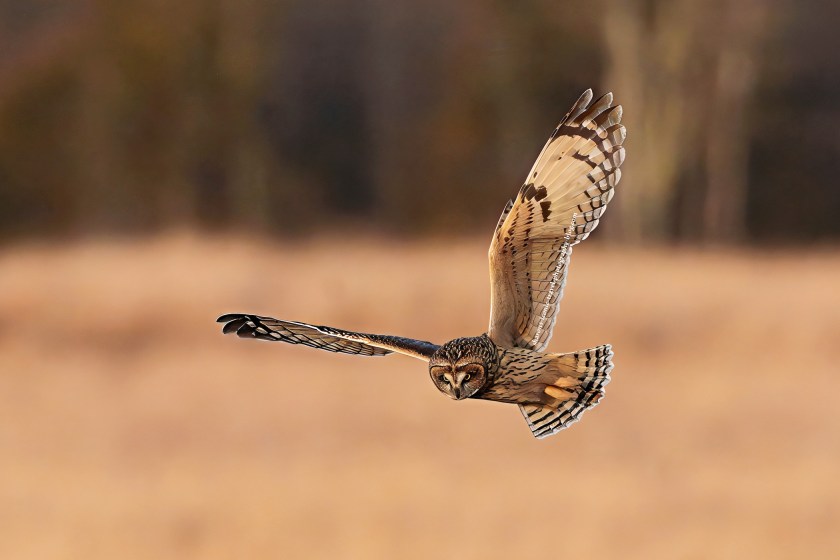
Later, when it was just too dark, it flew quite close to me, but alas the images were just too grainy.
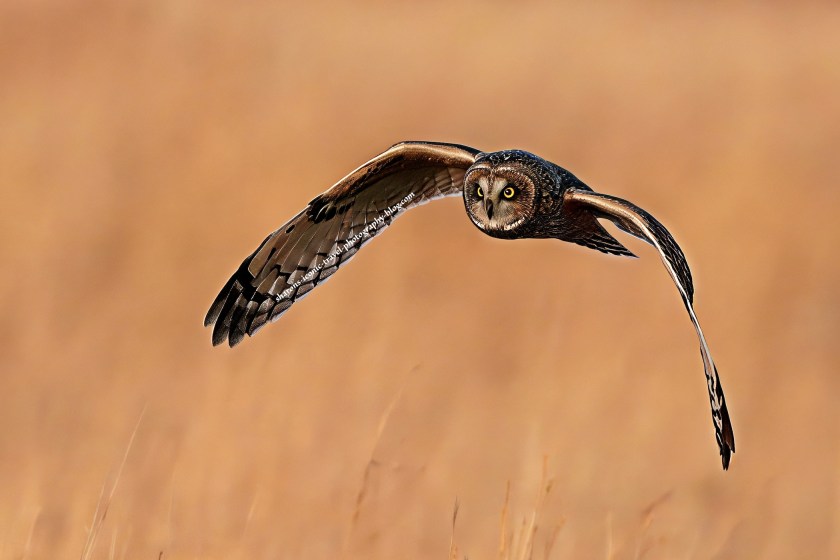
Here’s hoping I can see them close up in good light. Have a Terrific Tuesday!
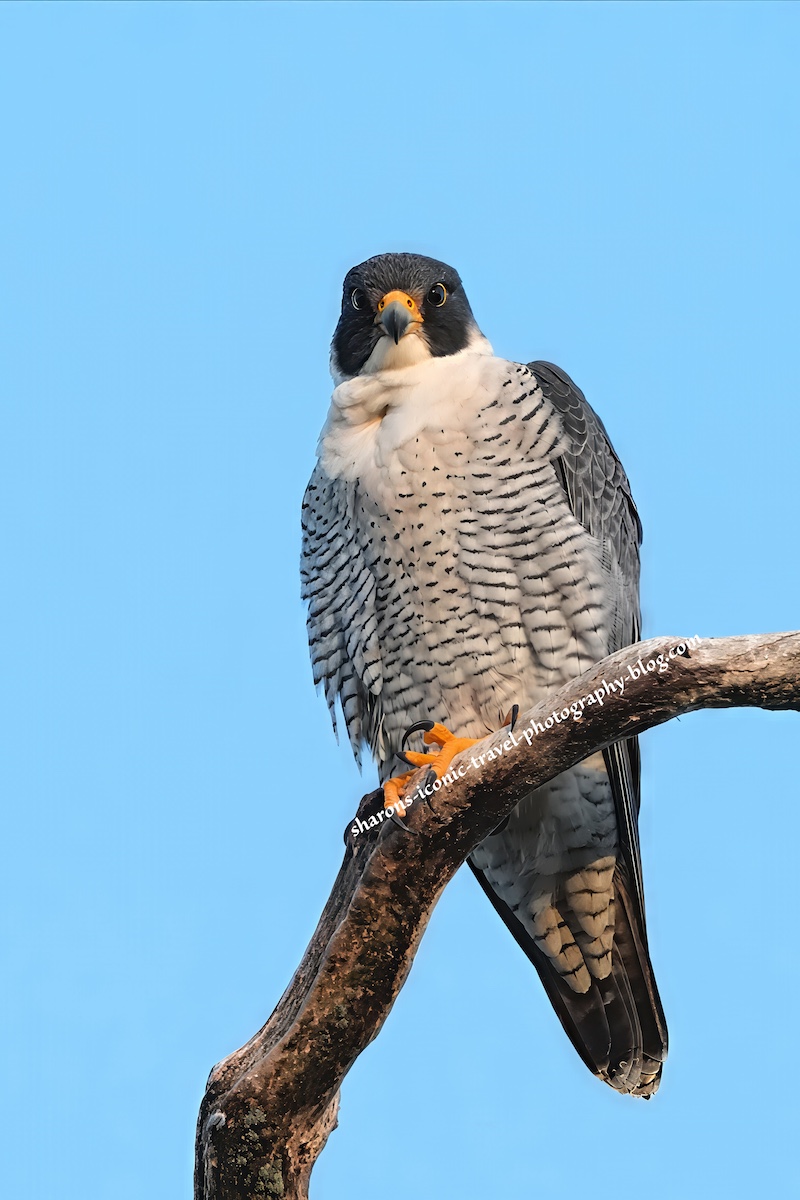
The Palisades is a long stretch of steep cliffs on the west side of the Hudson River that runs from lower NY into New Jersey. At their highest point they are about 540 feet in height and their length is about 20 miles. Peregrine Falcons like to nest on buildings, cliffs, and under tall bridges. The Palisades is a good spot to view Peregrines.
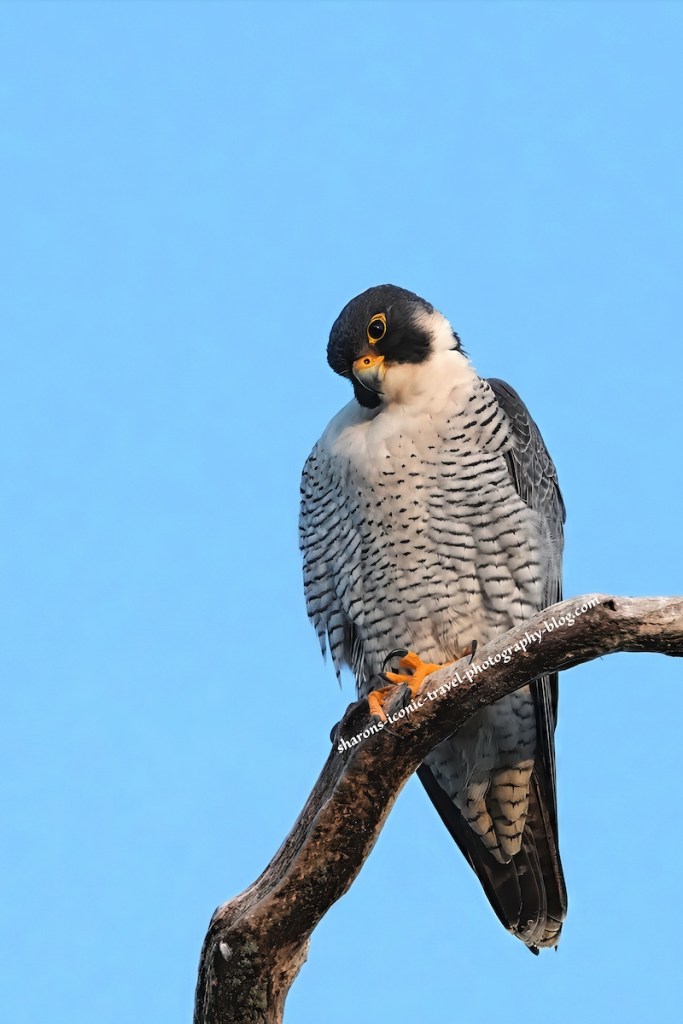
Peregrine Falcons are the fastest birds in the world. They can fly faster than 200 miles per hour. I caught this one before sunset. It never moved from the tree while I was there.
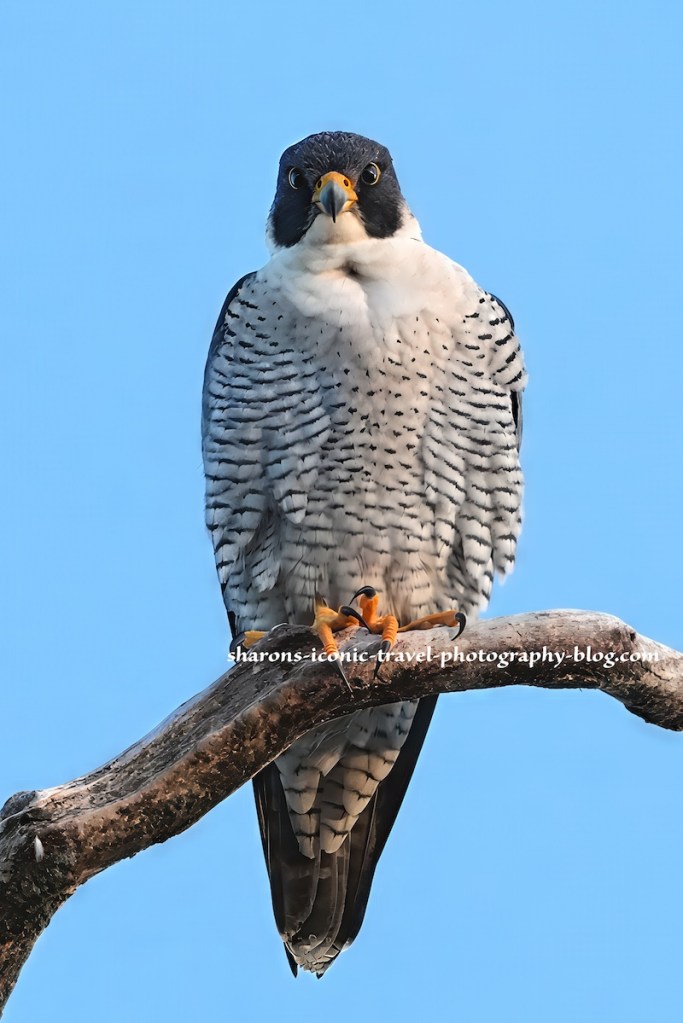
This falcon was perched on a tree cliffside but was facing the land on top and not the river. A pair of squirrels was chasing each other nearby, but the falcon did not seem interested in them. They are known to capture a variety of birds, but will steal fish and rodents from other birds. They also eat bats. I am trying to significantly reduce the size of my picture files to conserve space on the blog, but the images when I do that are not as sharp as the original. Have a wonderful Wednesday!
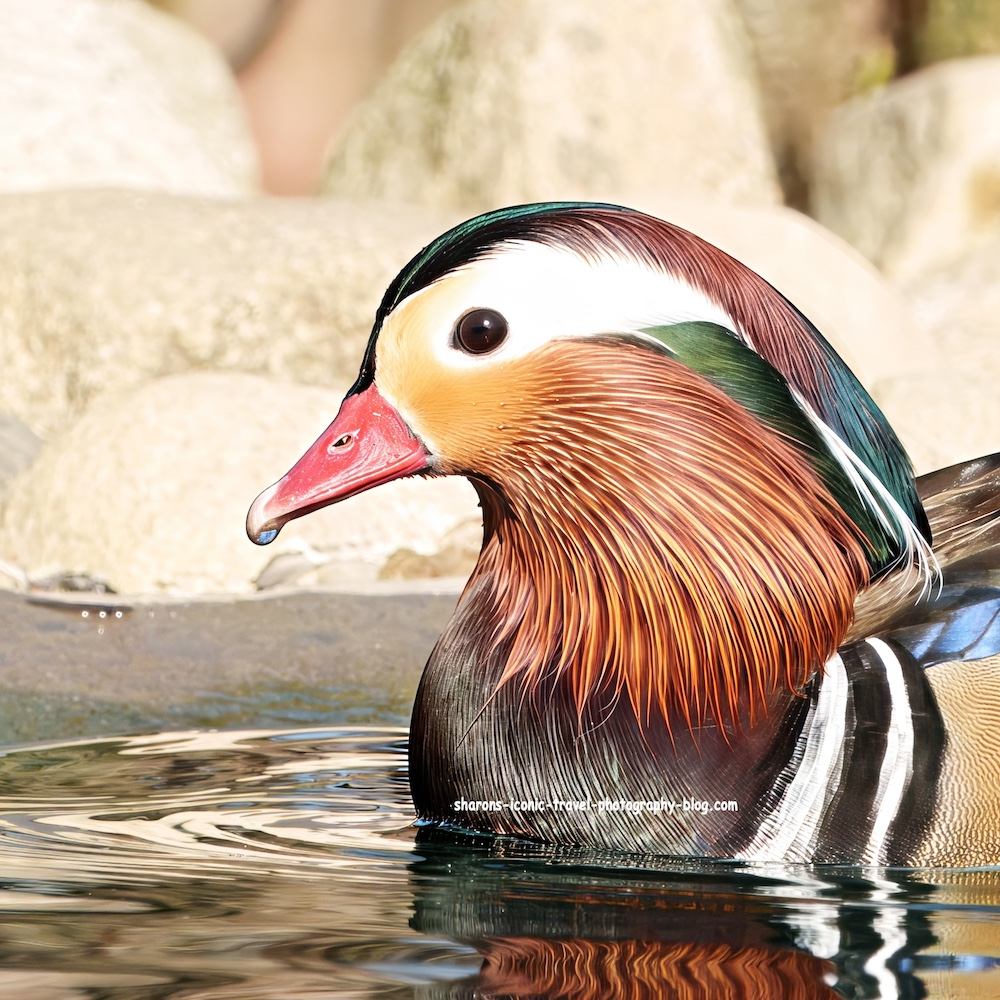
At this location I was able to spot a pair of Mandarin Ducks. The male is brightly coloured and the female’s colours are more gray, brown and white.
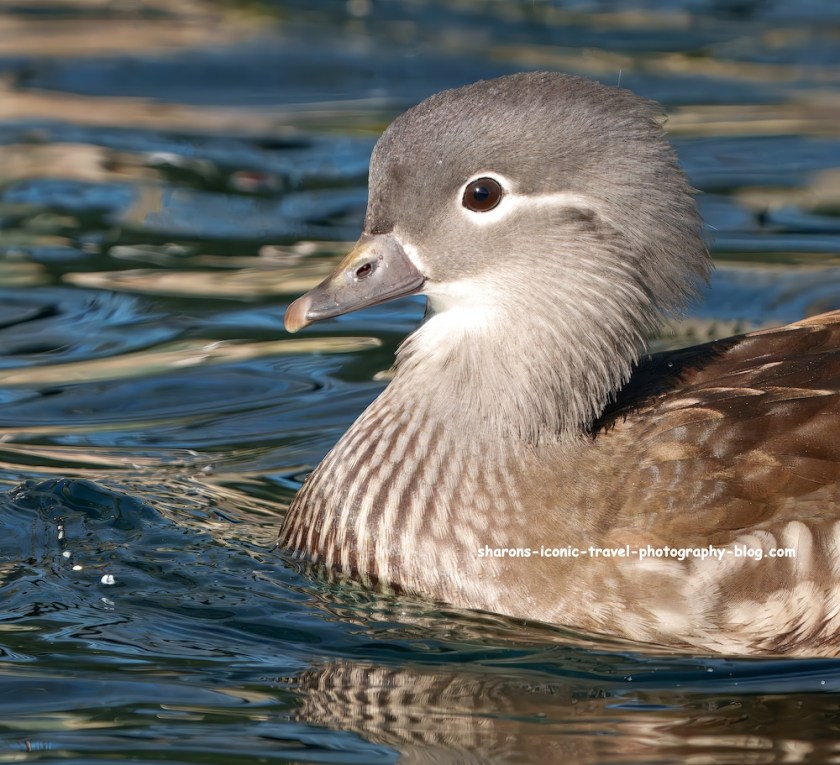
The female can lay from 9-12 eggs. The ducks reach maturity at a year old. Despite laying 9-12 eggs they say there are only about 65,000 Mandarin ducks in the wild.
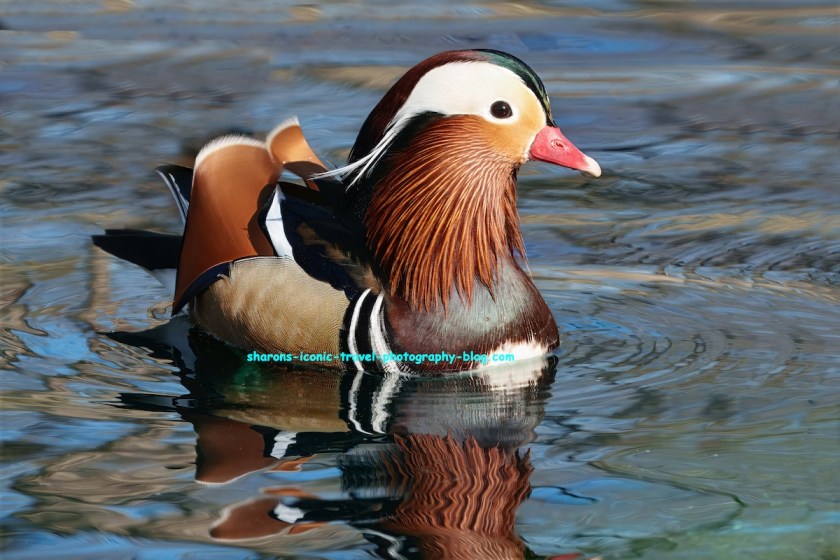
Male Mandarin ducks go blend in after breeding season. The males molt or shed the bright feathers, taking on the colouring more like females for a few months. Males gain back their winter plumage in the US in October or November from what I understand.
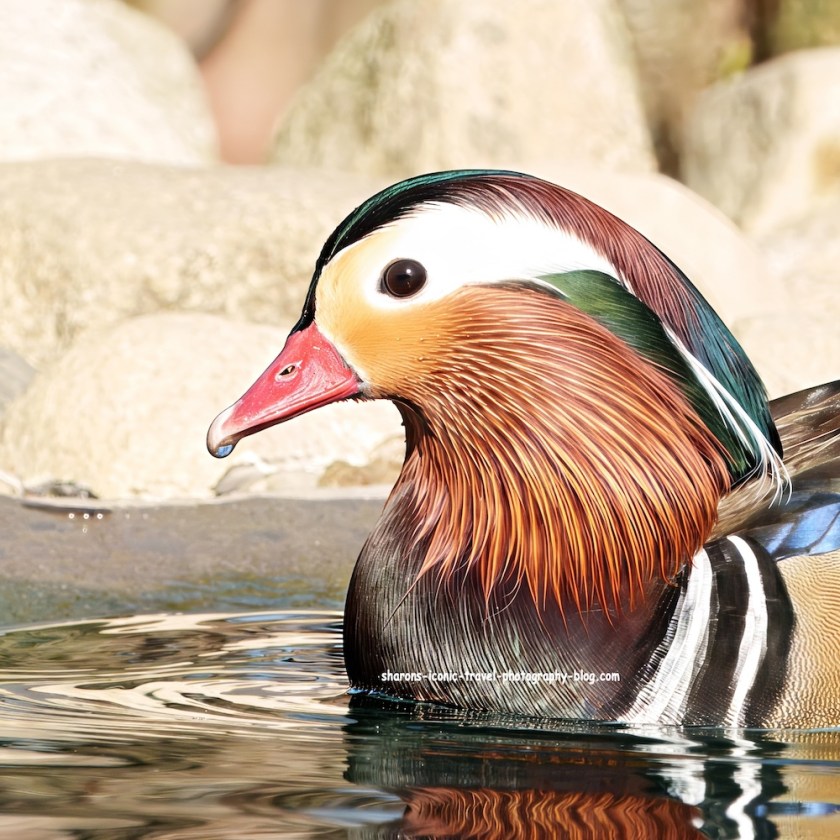
Mandarin ducks are not hunted for food because they taste bad according to Sea World. Here in the US some people and zoos have Mandarin Ducks and they escape and join other wild ducks. Have a Splendid Sunday!
I have seen wood ducks at a few places, but only from a distance. They seem very skittish. Sometimes it may be because the location gets a lot of traffic in terms of people, but they seem more on guard. This location had less people and when I was by myself I had the most luck.
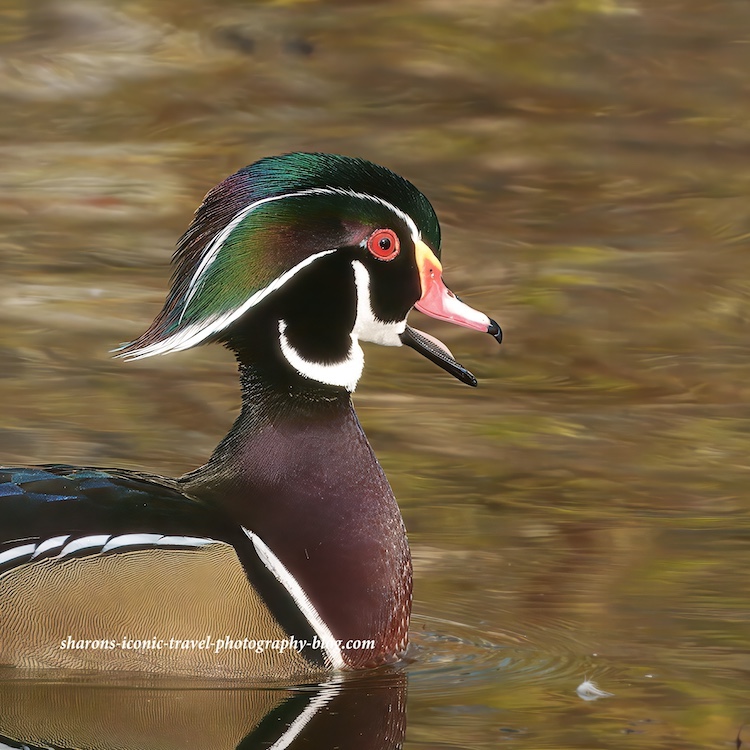
Wood ducks will hang out in wetlands, marshes, streams, ponds and lakes. I have seen them in wetlands, streams, and ponds. People put up nesting boxes and they will use them. They will also nest in trees. They are native to most of the eastern part of the US year round.
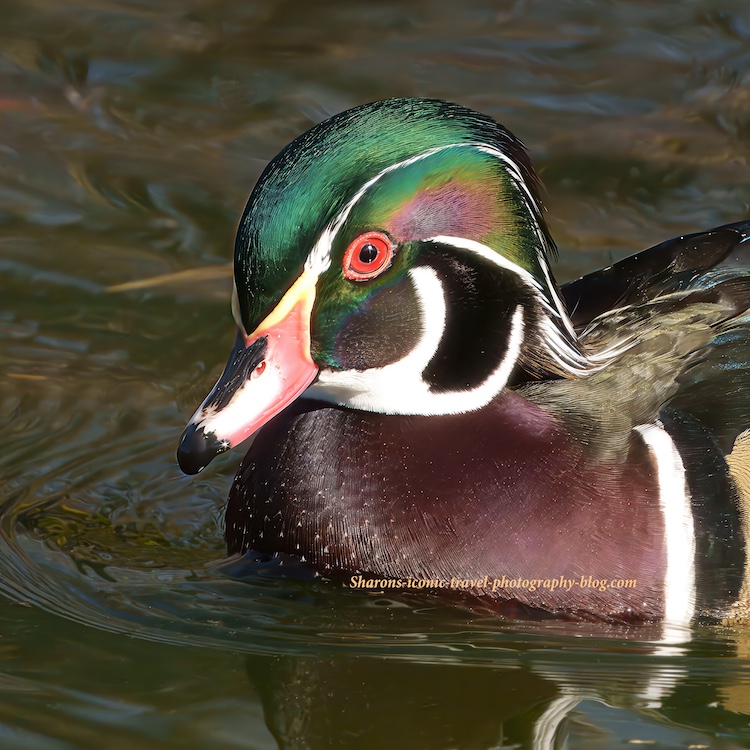
Wood ducks will eat seeds, fruit, insects, acorns, flies, beetles, caterpillars, and a variety of plants. They feed by making short, shallow dives called dabbling.
I was at this location for about 3 and a half hours trying to view this duck between branches, grasses and other obstructions. Sometimes it is worth the effort. Have a Happy Monday!
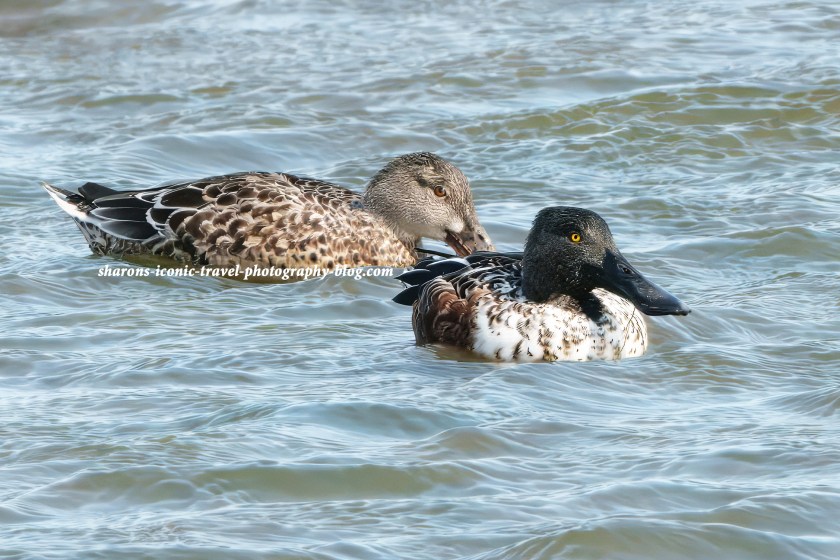
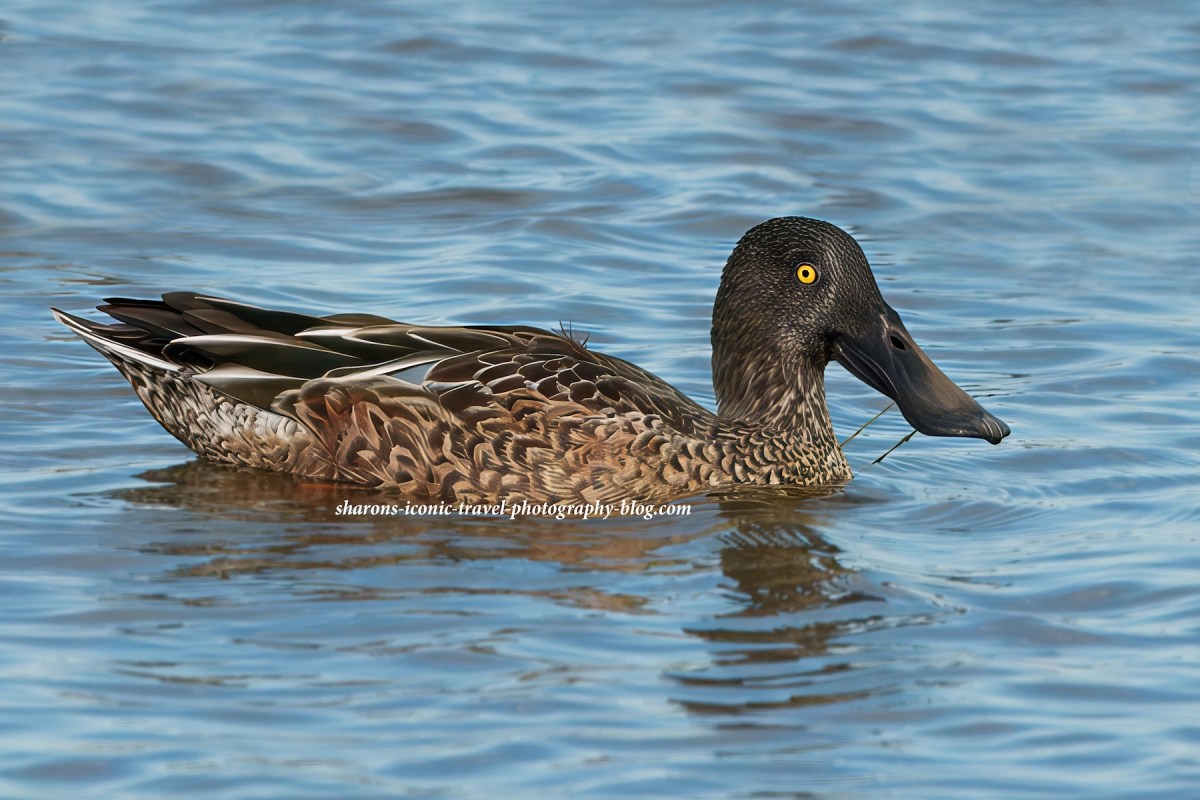
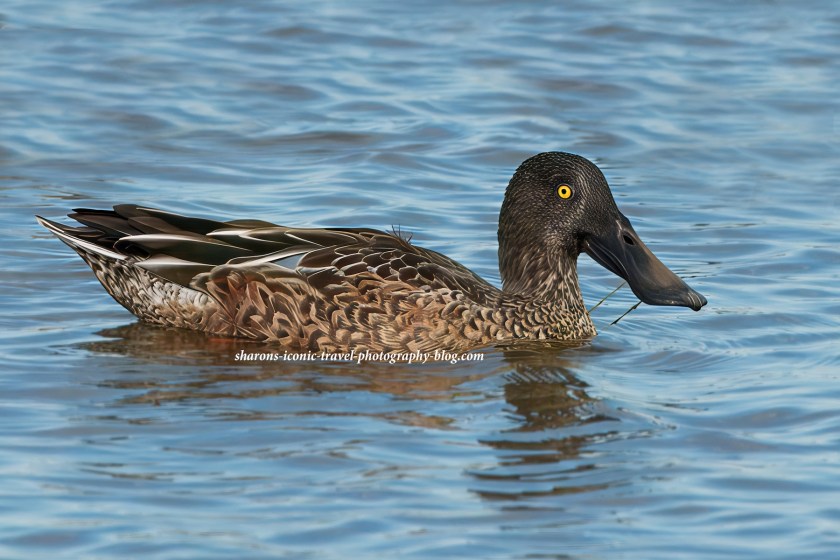
These are some more birds I saw in New Jersey. I think the above picture is a female and a male. They say females have an orange bill. This one on a different image does appear to have an area of orange on it. This male might in in the transition between non-breeding to a breeding male. The examples of breeding males I see online show a black head tinged with green, reddish brown flanks with a white chest. This one seems to have more dark areas on its chest. It may be the lighting conditions but I did not see much, if any green on it’s head.
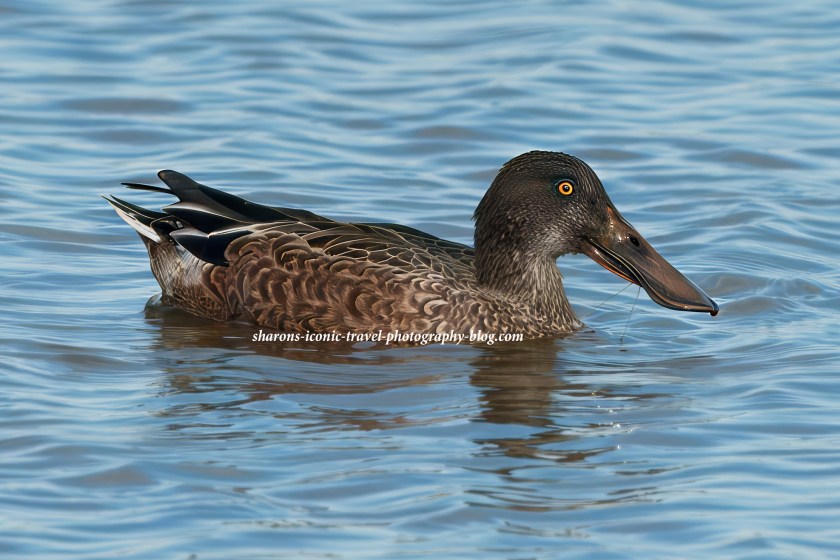
All About Birds identifies nonbreeding males as darker overall. They have a yellow eye. All About Birds lists New Jersey as its non-breeding area.
Have a Happy Thursday!