The Osprey Fledged

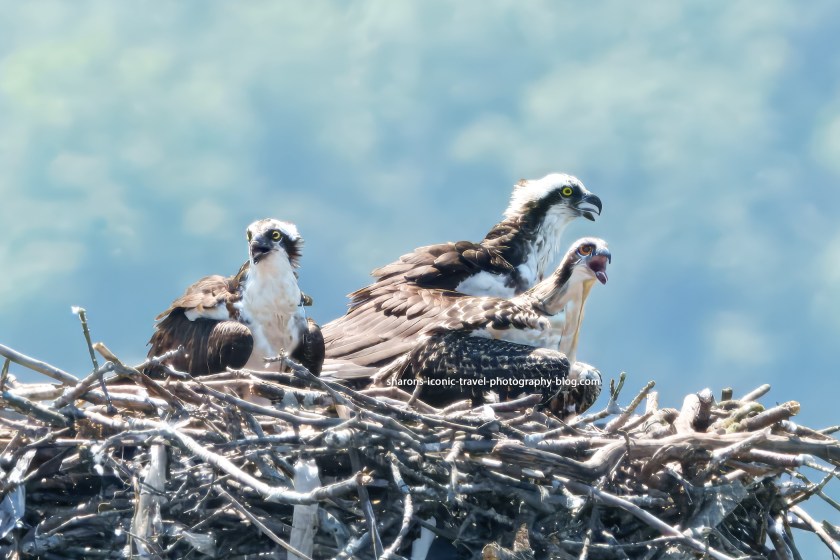
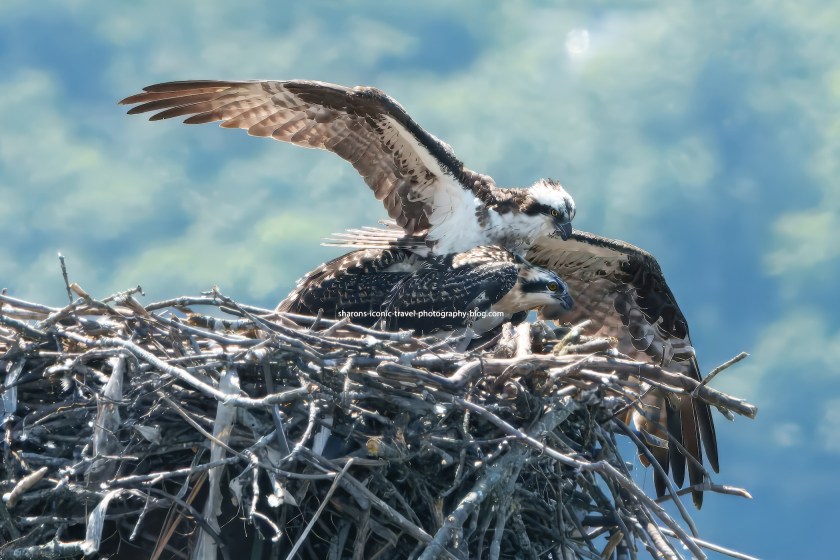
I saw both young osprey fly from their nest on Friday morning. One made two trips from the nest and back making large circular flights from land to nest. The other one flew off a lot farther and I gave up waiting for it to return. Hopefully it did at some point.

The Osprey Fledged
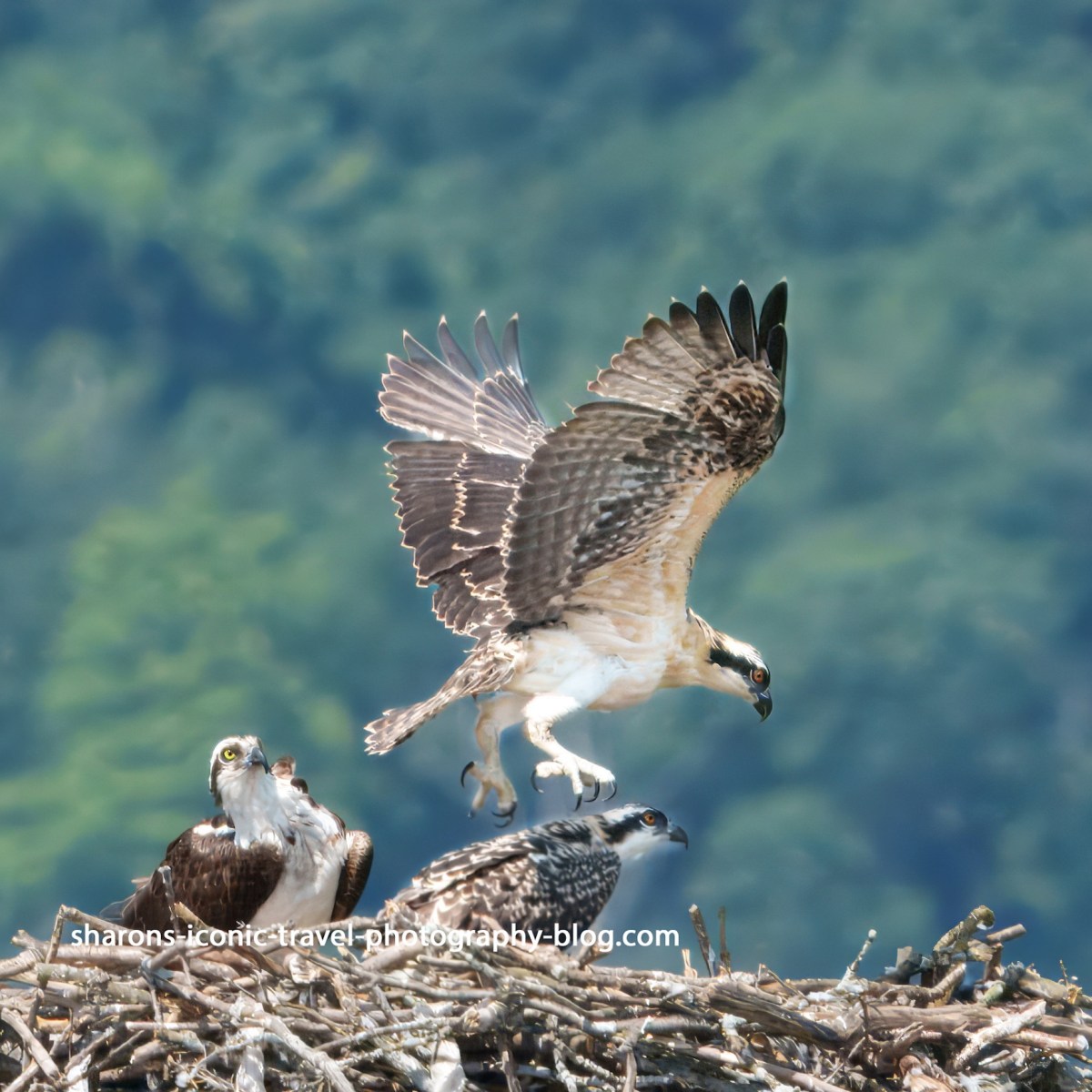
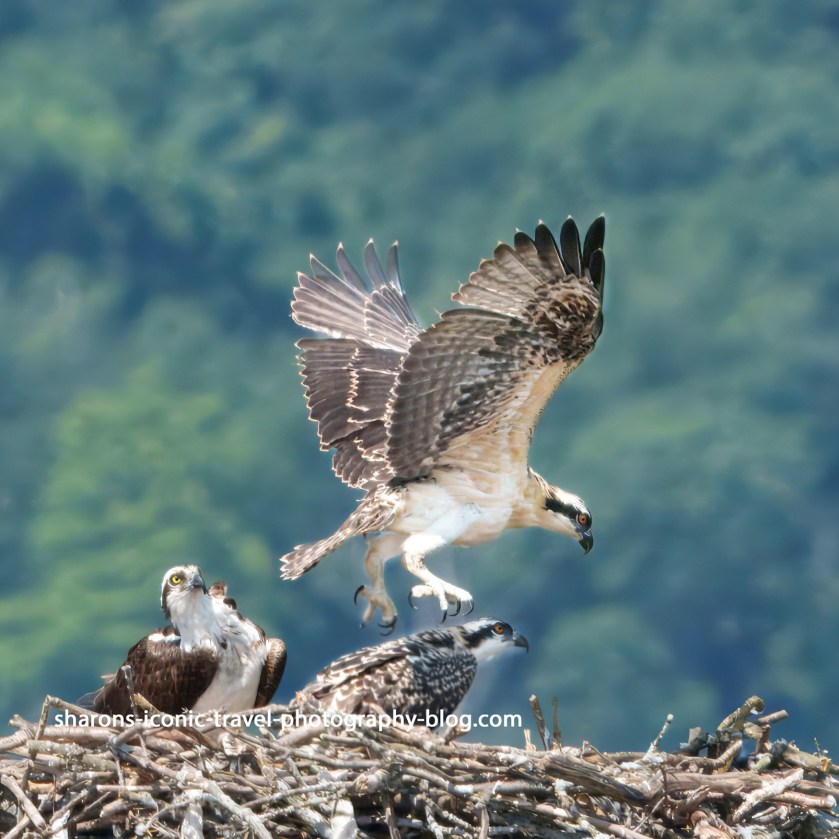
The Osprey Fledged-Coming in for a landing

In the photo above one of the young osprey is flying in to land in the nest and it’s sibling looks like it is cheering it on.

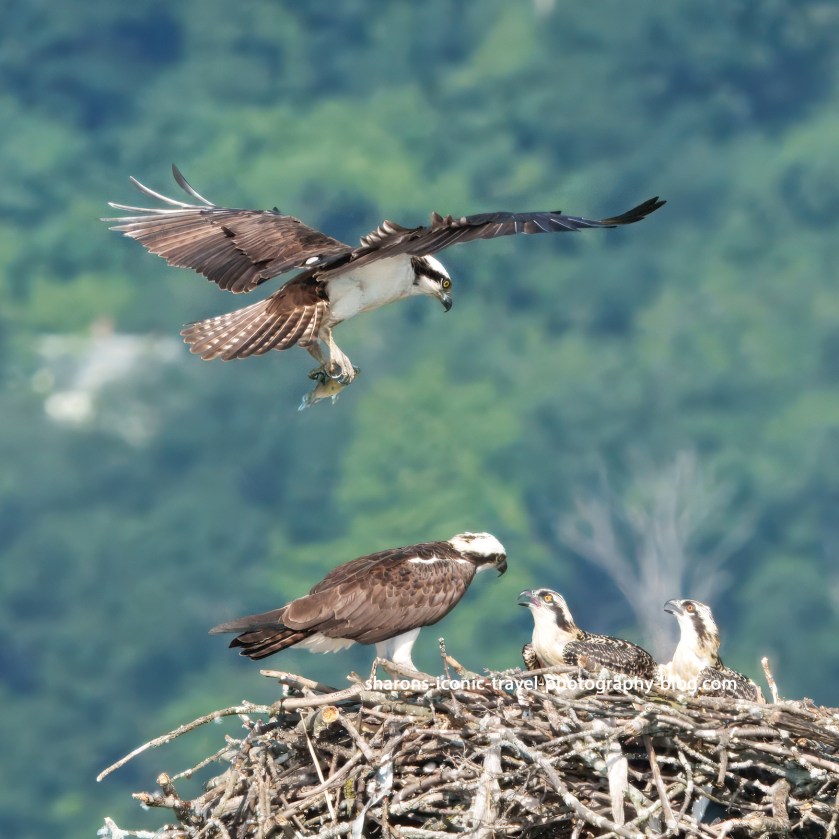
The Osprey Fledged- Landing again

The above photo shows the young osprey approach to the nest after the second flight attempt. It did land on the edge.

Pursuit

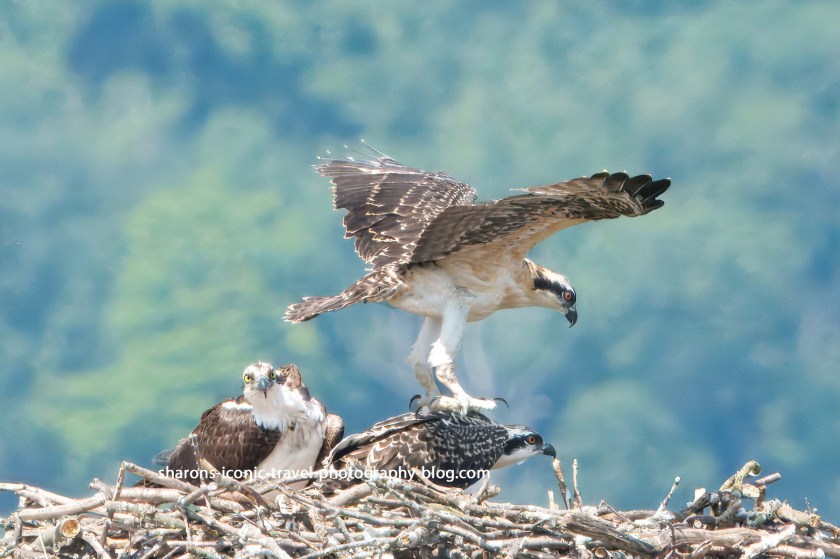
The Osprey Fledged – One dad chasing the other dad

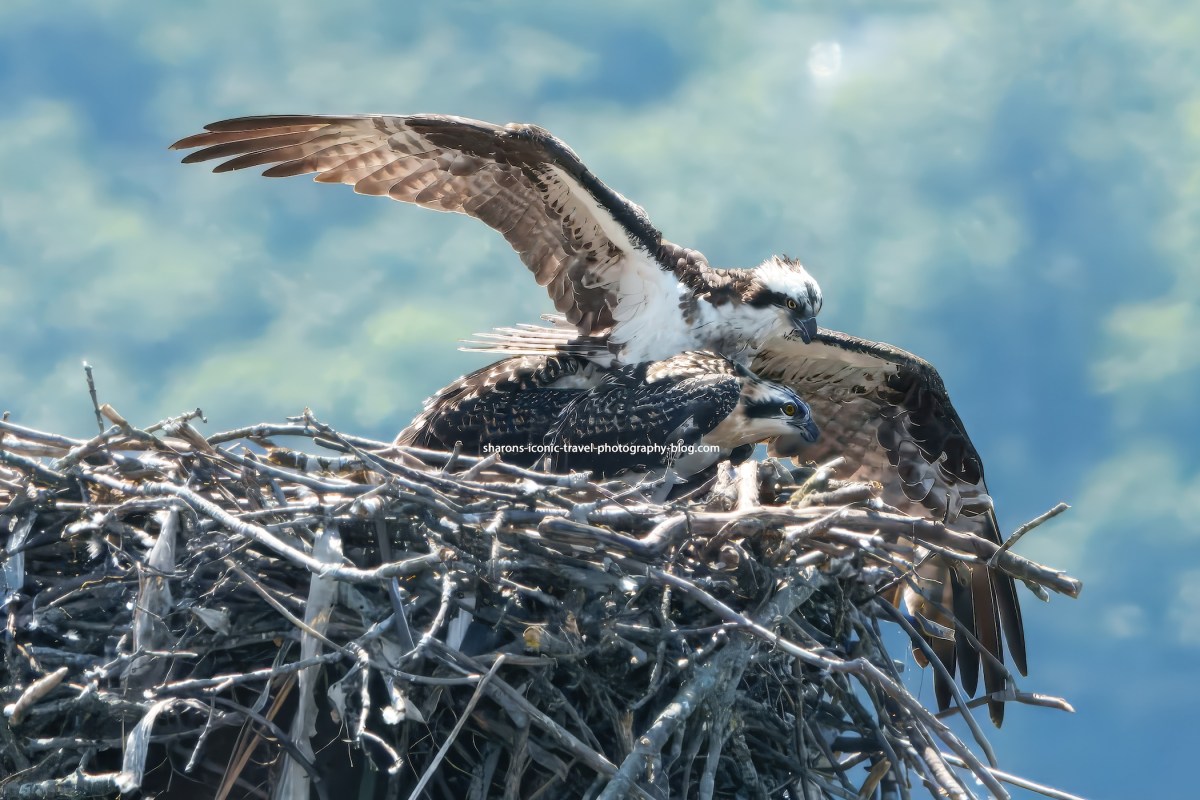
The adult male from the other nearby nest decided to harass the kids and mom in the nest I watch after the young osprey had flight practice. The mom complained loudly and the dad from this nest returned and chased off the other male. The male from the nest I watch is in the back. He is recognisable by his eye defect/ injury. The male in the front is the pest from the other nest.

The Osprey Fledged- One dad chasing the other dad

Have a happy Sunday!

Oriole, But Which Kind?

I found this bird in a wooded area next to the Hudson River. I know this is an oriole, but not sure what kind. Maybe the birders out there can give their opinion.

Oriole, but which kind?

It appears to be a female. The first time I ran this picture through the Merlin app the first one on the list was Bullock’s Oriole. However, that is a bird in the western US and Mexico mainly. I cannot totally rule that out because we have documented other birds that do not belong in this part of the US. In a couple of the example photos of females on Cornell University’s All About Birds site there were a couple of photos of females with more flat heads like this one.

The second name on the list was Baltimore Oriole. I know we have those around here in NY, but I am not totally convinced. The head on the Baltimore looks rounder in the picture’s on All About Birds than this bird’s head.

The second time I ran it through Merlin a third choice was given: Orchard Oriole. The head looks more rounded on the orchard oriole than this picture as well.

I am looking at the wrong details when comparing? Could this bird have flown into a window and flattened its head? I am not an expert on any of this. Those who are more knowledgeable please feel free to chime in.

Young Osprey Hovering

On Sunday it was a windy day on the Hudson River, so the young osprey decided to test their wings. At least one of them, if not both flapped their wings enough to hover at most maybe a foot above the nest.

Getting Ready

Young Osprey Hovering

The young osprey are in the front of this picture and the mom is in the rear left hand side. The dad was away probably 99 percent of the time I was there.

Hover Practice

Young Osprey Hovering

The young osprey utilized the wind to go up and down. It never appeared to get higher than a foot above the nest.

Young Osprey Hovering

Mom appears to be judging his technique in the photos above and below. I wonder if she gave advice. The sibling looks like they are trying to avoid being stepped on with those talons.

Young Osprey Hovering

Dad Rewards the Practice With a Fish

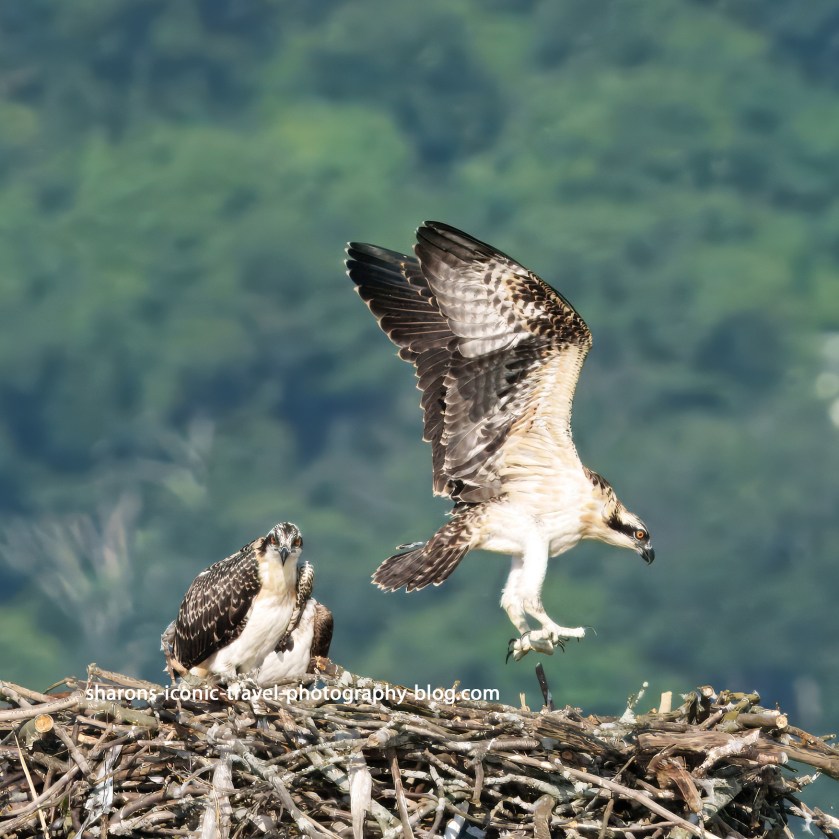
Young Osprey Hovering – Dad arrives with a fish

It looks like the young osprey are looking forward to a snack. It was not as hot out. I’m not sure why the dad stayed away more. Maybe it was due to the size of the growing babies and lack of room in the nest. When he dropped this fish off he only stayed in the nest for about a minute or so. I hope you all had a great weekend. Happy Tuesday!

Osprey at 105 Degrees

How do osprey cope with temperatures above 100 degrees? There are several things I have seen them do.

One is they sit with their mouths open like their are panting. There is a reason they do this. According to Couchiching Conservancy:

Birds have no sweat glands, so the primary way of dissipating excessive heat is by panting, just like a dog. If you see a bird during the hottest part of the day, it will likely have its mouth open.  You may or not see that their throat is moving up and down, ridding heat from their body through the open bill.

Osprey at 105 Degrees

Another way they cope is the mom will take short flights from the nest and go into the water to cool off. I have seen her float for a little while then fly back to the nest. So swimming or taking a dip helps them cool off.

In addition, when the mom returns to the nest after a dip she will shield her young from the sun under her wings. The nest is exposed, so she is shading them from the sun like an umbrella. I have seen the babies huddle under her wings.

Osprey at 105 Degrees

Also, I have seen the mom flap her wings or stretch them out more as the temperature rises. According to Couchiching Conservancy:

Another method they employ is to spread their wings and body feathers which allows heat to dispel and cool air to circulate between them.

Like a crazy person, I stood out to watch them in the afternoon of the days the temperatures reached 100 plus. I brought plenty of water and did not stay near the amount of time I normally stay. Take precautions when out and about and have a great Sunday.

Always Adding On

Most days when I go down to watch this nest, I see the mom or dad get additional sticks to add to the nest pile. Most of the time they are sticks floating nearby on the Hudson River, or from the nearby shore.

Always Adding On

Dad was out, so the adult appears to be the mom. Sometimes I think it is also an excuse for her to cool down by landing in the water for a few seconds.

Always Adding On

In the above picture it appears she is mulling over where to place the stick in the nest. Maybe the chicks are giving her input. Have a great Monday!

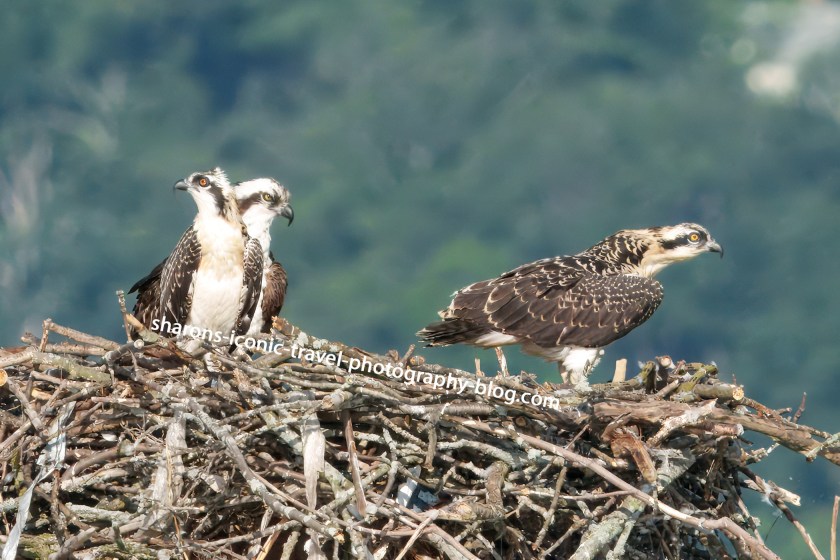
Osprey Family 6/8

It was a hazy day, but I figured I would try my luck with the osprey. We are supposed to have more rainy days this week. Despite the haze, I saw a lot.

Osprey Family 6/8 -You can see to babies by the parent on the right side of the photo.

The babies are starting to look more like Osprey. They are also peeking their heads above the nest more.

Osprey Family 6/8 -One being fed and the other looking in the same direction as the other parent.

These are all taken at a distance with a zoom lens and are cropped.

Osprey Family 6/8- One of the parents with both kids in the photo in the bottom of the photo. One head is just visible under the other baby.

Even hazy days can be good days! Have a great week!

Gimme!

Poor osprey! The eagles chase him to steal the fish. The fish crows chase him. He gets no respect.

Gimme!

He was on his way back to the nest with a partially eaten fish.

Gimme!

When low and behold a crow started chasing him.

Gimme!

The chase went on for quite. distance. The crow never had contact with the osprey. Maybe he thought better of it.

Gimme! The head of the mother is just visible in the nest.

The osprey made it back to the nest. He is better at bringing a fish over to the nest. If she wants a piece she bites off one, and he flies to a nearby spot to finish it off. Looks like this one was already partially eaten before he stopped by the nest. Have a Happy Thursday!

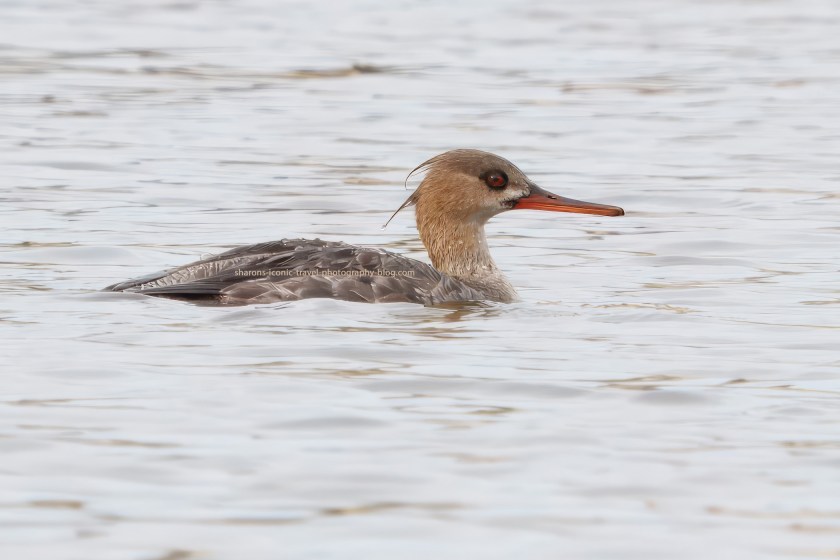
Red Breasted Merganser 2

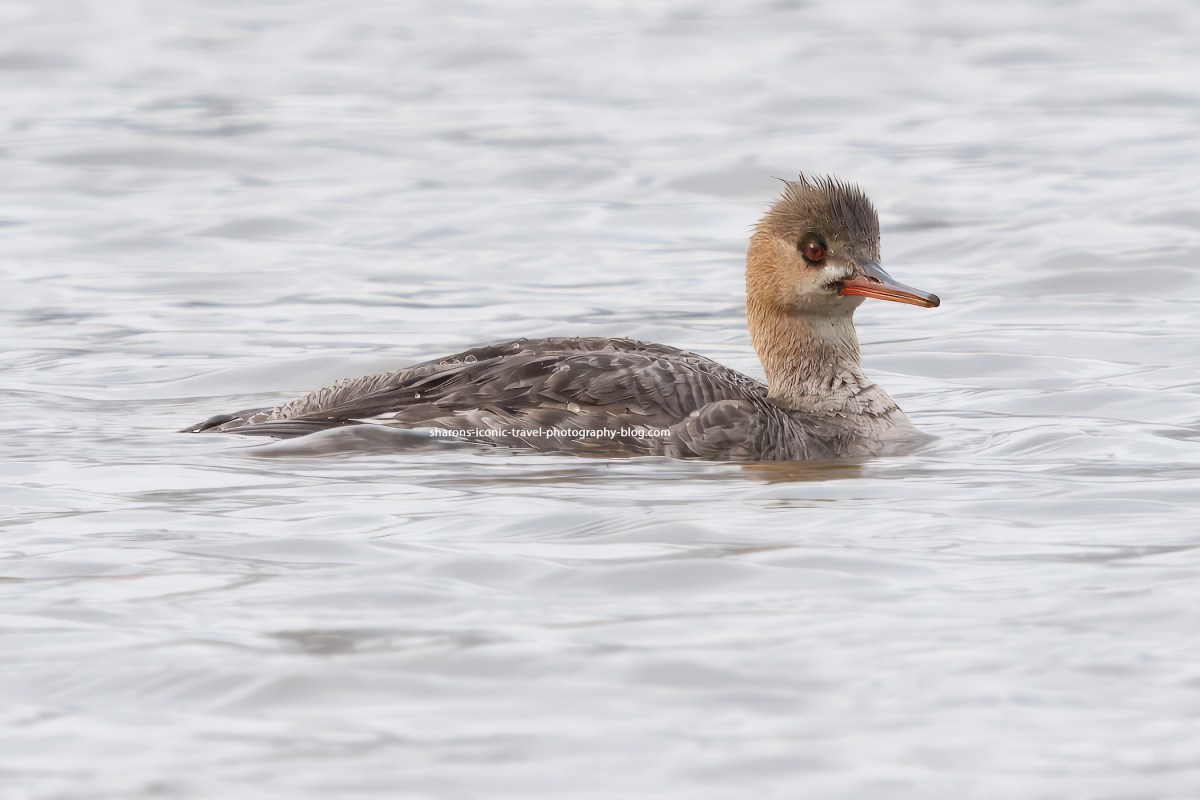
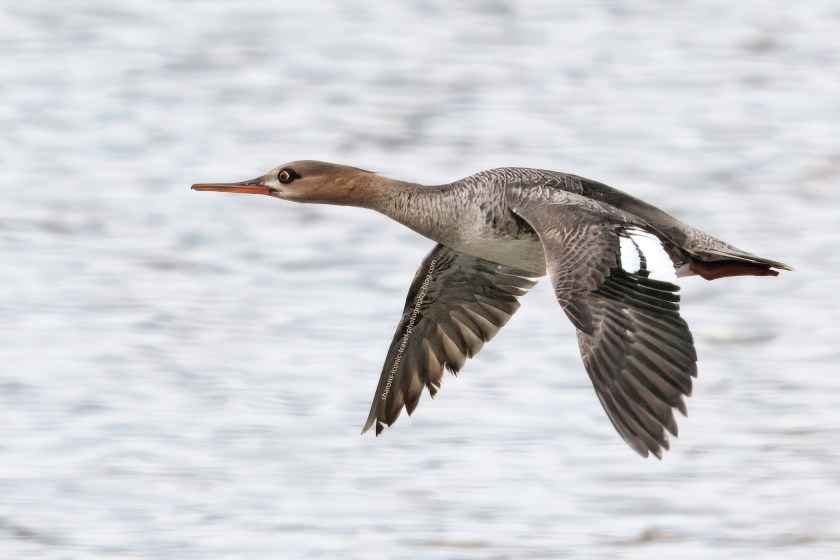
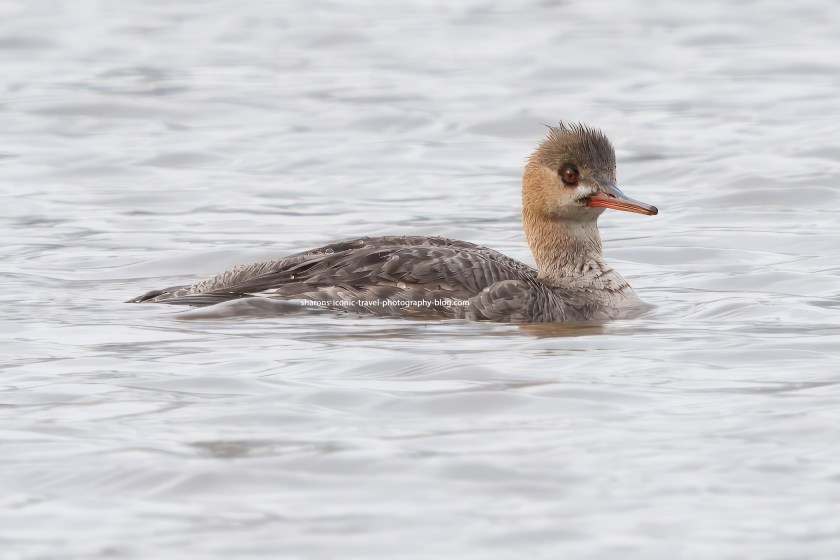
I got another chance to see this bird this week. It was about a mile south of where I saw it last. It is a juvenile male red-breasted merganser or a female.

It came to the mouth of a creek emptying into the Hudson River, but it originally stayed on the bank opposite me at quite a distance. Then it flew off.

Some geese started hanging out close to me for a while. It flew back, but this time closer to where I was. Not as close as I would want, but I will take it. My neck of the woods is in this type of merganser’s migration area. Where I took this photo appears to be above the area non breeding mergansers of this type would stay. Their breeding area is in the north of Canada. I have not seen any adult male mergansers around.

You never know what you will see. Happy Easter if you celebrate it!

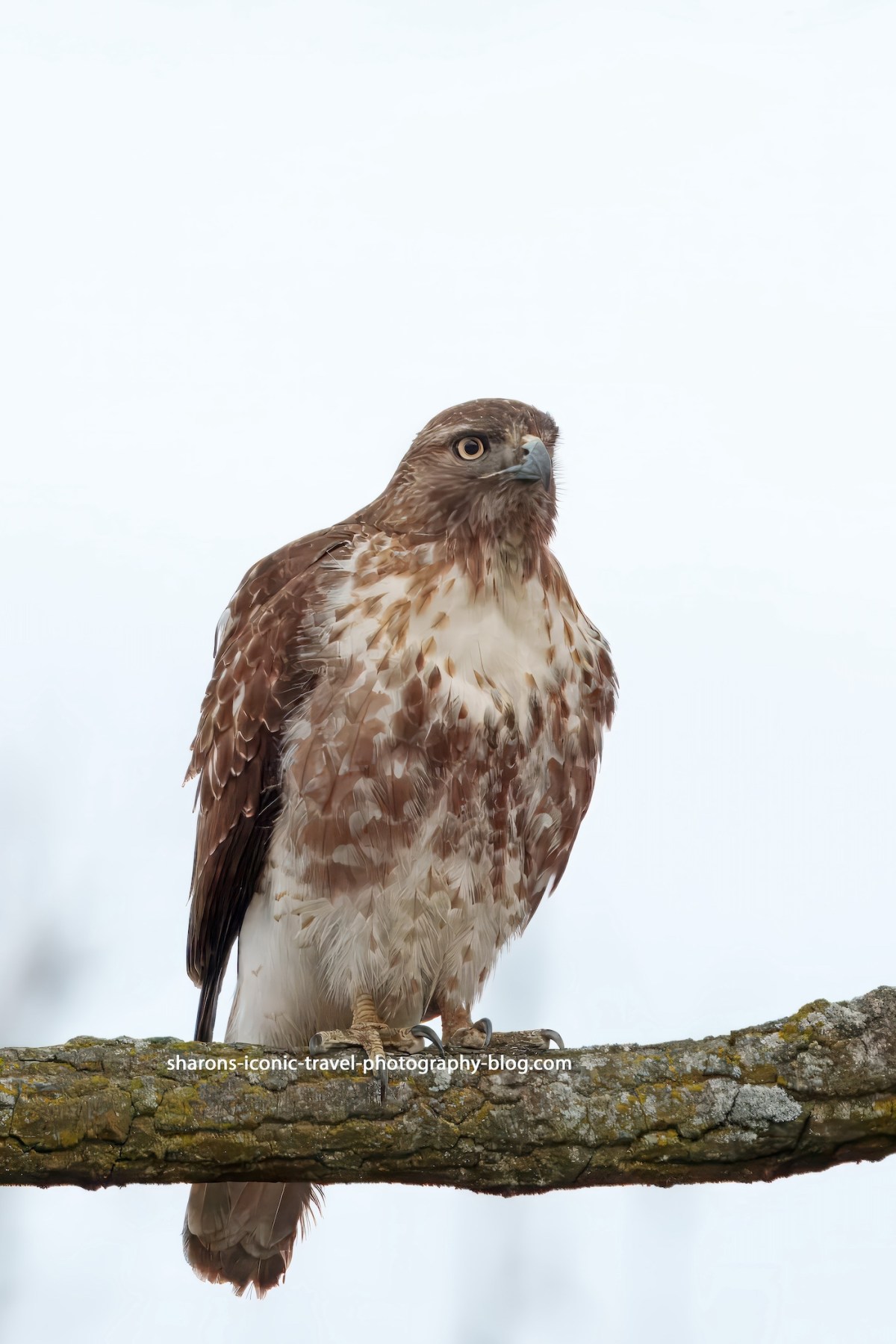
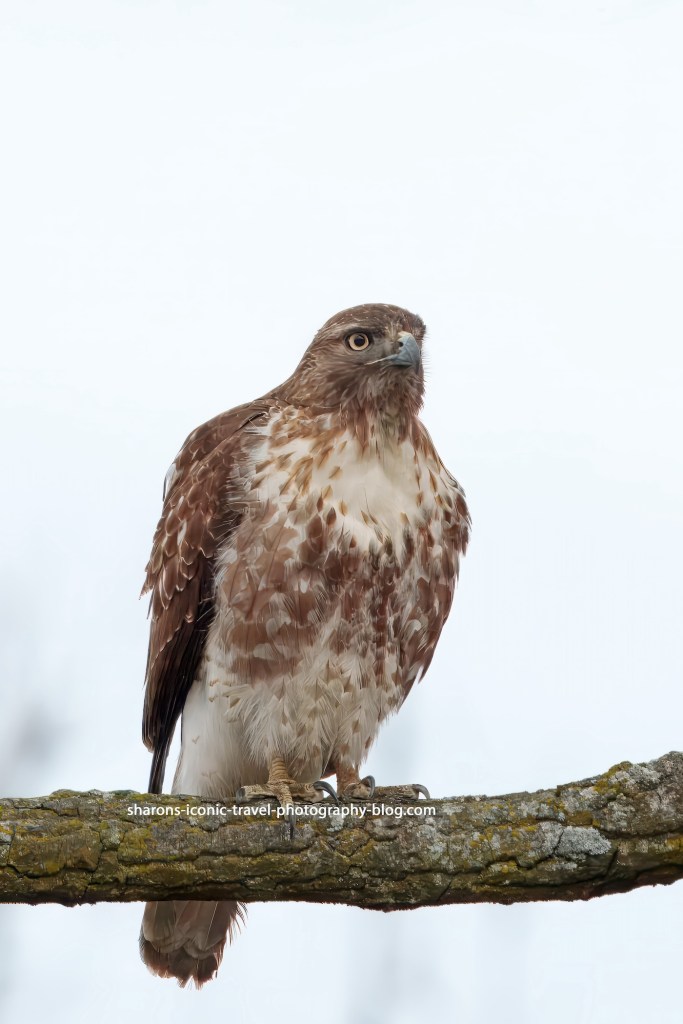
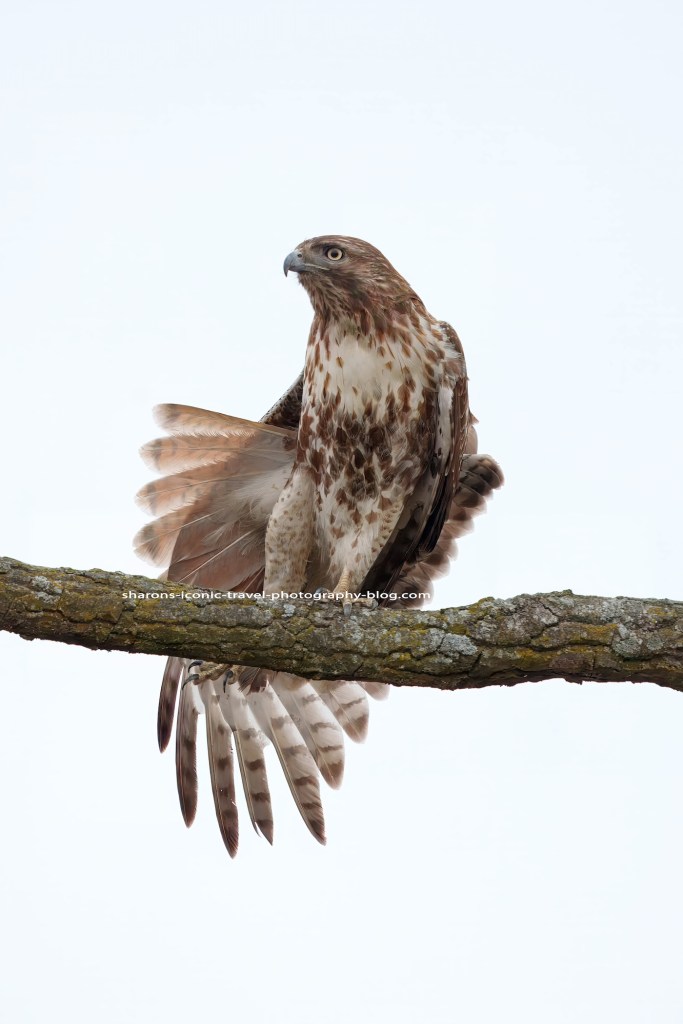
Red-Tailed Hawk on the Hudson

I stopped on a dark day after work to see the osprey, but only saw this red-tailed hawk up close instead. I have been to this location several times, but it was the first time I saw a red-tailed hawk there.

Red-Tailed Hawk on the Hudson

This park borders a large piece of private property that includes a field and a lot of woods, so this hawk has a variety of spots to chose from. I am guessing it does not go to the shoreline as much.

It was scanning the shoreline of the Hudson River under the tree it was perched on and watching the kingfishers and other birds pass by.

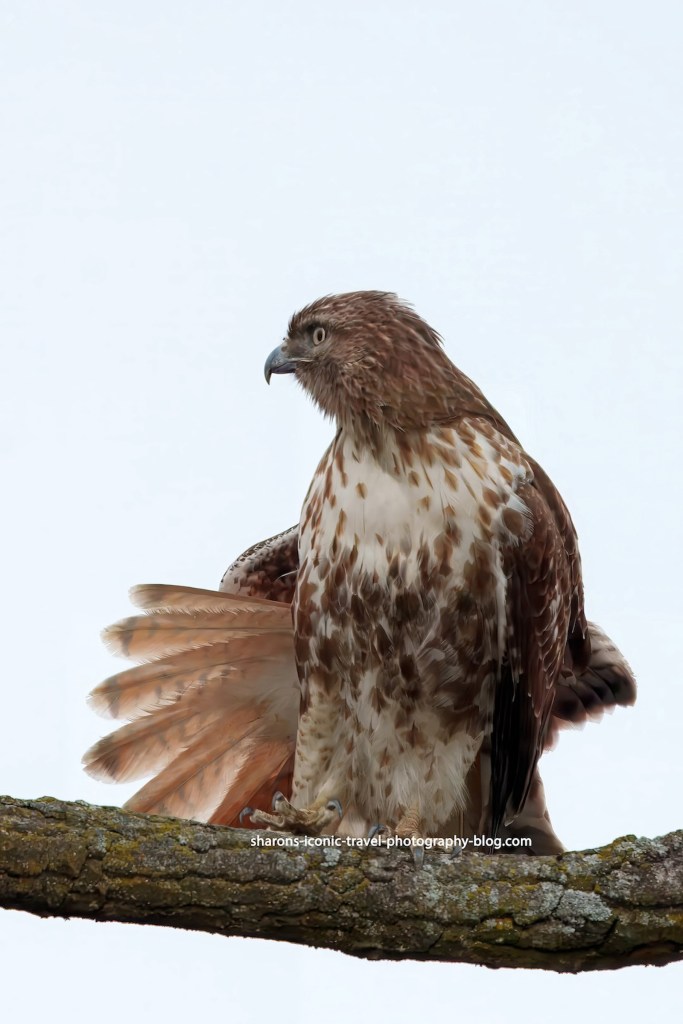
Red-Tailed Hawk on the Hudson

After it fanned out it’s wing feathers it flew off right over my head. I did not take pictures of its flight as I was sure I did not have the shutter speed high enough. It appeared to possibly land and catch something in a grassy area behind me. It was not my anticipated subject, but good to see all the same. Have a great weekend!

Hooded Merganser

I saw these on a body of water near the Hudson River in New York. They were not very close, so these are taken with a zoom lens and cropped a bit. I wish I could see them closer. Maybe some day I will get that opportunity.

Head Up

Hooded Merganser

This is identified as an adult male by All About Birds. New York is in their year round range.

Head Down

Hooded Merganser

Have a great rest of your week.