Brown Pelicans of Assateague Island

What do people think of when they hear of Assateague Island? Many think of the wild horses and the pony swim from Assateague to Chincoteague Island. The pony swim was yesterday. However, there is much in terms of wildlife to see at Assateague. One bird that is prevalent is the brown pelican.

Breeding Adult Brown Pelicans

Brown Pelicans of Assateague Island

I made a world wind trip to Assateague earlier in the week. I injured my knee a few months ago and only have small windows to make short trips. Brown pelicans like to fly above the surf. I have seen them early in the morning at sunrise and at other times during the day.

Brown Pelicans of Assateague Island

They will fly solo or in small groups.

Brown Pelicans of Assateague Island

Sometimes they gather together in small groups on the beach or out beyond the surf. I was lucky to see the two above on the beach. Maryland and New Jersey are in it’s breeding range.

Juvenile BRown Pelicans

Brown Pelicans of Assateague Island

Juvenile brown pelicans are mostly brown. The adults have more white around their heads. A few juveniles were hanging out with some adults.

Brown Pelicans of Assateague Island

According to all About Birds, “They have thin necks and very long bills with a stretchy throat pouch used for capturing fish.” They scoop them up in their throat pouches, which are expandable. According to the NPS.gov site they also use their neck pouches to cool off on a hot day.

This year was the first trip I have seen the pelicans this close. They flew closer to land at the beach and over land. I have not seen them standing on the beach before on previous trips. Even though I only had a short window it was a great trip.
Forster’s Tern

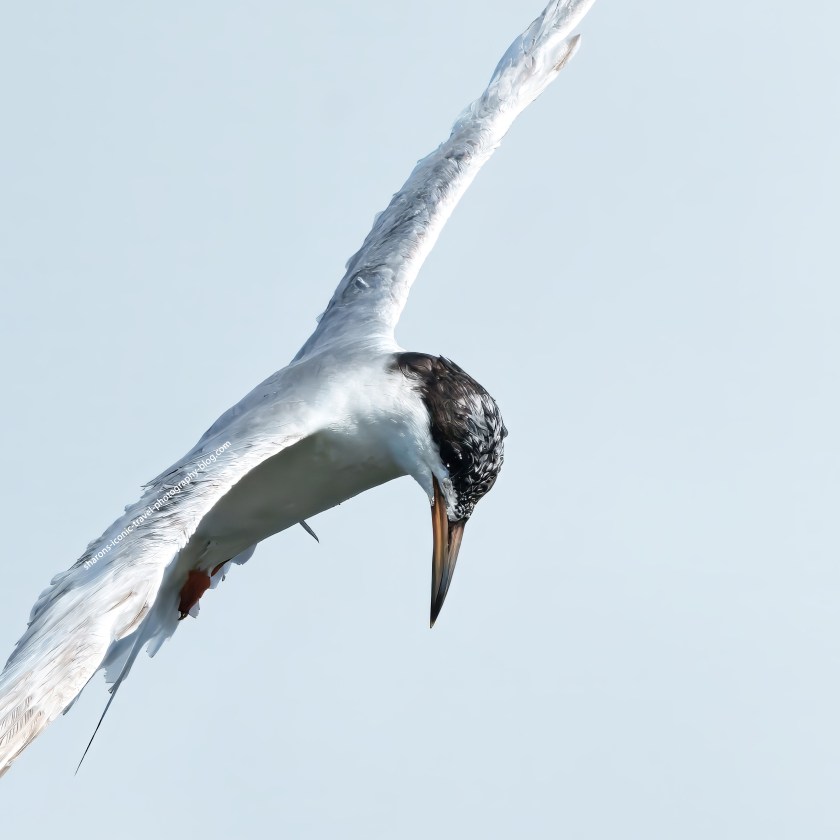
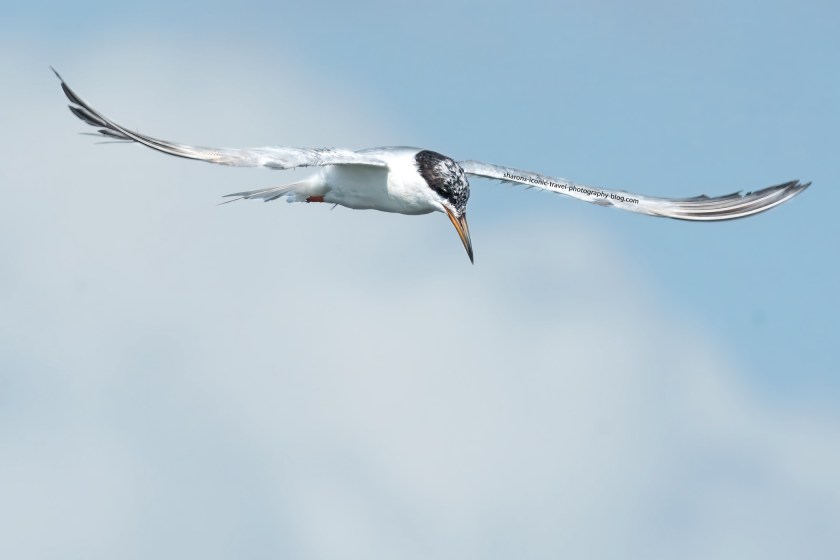
What bird is named after a famous naturalist ? It is the Forster’s Tern. Johann Reinhold Forster was a naturalist who voyaged with Captain Cook’s 2nd trip to the Pacific. Forster drew or cataloged 500 plants and about 300 animals.

Forster’s Tern

Appearance

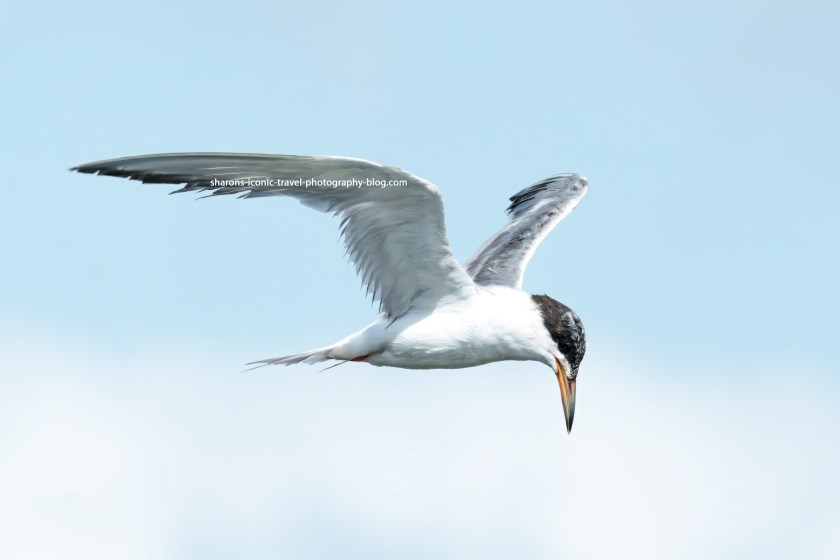
I saw this bird on the New Jersey shore area. Adults have a black cap and a black tipped orange bill. Their underside is while, while the wings may have gray coloring on top. It is in between a robin and a crow in size.

Forster’s Tern

Habitat

This tern can be in fresh water or salt water. It can be seen in marshes, bays and oceans. The map on All About Birds has the NJ coast as its breeding grounds. It goes further south to the lower US and the Central American coast in winter.

Forster’s Tern

Hunting

According to All About Birds this tern gets food by scanning for food over the water, about 20 feet above it, then dives in to capture their prey with their bill. Many times they stick close to the shoreline or close to it. Their dive is shallow up to about a foot below the surface. This is exactly what I saw. The road we could view from was maybe 20 feet or more from the water’s edge. Many times it was flying close to if not above the shoreline. I could not capture it diving in as plants obscured my view. Regardless, these birds were fun to watch.

Have a great weekend! Be safe!

Food Fight

In the US, when one thinks of a food fight, it means food is thrown. In the animal world, animals might be playing tug of war with food or trying to steal it from each other.

Food Fight – This is the dad with a fish.

The dad had the fish at this location for a while taking bites out of it. Meanwhile, at the nest nearby, the babies were going crazy making noise. These pictures were taken in New Jersey. The water in the background is the Atlantic Ocean.

Food Fight

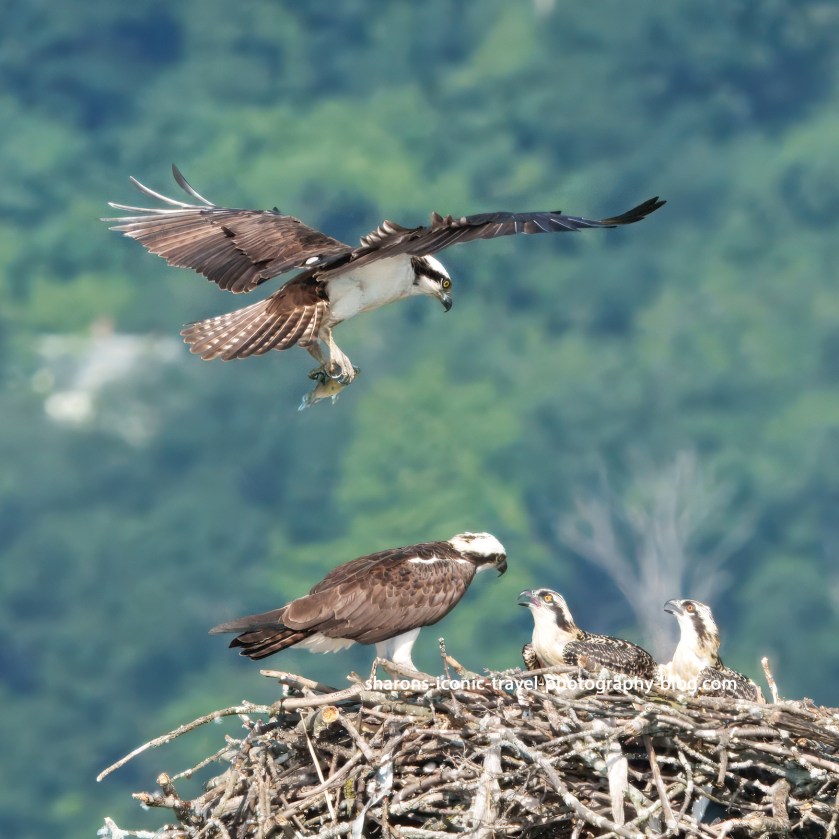
After a long wait, the dad finally brought the fish over to the nesting platform. This nest has three babies on the right. The mom is on the left. It appears these young osprey have not fledged from the nest yet. Happy Friday!

The Osprey Fledged

I saw both young osprey fly from their nest on Friday morning. One made two trips from the nest and back making large circular flights from land to nest. The other one flew off a lot farther and I gave up waiting for it to return. Hopefully it did at some point.

The Osprey Fledged
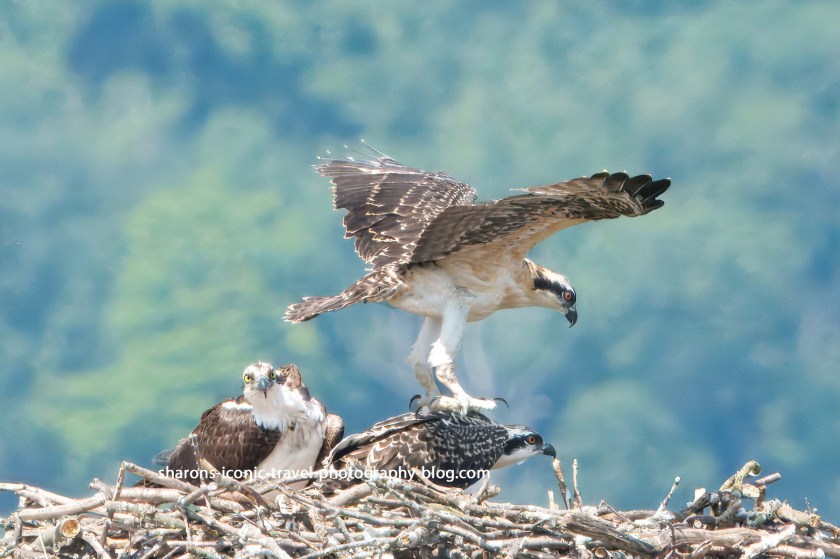
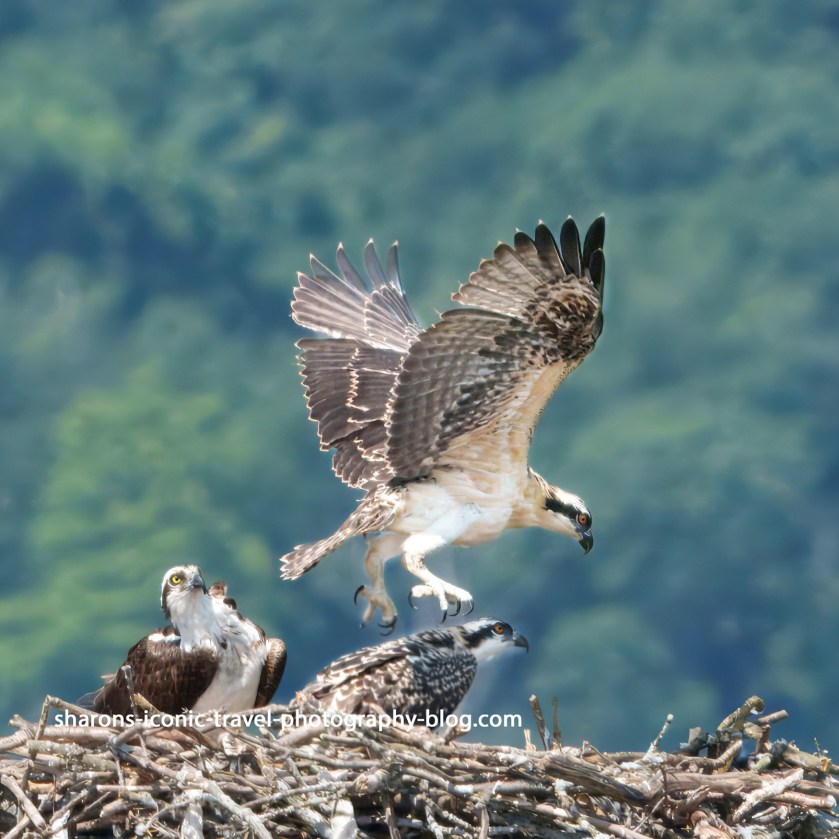
The Osprey Fledged-Coming in for a landing

In the photo above one of the young osprey is flying in to land in the nest and it’s sibling looks like it is cheering it on.

The Osprey Fledged- Landing again

The above photo shows the young osprey approach to the nest after the second flight attempt. It did land on the edge.

Pursuit

The Osprey Fledged – One dad chasing the other dad

The adult male from the other nearby nest decided to harass the kids and mom in the nest I watch after the young osprey had flight practice. The mom complained loudly and the dad from this nest returned and chased off the other male. The male from the nest I watch is in the back. He is recognisable by his eye defect/ injury. The male in the front is the pest from the other nest.

The Osprey Fledged- One dad chasing the other dad

Have a happy Sunday!

Oriole, But Which Kind?

I found this bird in a wooded area next to the Hudson River. I know this is an oriole, but not sure what kind. Maybe the birders out there can give their opinion.

Oriole, but which kind?

It appears to be a female. The first time I ran this picture through the Merlin app the first one on the list was Bullock’s Oriole. However, that is a bird in the western US and Mexico mainly. I cannot totally rule that out because we have documented other birds that do not belong in this part of the US. In a couple of the example photos of females on Cornell University’s All About Birds site there were a couple of photos of females with more flat heads like this one.

The second name on the list was Baltimore Oriole. I know we have those around here in NY, but I am not totally convinced. The head on the Baltimore looks rounder in the picture’s on All About Birds than this bird’s head.

The second time I ran it through Merlin a third choice was given: Orchard Oriole. The head looks more rounded on the orchard oriole than this picture as well.

I am looking at the wrong details when comparing? Could this bird have flown into a window and flattened its head? I am not an expert on any of this. Those who are more knowledgeable please feel free to chime in.

New Heights July

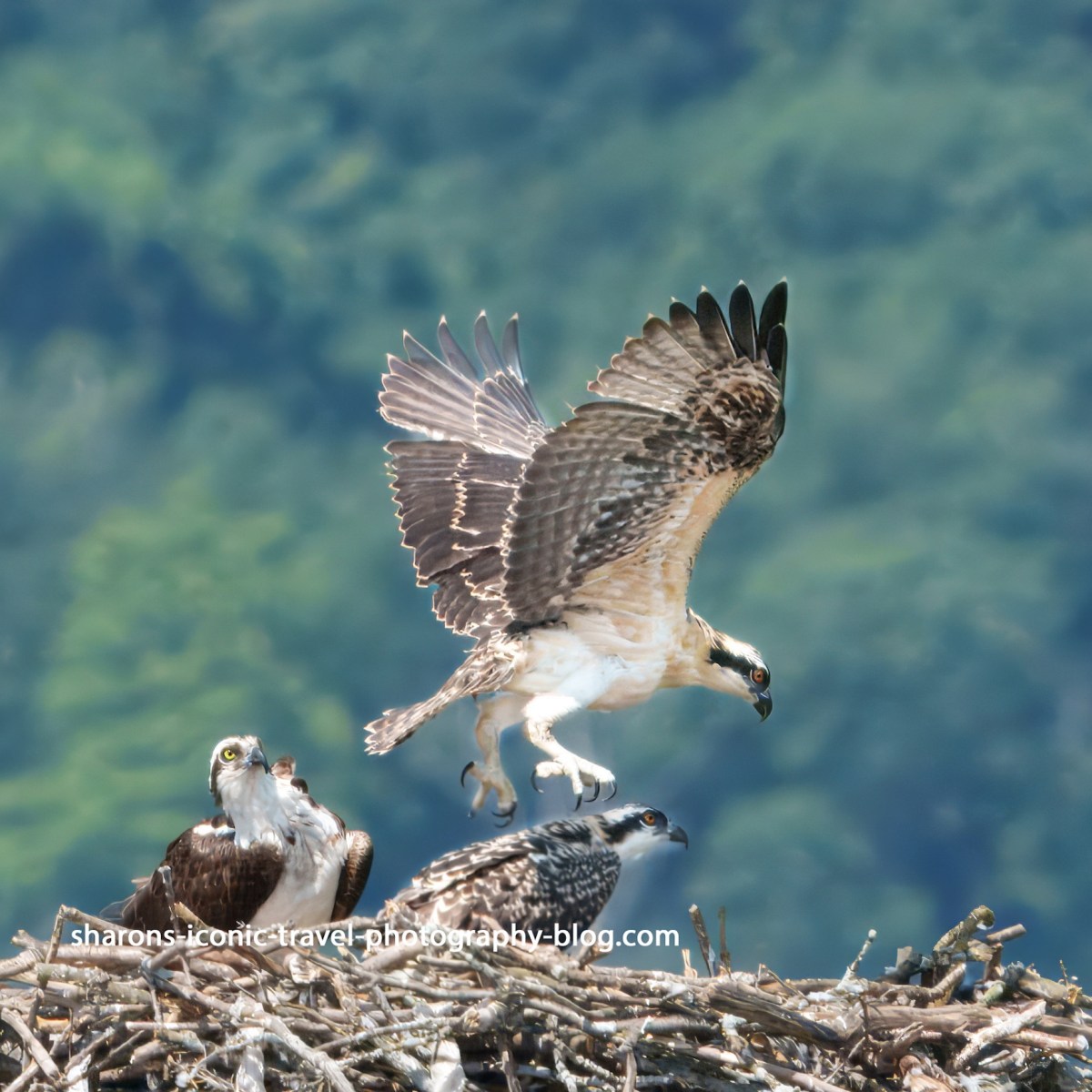
The osprey babies are continuing to practice hovering over the nest. I think last time only one osprey was doing this.

New Heights July- The young osprey in for the landing

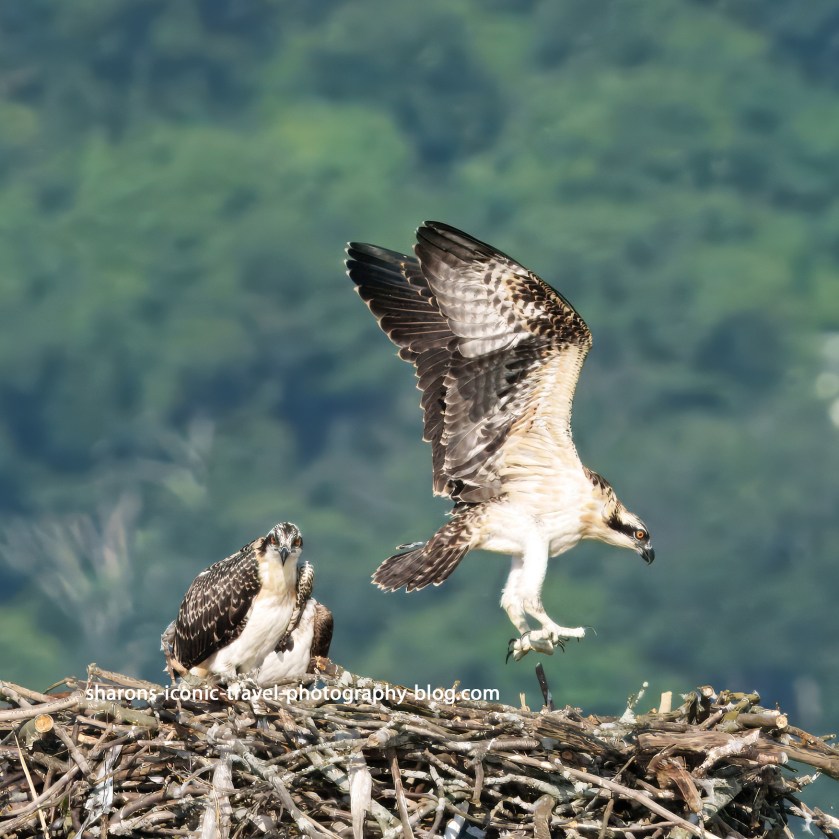
This time one young osprey only flew a foot or less over the nest. Here it is perfecting the landing.

New Heights July- This one is reaching new heights.

While the other young osprey appears to maybe reach heights of around 3 foot or so above the nest. After each young osprey practiced hovering the mom would seemingly talk to them. Then she called louder a few times. Next dad appeared from a distance with a fish.

New Heights July- Rewarding the young osprey with a fish

Dad rewards their flying practice with a fish. This time he brought in a larger one. Is this a cat fish?

New Heights July- Bringing the left over fish to his perching spot

It appears they took some bites off of the tail area. Then dad flew to his nearby perching spot and ate the rest of it. I wonder if the young osprey did not have much of an appetite or are they complaining they do not like catfish. Enjoy your Thursday.

Little Pest

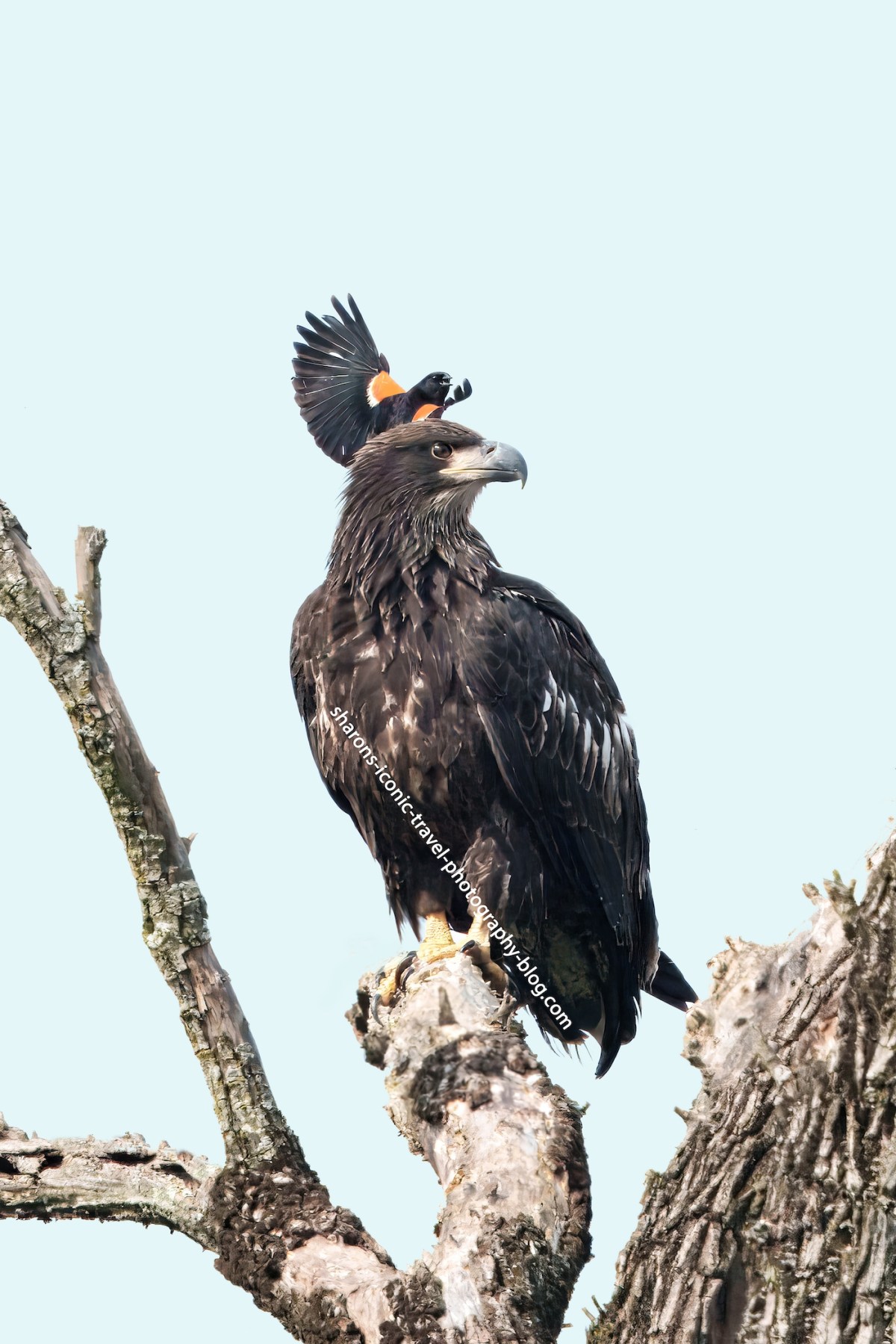
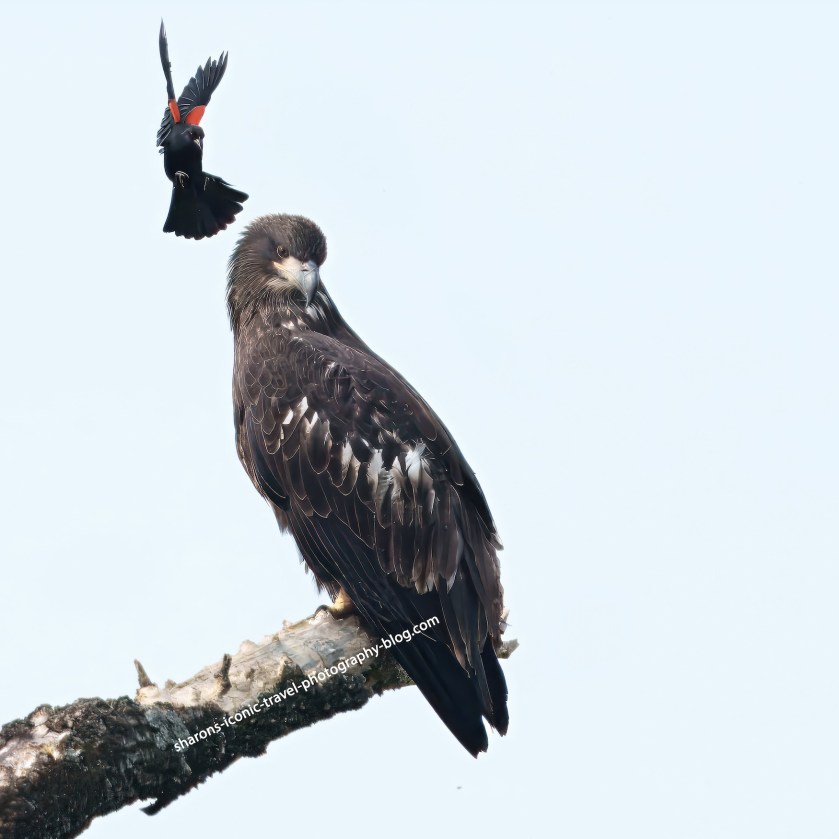
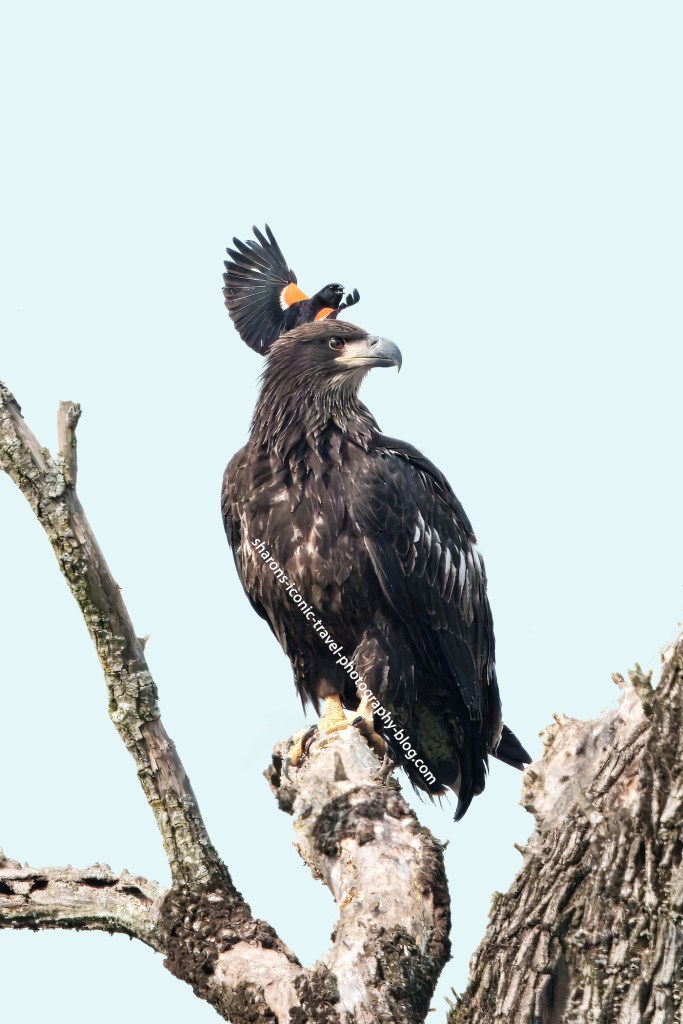
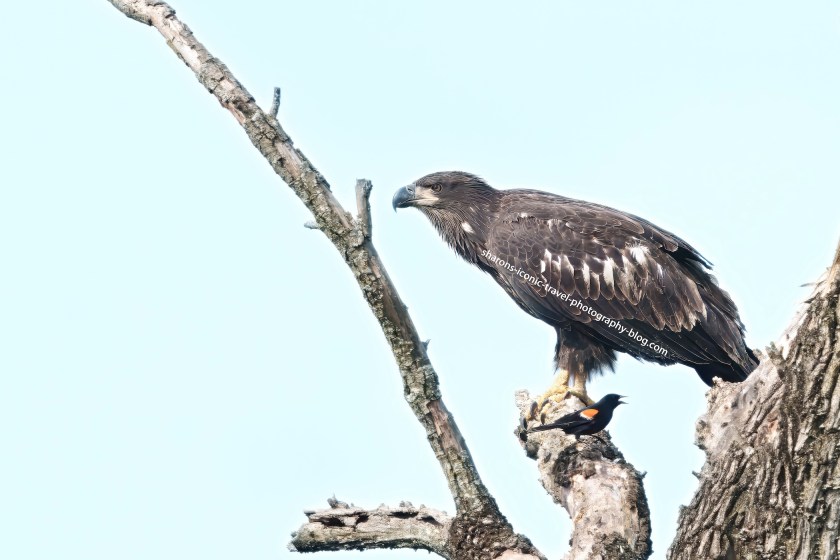
Eagles will bother other eagles and osprey by trying to steal fish they catch. Who bothers an eagle? For one, some little birds will pester the eaglets after they fledge. On this day it happened to be a red-winged blackbird.

Little Pest

I have not checked up the eaglets in a while. I know one fell out of the nest before it was ready to fledge and broke its wing on the way down. It is at a rehab that specialises in eagles. Two remained and both fledged. Last I heard one flew to the river and never returned to the nest area. We are hoping it is hanging out down there. The third is a late bloomer. It only flies to the river to loose the pests that bother it. It is has been sticking closer to the nest.

Little Pest- Photo Bomb

In the above picture it looks like the red winged blackbird is having fun. It was trying to attack the eagle from behind it, at times hitting its tail area.

Little Pest- a gutsy bird

The red winged blackbird has a lot of guts landing next to the eaglet. So far this eaglet has no clue what to do about these little pests other than fly away. Have a great Thursday!

Young Osprey Hovering

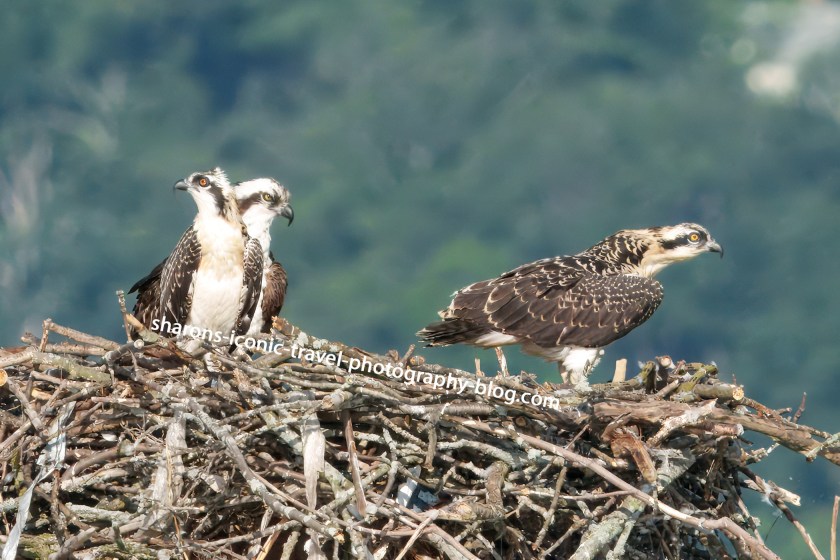
On Sunday it was a windy day on the Hudson River, so the young osprey decided to test their wings. At least one of them, if not both flapped their wings enough to hover at most maybe a foot above the nest.

Getting Ready

Young Osprey Hovering

The young osprey are in the front of this picture and the mom is in the rear left hand side. The dad was away probably 99 percent of the time I was there.

Hover Practice

Young Osprey Hovering

The young osprey utilized the wind to go up and down. It never appeared to get higher than a foot above the nest.

Young Osprey Hovering

Mom appears to be judging his technique in the photos above and below. I wonder if she gave advice. The sibling looks like they are trying to avoid being stepped on with those talons.

Young Osprey Hovering

Dad Rewards the Practice With a Fish

Young Osprey Hovering – Dad arrives with a fish

It looks like the young osprey are looking forward to a snack. It was not as hot out. I’m not sure why the dad stayed away more. Maybe it was due to the size of the growing babies and lack of room in the nest. When he dropped this fish off he only stayed in the nest for about a minute or so. I hope you all had a great weekend. Happy Tuesday!

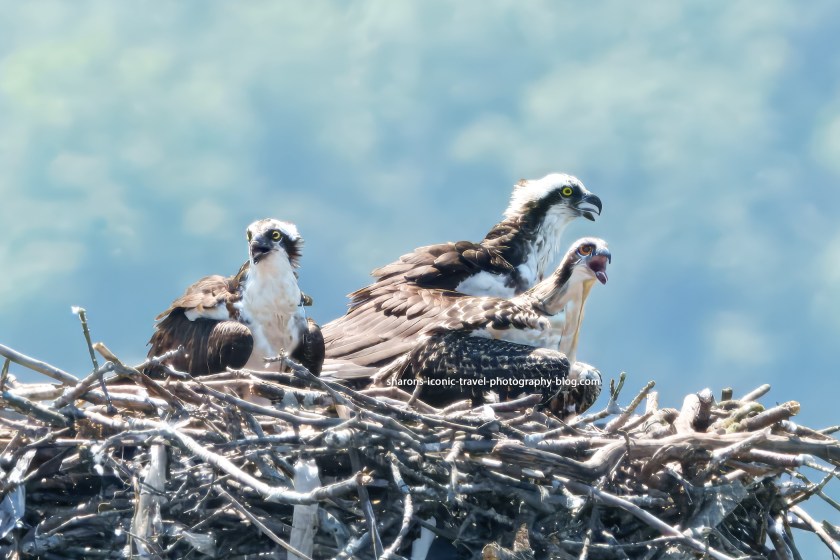
Osprey at 105 Degrees

How do osprey cope with temperatures above 100 degrees? There are several things I have seen them do.

One is they sit with their mouths open like their are panting. There is a reason they do this. According to Couchiching Conservancy:

Birds have no sweat glands, so the primary way of dissipating excessive heat is by panting, just like a dog. If you see a bird during the hottest part of the day, it will likely have its mouth open.  You may or not see that their throat is moving up and down, ridding heat from their body through the open bill.

Osprey at 105 Degrees

Another way they cope is the mom will take short flights from the nest and go into the water to cool off. I have seen her float for a little while then fly back to the nest. So swimming or taking a dip helps them cool off.

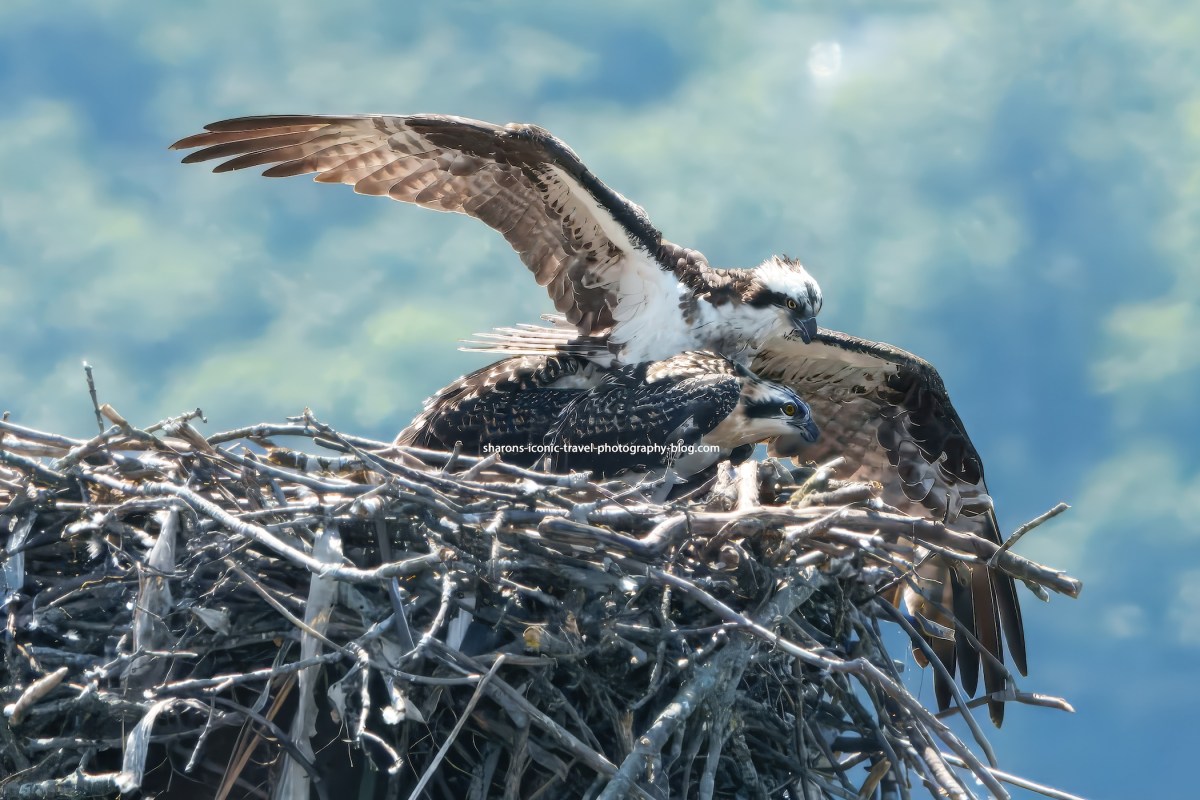
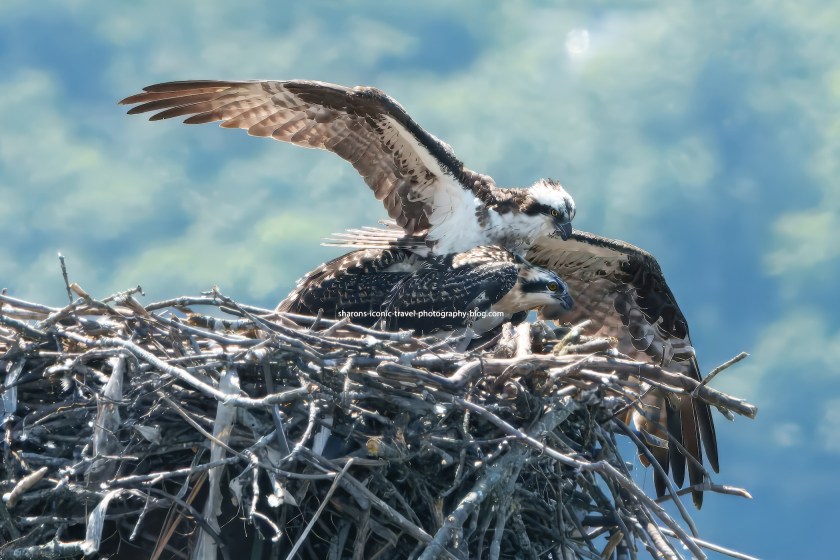
In addition, when the mom returns to the nest after a dip she will shield her young from the sun under her wings. The nest is exposed, so she is shading them from the sun like an umbrella. I have seen the babies huddle under her wings.

Osprey at 105 Degrees

Also, I have seen the mom flap her wings or stretch them out more as the temperature rises. According to Couchiching Conservancy:

Another method they employ is to spread their wings and body feathers which allows heat to dispel and cool air to circulate between them.

Like a crazy person, I stood out to watch them in the afternoon of the days the temperatures reached 100 plus. I brought plenty of water and did not stay near the amount of time I normally stay. Take precautions when out and about and have a great Sunday.

Always Adding On

Most days when I go down to watch this nest, I see the mom or dad get additional sticks to add to the nest pile. Most of the time they are sticks floating nearby on the Hudson River, or from the nearby shore.

Always Adding On

Dad was out, so the adult appears to be the mom. Sometimes I think it is also an excuse for her to cool down by landing in the water for a few seconds.

Always Adding On

In the above picture it appears she is mulling over where to place the stick in the nest. Maybe the chicks are giving her input. Have a great Monday!