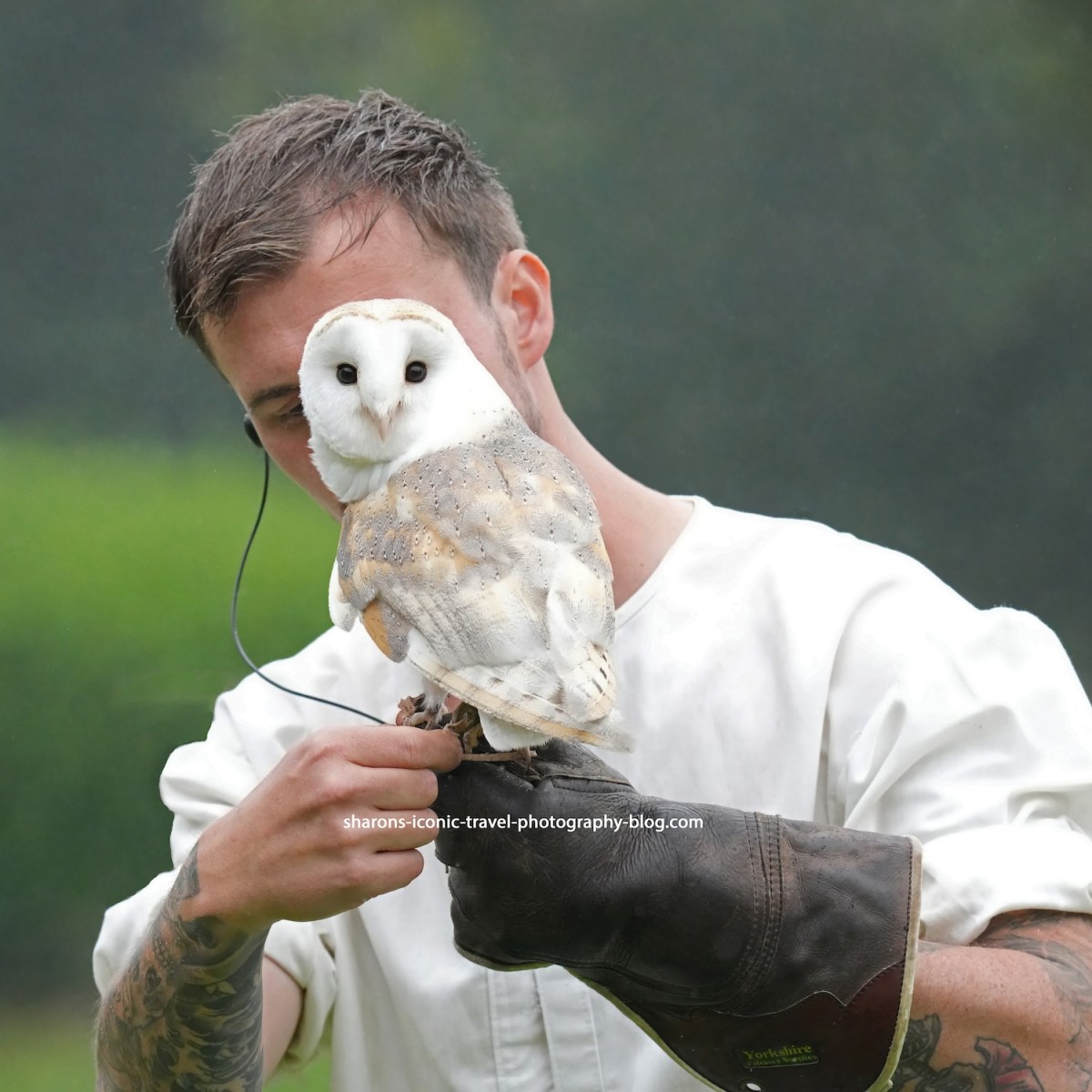
Barn Owl

I have always wanted to see a barn owl. We do have them in New York, but the Ebird reporting site protects the location of where they are sighted as they do exist, but are rare in the state. Going to a castle in England was my best shot at seeing one of these owls.
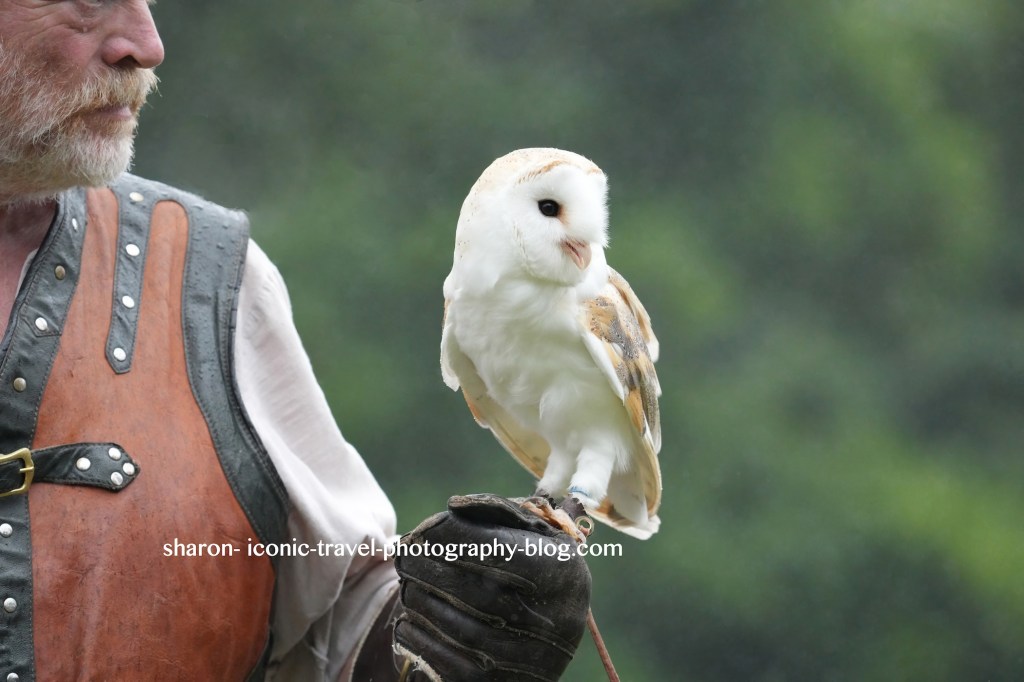
Some castles have many different activities to bring in money. They may have tours, host large concerts, put on Medieval or other historical shows, have high end lodging, etc. However, my favourite event to see are the falconry shows.
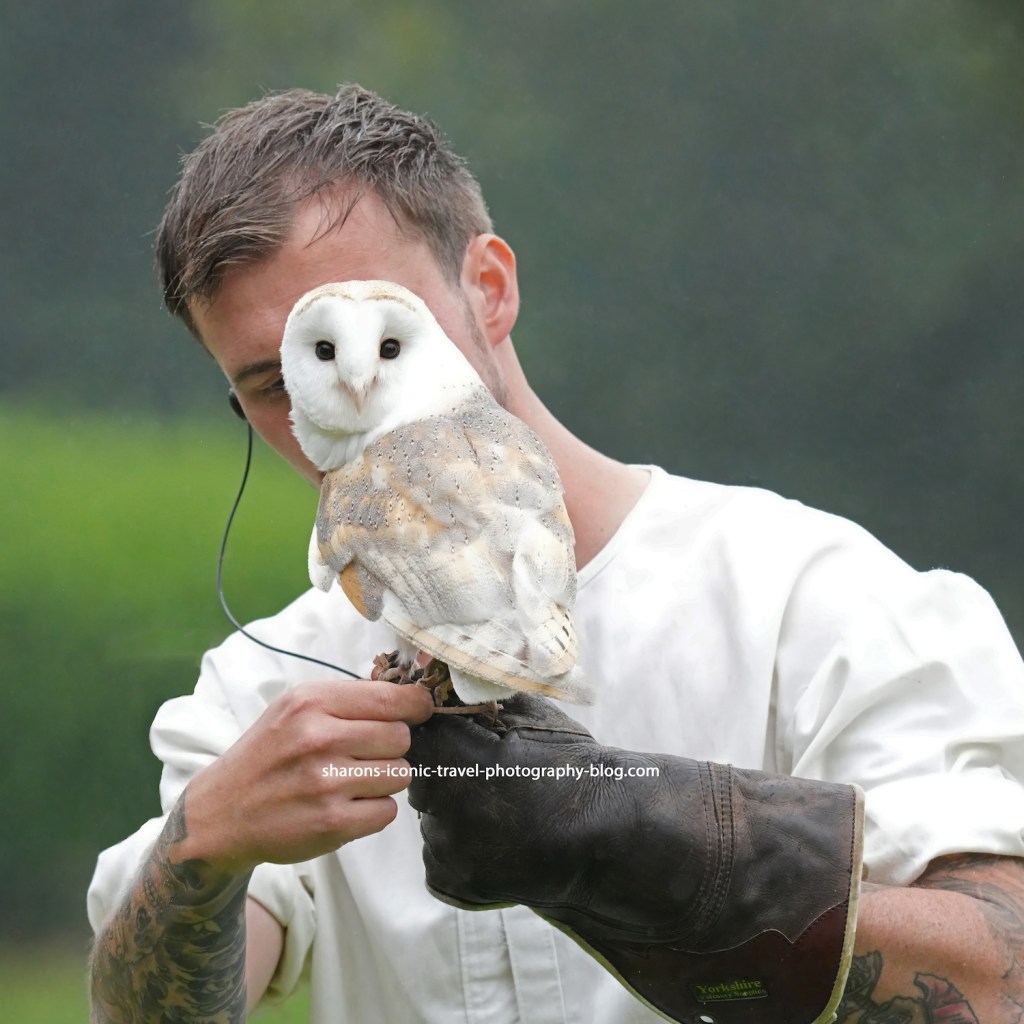
This falconry show at Warwick Castle does not disappoint. They had four falconers flying the birds. They had owls, falcons, hawks and eagles. Unfortunately it was raining that day. I did remove the raindrops from these photos. However, it messed with my autofocus and most of the flight shots did not pan out. I think the size of the owl came into play as well.
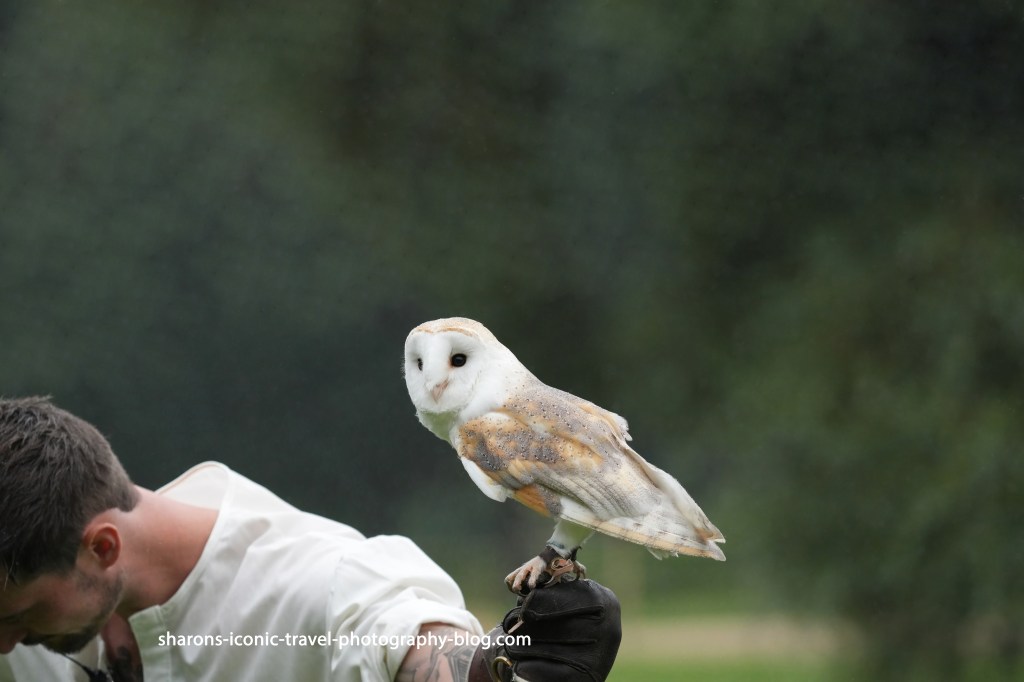
If I ever return to England, I hope to spend a few days visiting this castle. They have many shows and multiple falconry shows a day. I would also like to see a barn owl in the wild some day. Have a great rest of your week.

Gray Heron

I was fortunate enough to see some gray herons at different Royal Parks in London. It turns out these places are great places to bird watch.

Gray herons are similar in appearance to great blue herons, but are smaller in size. All About Birds has the length of the gray heron being between 35.4-38.6 inches, while the great blue heron is between 38.2-53.9 inches in length.

Gray Heron – Adult

The above pictures appears to be an adult. It has the pronounced black stipe on its head and the beak is lighter. During peak breeding season its beak can be orange.

Gray Heron – Juvenile?

I am guessing this image may be a juvenile gray heron. It does not have the pronounced black and white colours on its head and its beak is darker.

I highly recommend visiting the Royal Parks in London. It is a great way to get in some steps in while being nature in the heart of London.

“In every walk in nature, one receives far more than he seeks.”

John Muir

Bufflehead

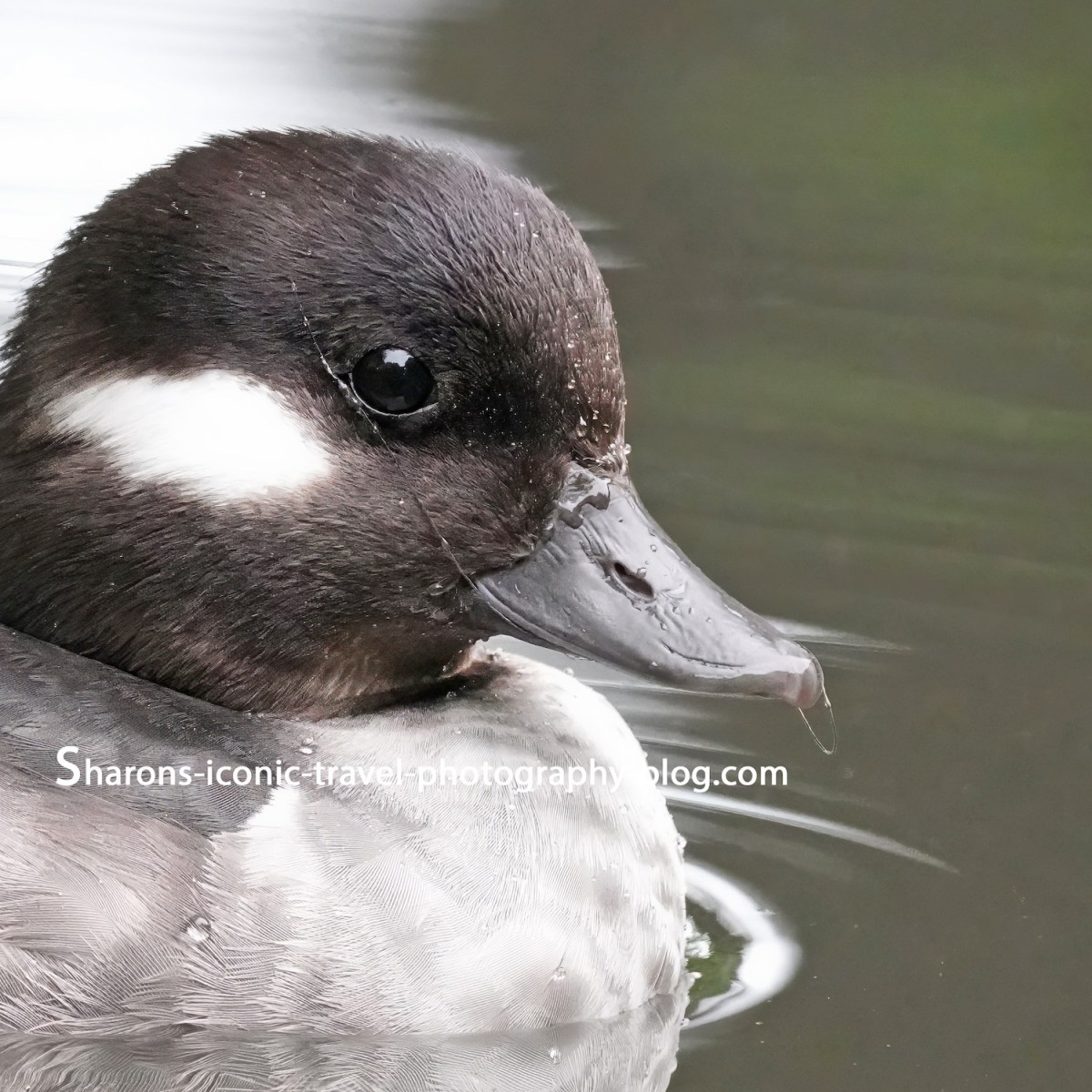
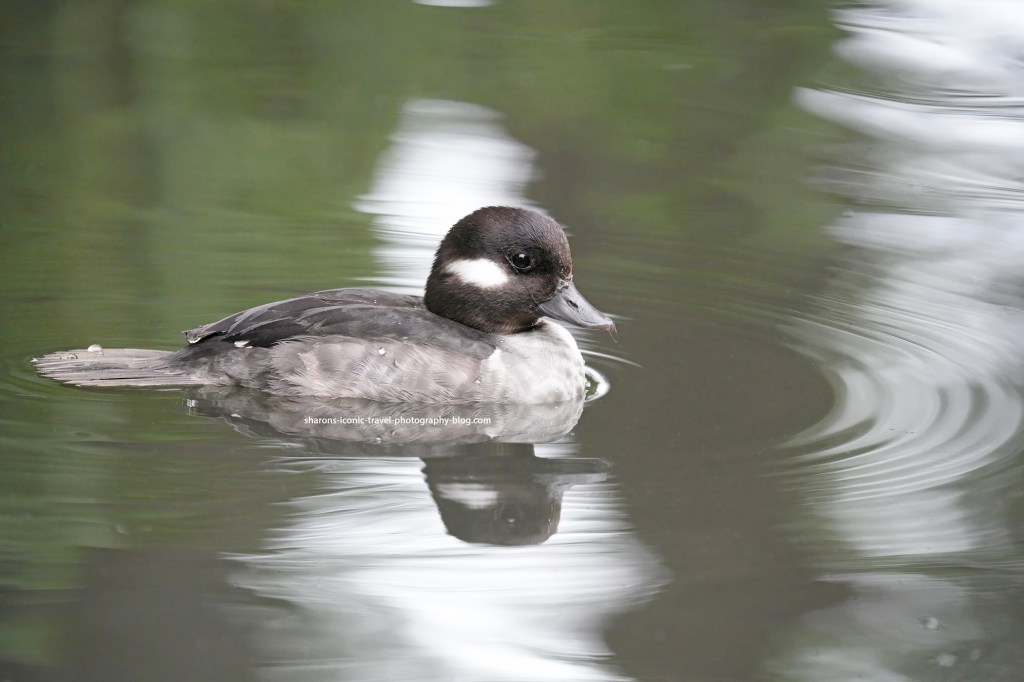
Some birds that are native to North America, I have not seen in North America. One such bird is the Bufflehead. I saw this bird for the first time in London, England.

Bufflehead – female

There are sightings in England and Europe for these on All About Birds. I was kind of thrown off in identifying this diving duck. I am far from an expert and the colouring listed online for a bufflehead female appears to be brown, but in these images the duck appears to be black. I will have to look through my pictures more, but I do not think I captured a male. This female was on a pond on a cloudy day. The pond was mostly well shaded by trees hanging over it creating an even darker situation.

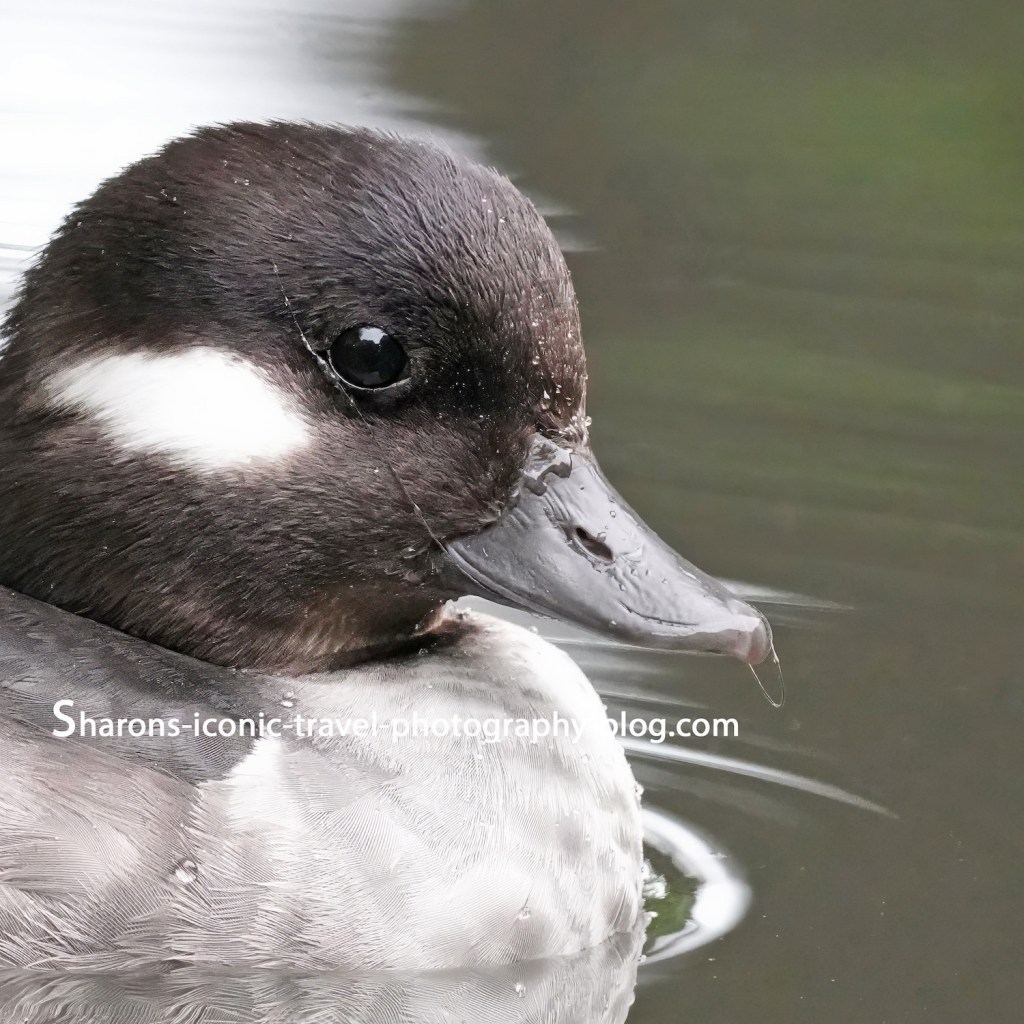
Bufflehead – female

In multiple images not taken in consecutive order it appeared maybe a hook was in its beak. I could be wrong, but to be on the safe side I contacted the entity responsible for the pond and they were going to check it out.

Again, I would like to emphasis that sometimes what many think is not the best lighting can still create nice lighting for your images. Don’t discount the cloudy days.

Surprise! A Great Horned Juvenile

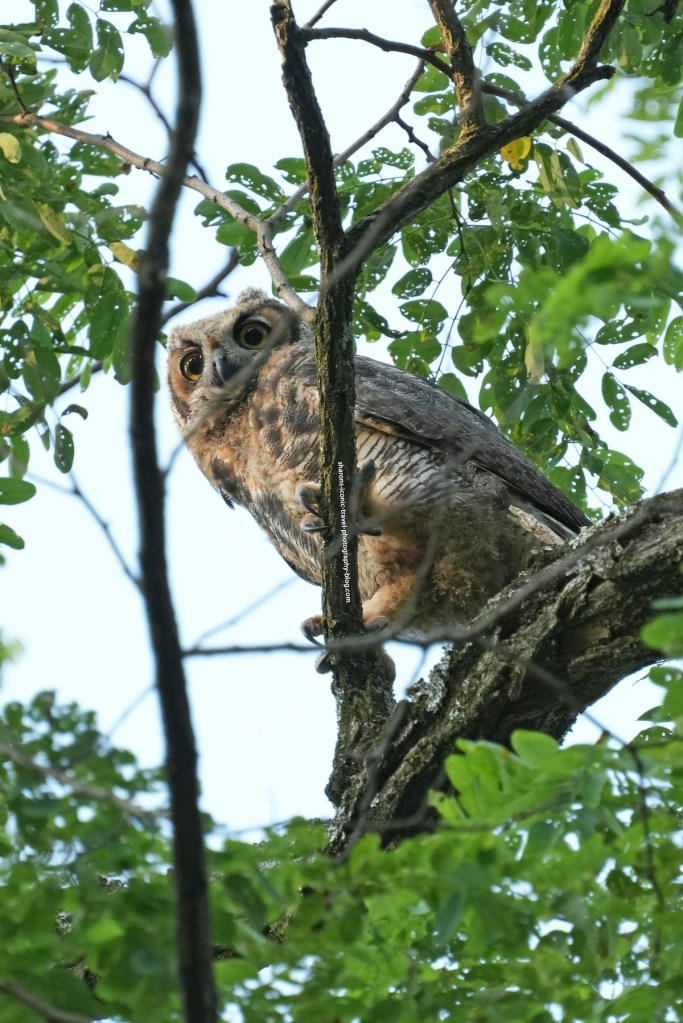
I have heard crows complaining on hikes. Sometimes it is good to check it out as it might be a bird of prey that are fussing about. Surprise! A great horned juvenile was there.

Surprise! A Great Horned Juvenile

I knew it was a great horned, but a friend messaged me it was a juvenile after I took a picture with my phone of the back of my camera. It is still fuzzy on the head and the ears are not quite like an adult’s ears yet.

Surprise! A Great Horned Juvenile – mobbed by crows

It was unexpected for a few reasons, but I was happy to spot it. It was dark in this part of the woods and it was before sunset, so I could not increase the shutter speed, hence the crows are blurred a bit. This is the first time I have seen a juvenile great horned owl after it fledged. Expect the unexpected.

Busy Osprey Family

I went to check on the Osprey family this weekend. Parents were flying in and out of the nest, which is a good sign the baby or babies hatched.

Busy Osprey Family

I was hoping to see a parent bring in a fish, but not this time.

Busy Osprey Family – Baby head pops up

I only got a few pictures that included a baby osprey. This is one of them. I do not know if this is the only one.

Busy Osprey Family – Feeding the young fish

I do not think the parent was feeding herself here. They seemed to be handing off low to a baby in the nest.

Busy Osprey Family – Reinforcing the nest

I did not witness a fish being brought in, but saw one of the parents bring in a stick, Considering there is visible in this picture a big hole in this nest, it is probably a good idea. Were you busy this weekend? I hope you had time to relax.

Downy Woodpecker Family

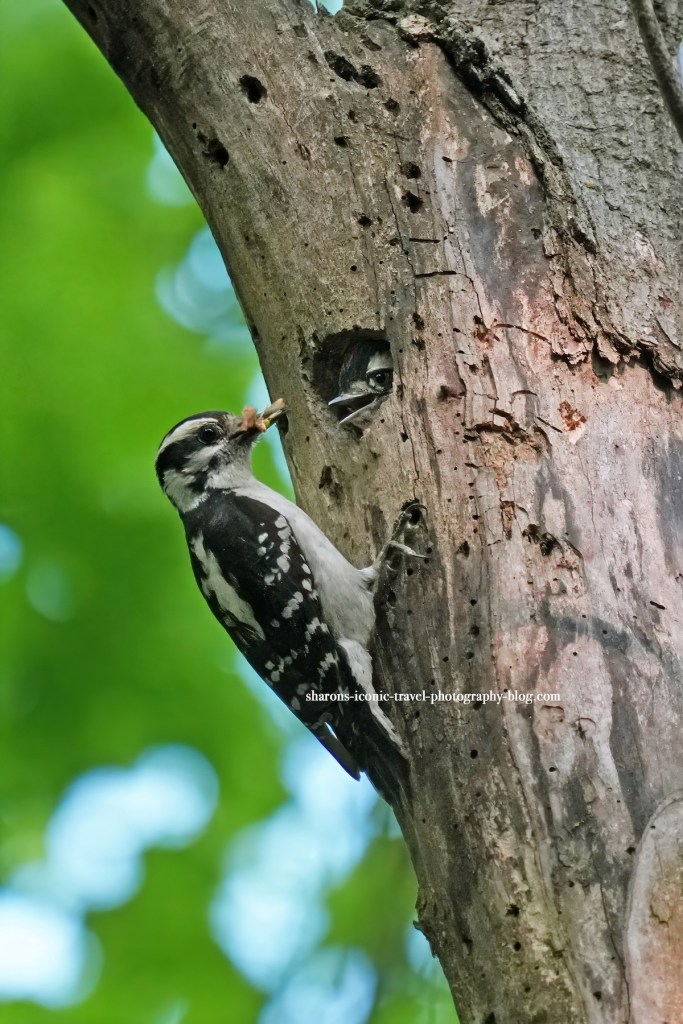
I see and hear various woodpeckers in my area. There is only one kind I have been able to catch the babies peaking out of the tree hole of the nesting tree. It is the Downy woodpecker.

Downy Woodpecker Family – Baby

I usually can at least find the tree the babies are in because I heard them making sounds begging for food. It does not always mean you will be able to catch sight of the hole. Sometimes by the time you hear the babies start making the sounds, the hole may be well camouflaged by leaves.

Downy Woodpecker Family – Dad

The parents are usually fairly close by pecking at trees for bugs. Sometimes they even look for food on the nest tree.

Downy Woodpecker Family – mom

I have no idea what kind of food they caught in either of these pictures. Our woods is full of bugs due to all the rain we have experienced the past year, so they won’t go hungry.

Downy Woodpecker Family – Mom feeding baby

I believe the babies have fledged from this particular tree, but I know of at least three other trees in the same woods where the Downy babies were still in the hole. This pictures were before sunset, taken from a distance, and heavily cropped.

If you go to All About Birds the babies sound kind of like this in the woods when they are in the tree, but soon to fledge. I usually start hearing them right before they fledge.

https://www.allaboutbirds.org/guide/Downy_Woodpecker/sounds

Walk slow and enjoy the sights and sounds of nature. What woodpeckers do you see along your journeys?

Unexpected Owlets

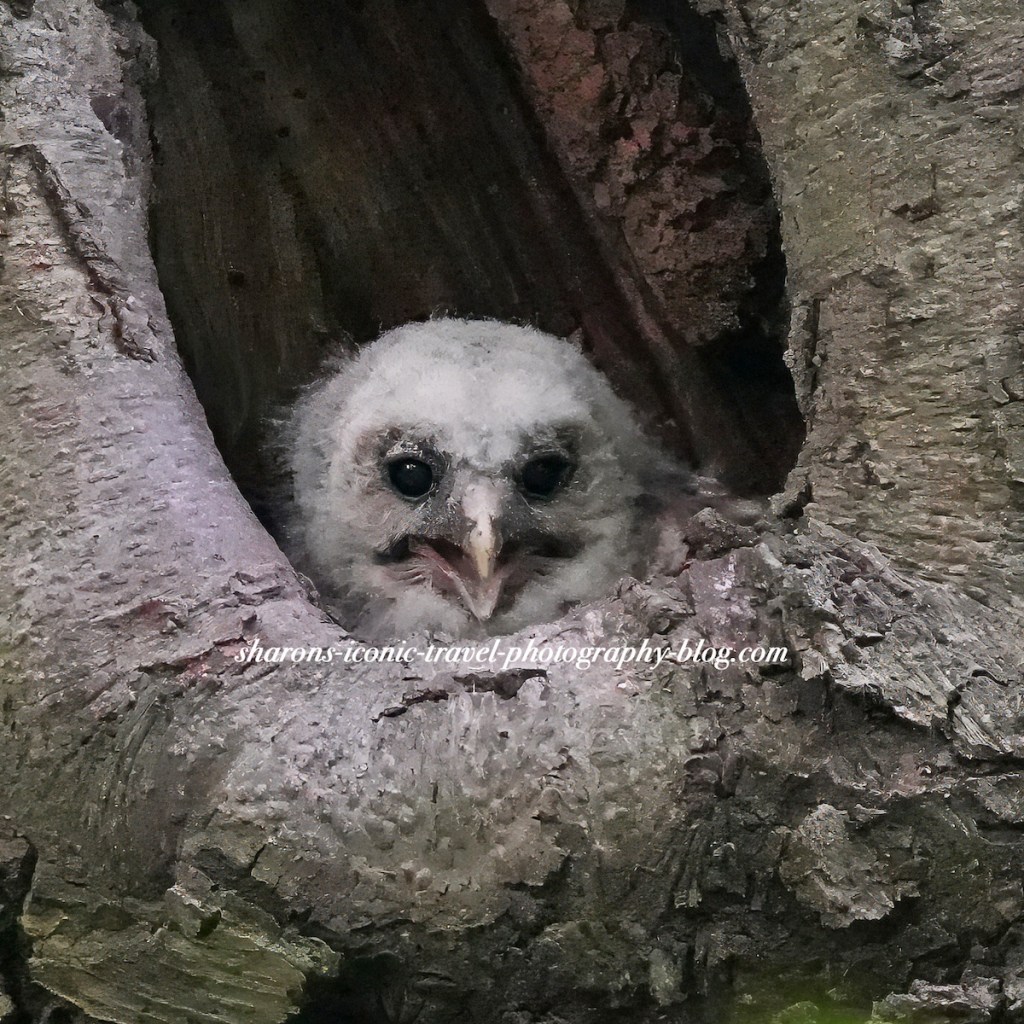
These are an unexpected find. It is an unexpected location for many reasons that I cannot go into detail about.

Unexpected Owlets screaming for parents and most likely food

The weather has been absolutely horrid. Very cloudy most of the time it seems, so it makes for very dark conditions amongst a group of trees. The photo at the bottom I actually got caught in a passing rain storm.

Unexpected Owlets – Two in the hole

I actually heard the sounds days before I saw them at the tree hole. The first few days they did not appear at the tree hole. I walked on all sides of this tree and the sound appeared to come from the other side of the tree no matter what side of the tree I was on. I concluded it had to be inside the tree. I even had a friend listen to a video of the sound to confirm it was an owlet. I never heard them make these sounds inside the tree hole, only after they ventured out of the hole. Then I saw one on a different day appear at the hole. On another day I saw two heads. It almost appeared the one would push the other out.

Unexpected Owlets- It was raining and I had to leave.

All of these photos, but especially the one on the bottom are taken in very low light conditions at a high ISO. Even in a location you would never think an owl would nest, they might. Enjoy the rest of your week!

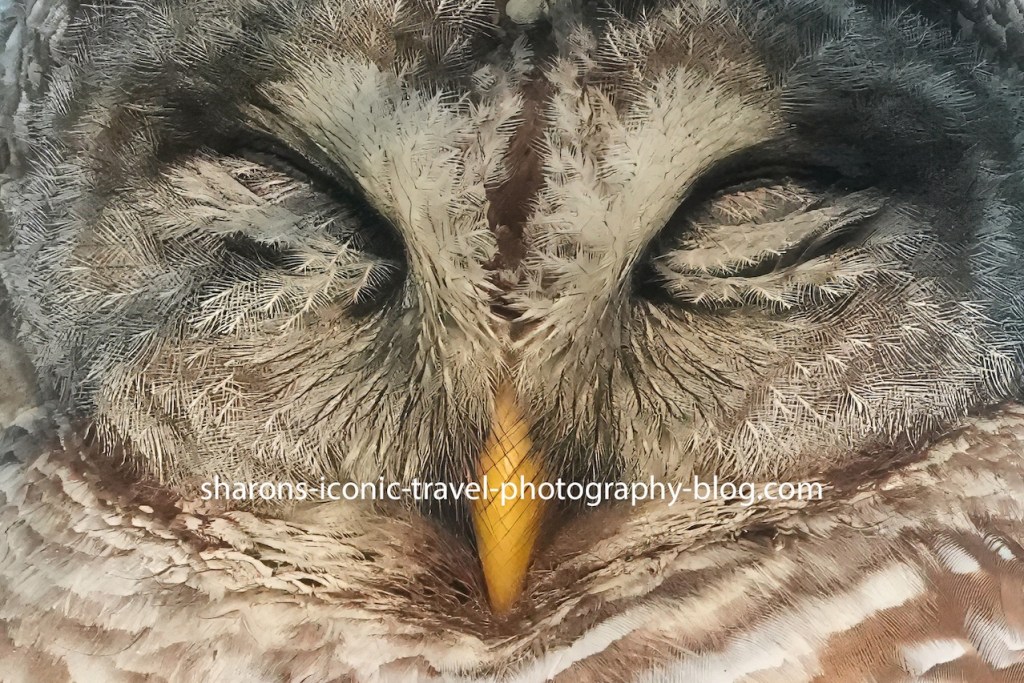
Barred Owl Open and Shut

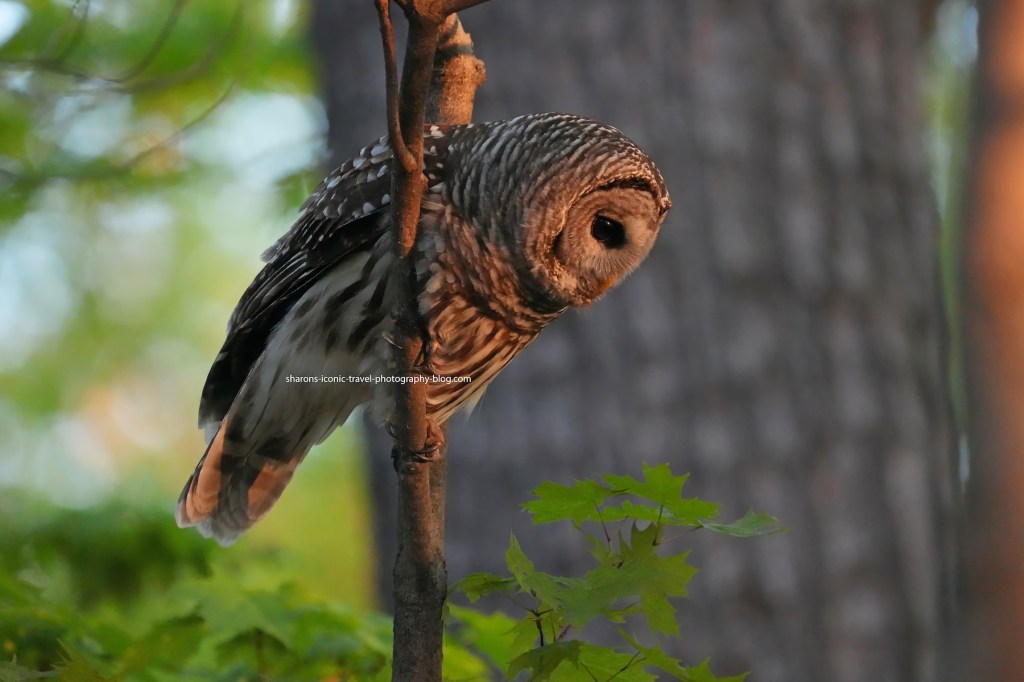
The barred owl has a facial disk. The disk is composed of feathers that grow around the owl’s head. These feathers help make the bared owl a skilled hunter. These feathers they say help direct sound to the bird’s ears. They say it is the same effect as cupping your hands behind your ears. The disk feathers allow them to hear the movement of a mouse in the grass, the flapping of feathers in the night, or the slithering of a snake in a tree or on the ground.

Barred Owl Open and Shut- In a brief window of light from the setting sun
Barred Owl Open and Shut- Cloudy

The hunter becomes the hunted in the Pacific Northwest. The government wants to cull barred owls. The barred owl is being blamed for the decrease in population of the spotted owl. The barred is more indigenous to the east coast, but has been moving over the the Pacific Northwest. Therefore, the US Fish and Wildlife wants people to kill 500,000 of them. It is very controversial as it will eliminate a species in one area to save another. What do you think?

The Barred are Back!

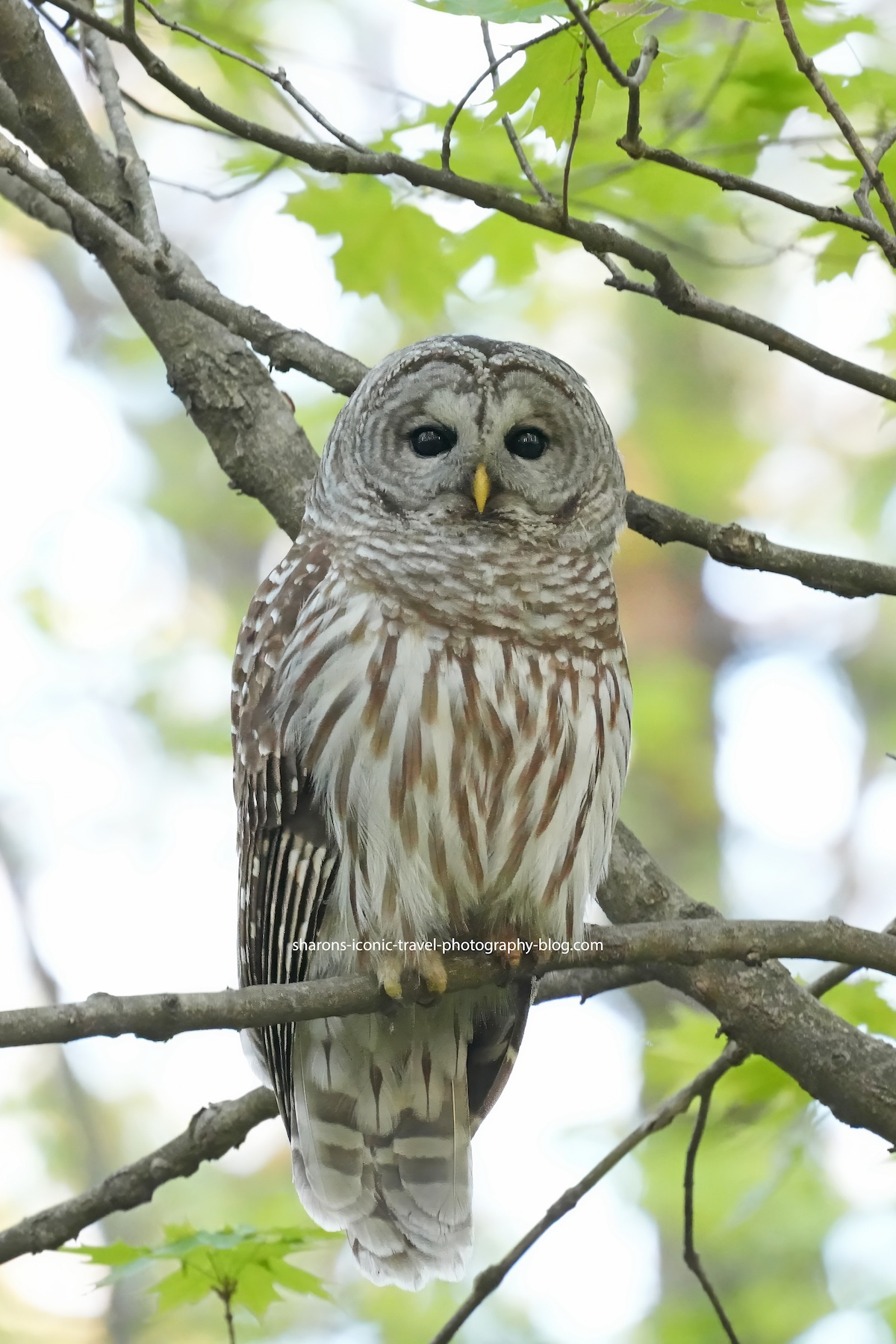
This pair has been in and out of public land at one of the many places I hike. It has mostly been outside of public land past two years. Too many things have happened and continue to happen that keep them on private lands. Tonight the pair crossed the border into public land.

The Barred are Back!

I actually saw one of them on Sunday morning. I was looking at another bird and the owl made one of the many sounds a barred owl makes. Turns out it was in a neighbouring tree. I would like to think it was saying hi!

The Barred are Back!

I have not heard any of the usual telltale signs they are near in the past several months such as the complaining of robins, bluejays, chipmunks, etc. Birds complain when a hawk or owl is nearby. Tonight was the first time I heard the signs, but it was well after I saw it.

The Barred are Back!

The pictures above and below are at sunset. It actually caught something on the ground and carried it to a neighbouring tree to its mate. The mate ate a little then carried it off towards private land. I think they will only be occasional opportunities on the fly to see them again this year.

The Barred are Back! It caught something on the ground right after this picture.

I hope I see them again in the future. This was unexpected, but great nonetheless.

Short-Eared Owl Grand Finale

These pictures were taken recently in what may have been the short-eared owls last day here. A big event happened and that may have driven them back up north to Canada. The season started out with not much luck for me, but ended with a bang.

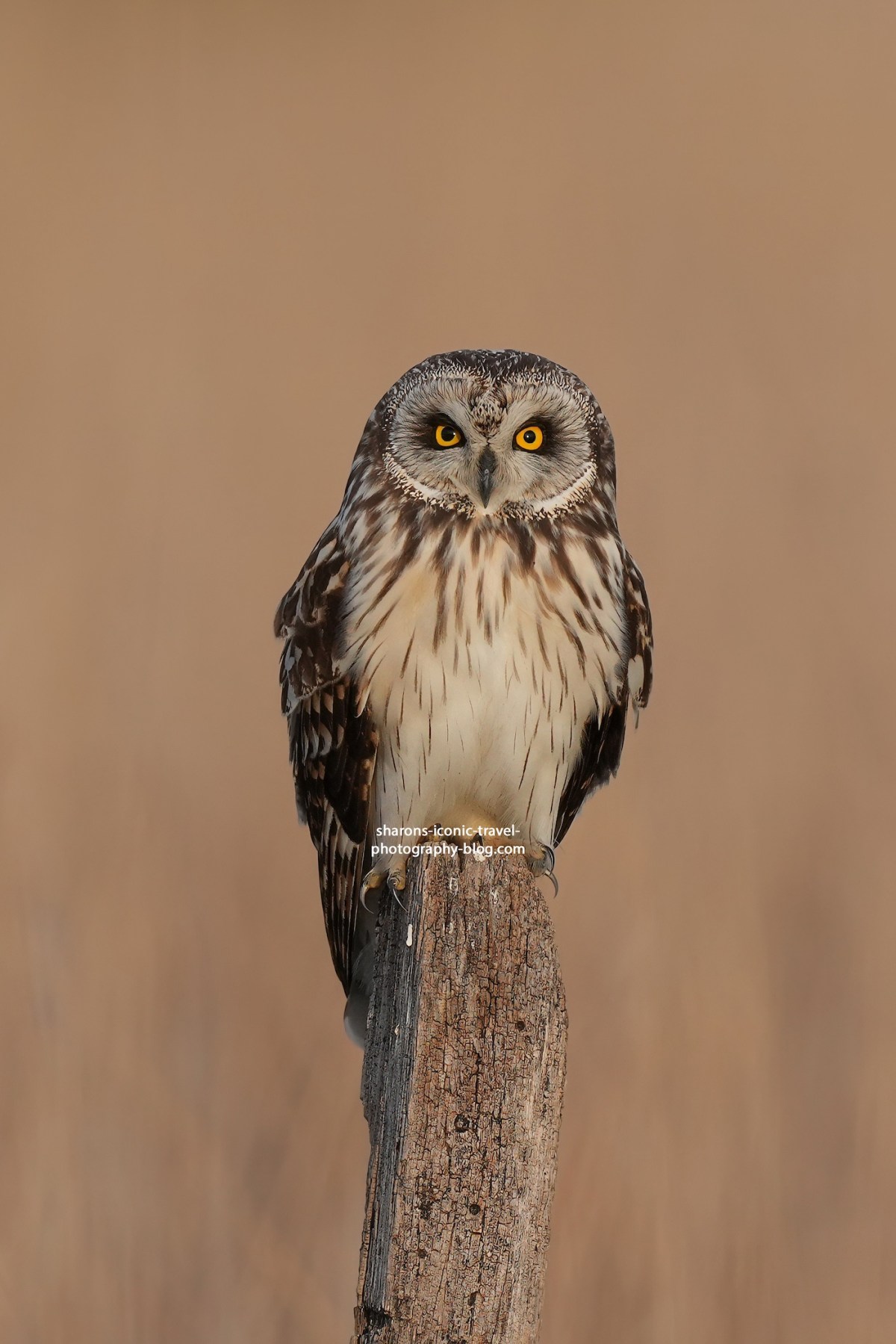
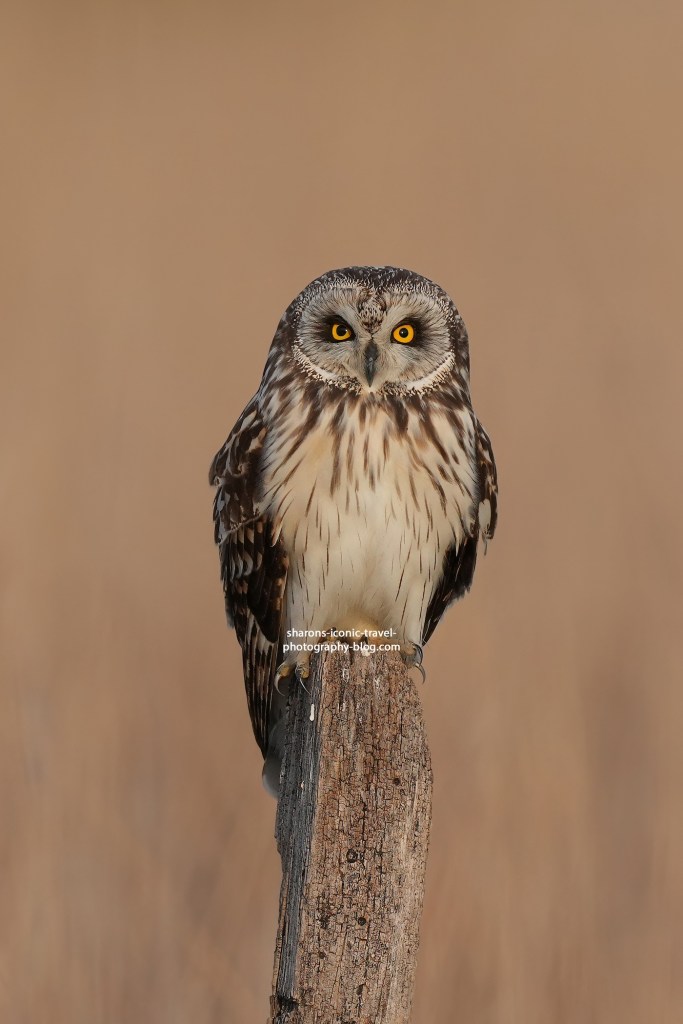
Short-Eared Grand Finale- Sat on a post and lingered for a while

I did not have much luck until sometime around mid-February and had more luck after the time change. On weekends in winter the place is mobbed and the behaviour of some of the photographers I believe keeps them far away from where we are allowed to stand. I say some, not all. Most respect the rules of the location and the animals. The short-eared owls usually leave sometime in March, but they stayed until past mid-April. People were hoping they were going to stay year round. (I went to another location yesterday and I was told it was a great year for short-eared owl viewing there as well).

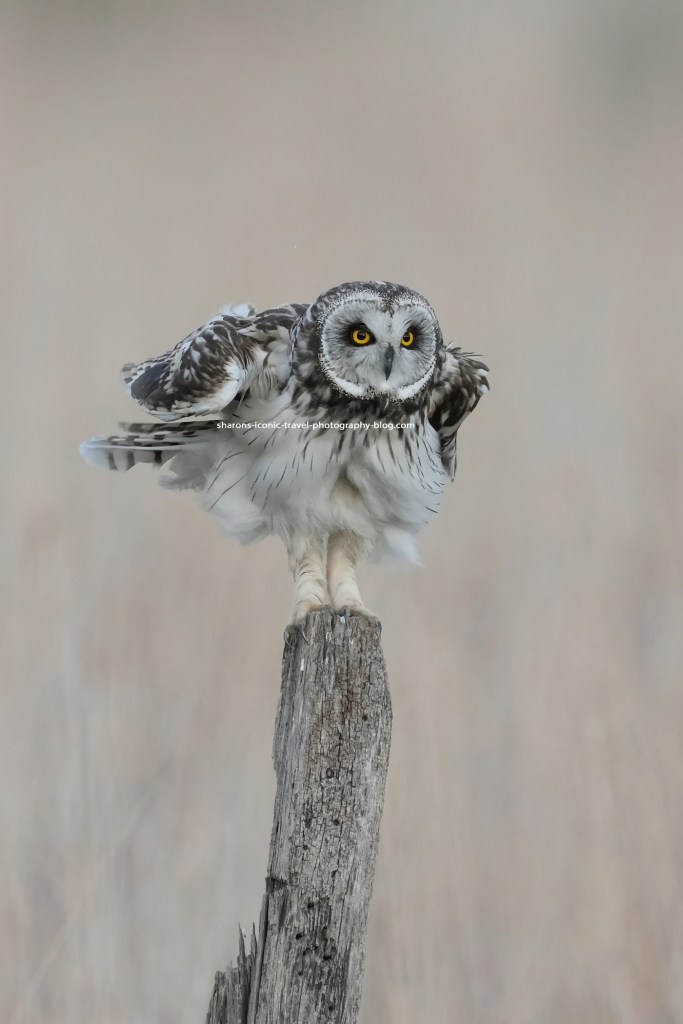
Short-Eared Grand Finale- They seem to stretch themselves out like this before they fly. Light changed while it was lingering here.

One owl would land on trees, various posts and do close fly-bys. I among others believe it was the same owl every time. When I say close fly-bys I mean within 5-10 feet of you. I hope the same owl returns next year. Otherwise, I enjoyed it while it lasted mid-February through mid-April. Seeing an owl close up was not a daily occurrence. Sometimes it would come up to a nearby post or do fly-bys when there was low light. If the conditions were not right you would not see them close or at all.

Short-Eared Grand Finale- Take off from the post

One thing I learned and it seems to be true is the short-eared owls do not like wind over 10 miles and hour. It was rare to see them fly when the wind was above 10 mph. I believe on this night it was not promising, but a cloudy day changed into one with no clouds at the horizon and it made for good light after 6. The winds also died down. Right around the time for these two events we started to see them pop up and fly.

Get out and enjoy the wildlife that reside in your state! Have a great rest of your week!