Red-Tailed Star 2

The short-eared owls do not always come up during good light. So what do you do? We can watch the accommodating Red-Tailed Hawk.

Red-Tailed Star 2 – landing on a post

This hawk stays close to where the photographers and other visitors are allowed to stand. She goes between a roof, chimney, posts, trees etc. She provides us all ample opportunities to see her. She even lands on the railing of the photography platforms while people are on it.

Red-Tailed Star 2 – with a vole

Sometimes she brings the voles she catches to a post to sit on and eat in full view.

Red-Tailed Star 2 – with a vole- close up

I walk this location in warmer months when all the trails are open. You can stop anywhere on the trails around this place and hear a vole moving around in the grass. I think all the owls and hawks do not have to worry about competition or their food supply.

Red-Tailed Star Two- Flying Up to a Post
Red-Tailed Star 2- Actively Hunting From a Post

Wildlife is fun to watch, especially when they are so accommodating. Have a great rest of your week.

Moorhen

I viewed both moorhens and coots in Royal Parks in London. The moorhen reminds me of another bird, the American Coot. Coots and moorhens are related. How are they alike and different?

Moorhen

To me the major similarity are the legs and feet. I describe them as lizard like. They both are omnivores and eat plants and small animals. In addition they both have a reddish tint to their eyes. Both Moorhens and Coots can be seen in England and parts of the U.S. I have yet to see a moorhen in the US. They are also both known to hang around near ducks.

Moorhen

They do differ in some ways. Coots are more black in plumage while Moorhens have black and brownish colouring. Moorhens have a red face shield and a yellow beak, while coots have a white face shield and beak.

Did you know these birds are also known as swamp chickens? It may be because the body looks like that of a chicken. In old English they were known as morhens. In old English mor means marsh. Do you know any other birds that have interesting nicknames?

Short-Eared Owl Hugging the Grass

I was not sure I was going to go to see the owls today, but I am glad I did. Usually there are too many people there on Sundays and too much noise. However, despite the large number of people everyone was quiet, and we got a treat.

Short-Eared Owl Hugging the Grass

At least 4-5 owls were up around 3:30 and the light started coming out from behind the clouds in spurts.

Short-Eared Owl Hugging the Grass

Many times the owls were flying just above the grass. We did see one successfully catch a vole. I have a few shots of it flying low with it, but I was facing the sun and the images were not that sharp. You can’t have everything, however it was a very satisfying viewing day. I hope you had a great weekend.

Female Red-Bellied Woodpecker

This is the female version of the red-bellied woodpecker. The male has red all the way to and including its crown. The female does not have red on the crown. It looks like it has a bald head.

Female Red-Bellied Woodpecker

These pictures were taken last weekend in a wetlands area in a different county that I found the male.

Female Red-Bellied Woodpecker

I am having issues tagging photos tonight. Is anyone else? It deletes as I am typing them. Anytime I contact Word Press anymore they do not respond.

Have a great weekend! If you have good weather catch some rays and get some Vitamin D.

More Tufted Titmouse

Park security greeted me again upon arrival. It was the tufted titmouse. Everywhere I went in the park they followed and posed for me.

More Tufted Titmouse

At one point I went on a path with brush on both sides. It was landing on the bushes within a foot of me. One also landed on my zoom lens and on my hand holding the camera up.

More Tufted Titmouse

We are in a dry situation. Normally I do not wish for rain on weekends, but I am pulling for it to happen this weekend. We have had multiple wildfires in surrounding counties. I like having the skies we had the past few weeks. It can make for some great photos, but there is evidently too much of a good thing.

More Tufted Titmouse

Enjoy your Sunday and Happy Veteran’s Day to all who served!

Red-Bellied Woodpecker

I believe this is the red-bellied woodpecker. My area of New York is within its year round range. By comparing it to photos on All About Birds I would think this is a male as males have a red crown.

Red-Bellied Woodpecker

I could not get a good view of this bird. I only saw it for a short amount of time. When I moved to a side of the tree that was better for lighting it was not visible.

Re Bellied Woodpecker

This may be the first time I have seen this kind of woodpecker. This location is said to have red-headed woodpeckers also. I stop here frequently, but have yet to sight one. Enjoy your holiday weekend. Happy Veteran’s Day!

Black-Capped Chickadee

I believe this is a black capped chickadee. I saw this in a park on the Hudson River in New York. New York is within its year round range.

Black-Capped Chickadee

According to All About Birds the black-capped chickadee has a habit of investigating people. This bird flew right at me a few times then veered off. So that was certainly true.

Have a Happy Friday!

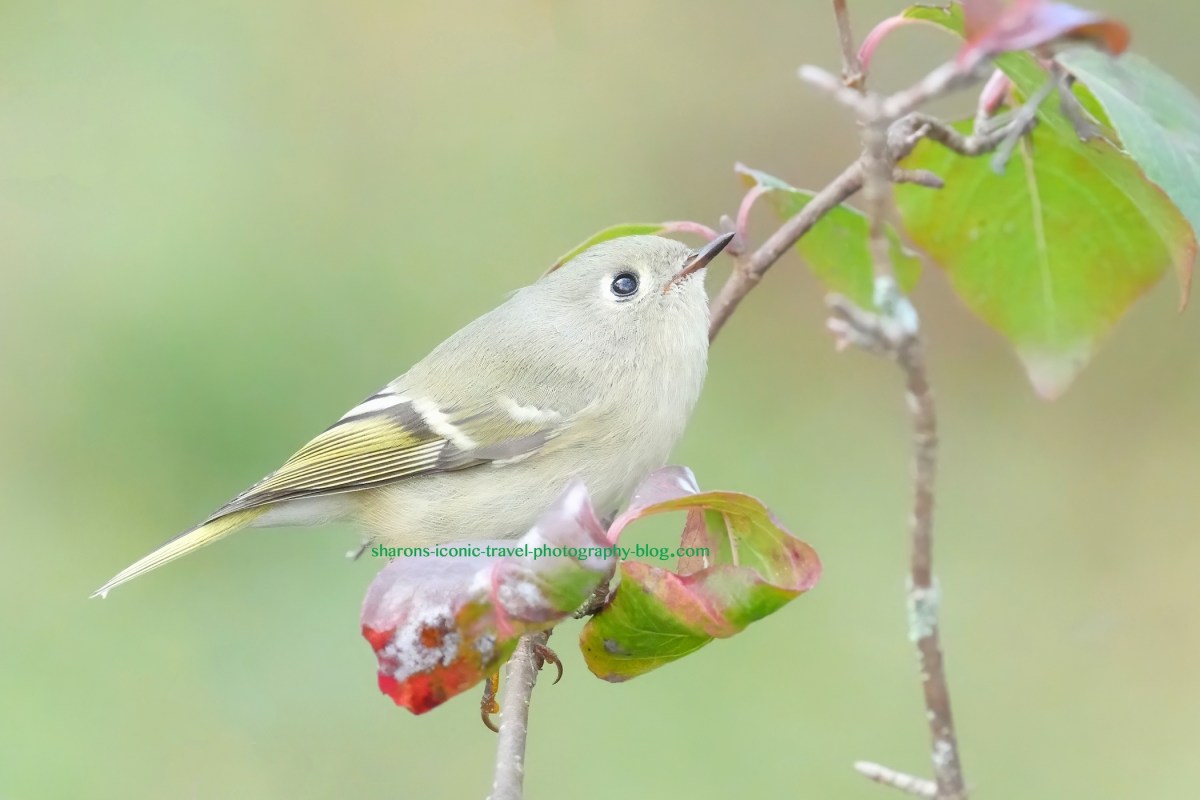
Ruby-Crowned Kinglet November

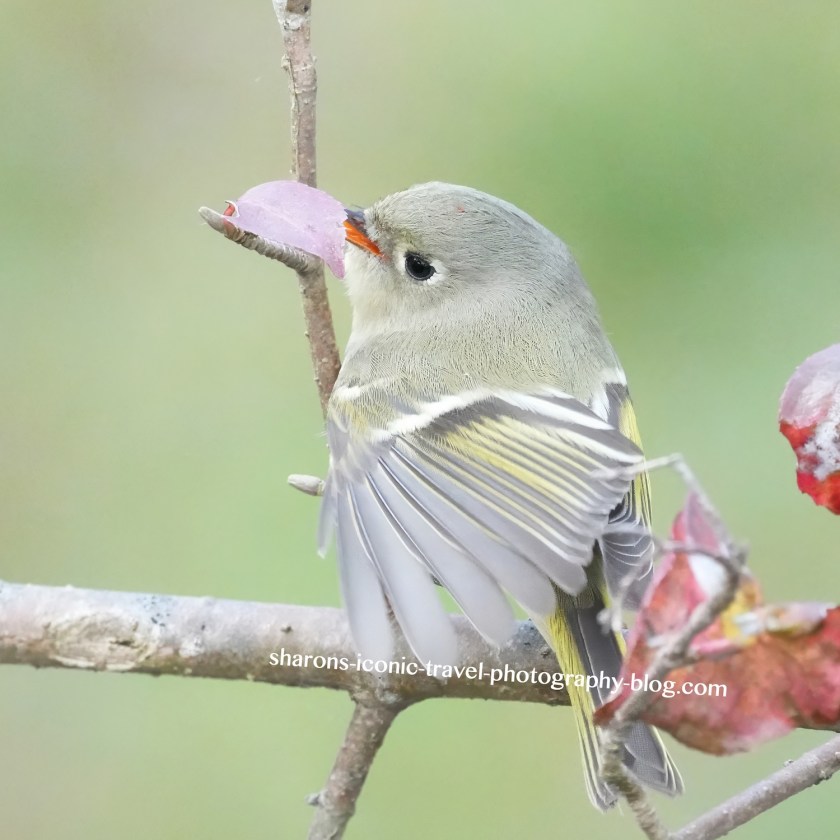
They say you usually do not see the crown unless this bird is agitated. It was a very windy day and the crown feathers are only partially visible and not standing up, so I do not think it was agitated.

Ruby-Crowned Kinglet November

This bird does not linger on branches. It moves from branch to branch and tree to tree like it is hyperactive.

Ruby-Crowned Kinglet November

Sometimes windy days can be good days for taking a photograph. Have a great Wednesday!

White-Breasted Nuthatch

I believe this is a white-breasted nuthatch. I saw this in a park next to the Hudson River in the Hudson Valley of New York. Most of the US including New York State is part of their year-round range.

White-Breasted Nuthatch

According to All About Birds white-breasted nuthatches get their name from their habit of jamming large nuts and acorns into tree bark, then hitting them with their sharp bill to “hatch” out the seed from the inside.

Have a great weekend!

Ruby-Crowned Kinglet

This bird was tough to snap a picture of. It seemed to be ADHD. It moved quickly from tree to tree and branch to branch. I believe it is a Ruby-Crowned Kinglet. If I am wrong let me know.

Ruby-Crowned Kinglet

Ruby Crowned Kinglets are said to be hyperactive, which definitely fits this bird. This type of kinglet is said to have an uneven eye ring, which this one does. The Ruby-Crowned Kinglet is said to have brighter greenish edges on the wing and tail feathers, which you can see here.

Ruby-Crowned Kinglet

This bird was in a wooded area right next to the Hudson River in an area with different kinds of birds.

Ruby Crowned Kinglet

According to Merlin, the ruby crown is only on the males and is usually hidden. If it becomes agitated you might see it.

This bird was interesting to observe. The Hudson Valley in Southern NY is actually in its non-breeding range. What birds have you caught during this migration?