Female Northern Harrier

Northern Harriers are one type of hawk native to North America. It is one hawk I mainly see in winter.

Female Northern Harrier

Food

Northern harriers hunt small mammals and birds. They can get rabbits and ducks. During winter, when I see them, they mainly go after voles and mice. This one is carrying grass, but I am not sure if there is a vole or mouse amongst it.

Female Northern Harrier

Hunting behaviour

I have found these birds in grasslands where they fly quite low going often between the grasses. Harriers hunt during the daytime. They can also hover then dive while hunting. Harriers rely on hearing and sight to capture their prey. I have seen them chase after and steal a vole from a short-eared owl in late afternoon.

Nesting Behaviour

Northern harriers will roost in groups on the ground, sometimes with Short-Eared Owls, according to All About Birds. Because they roost on the ground, animals such as coyotes and feral dogs will go after adult northern harriers.

Female Northern Harrier

These are fascinating birds to watch. I love seeing them hover and chase after the short-eared owls. Have a great Wednesday!

Muskrats on Ice

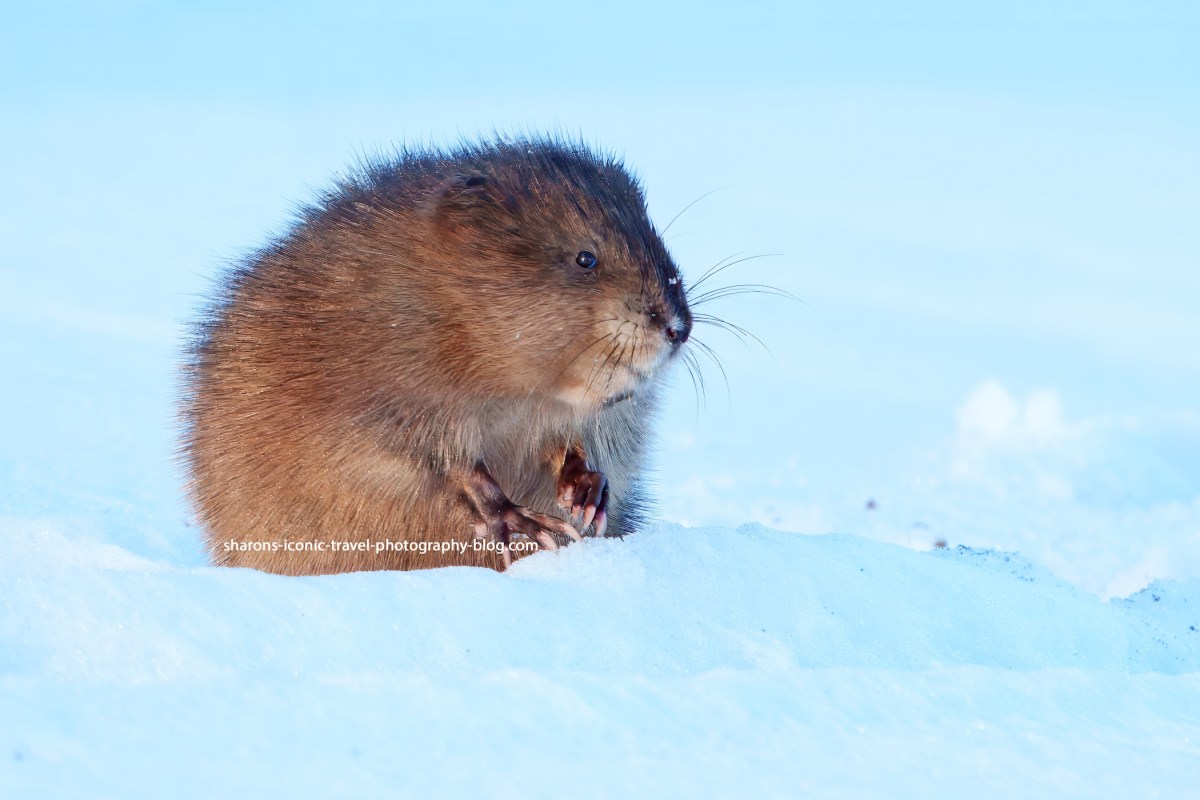
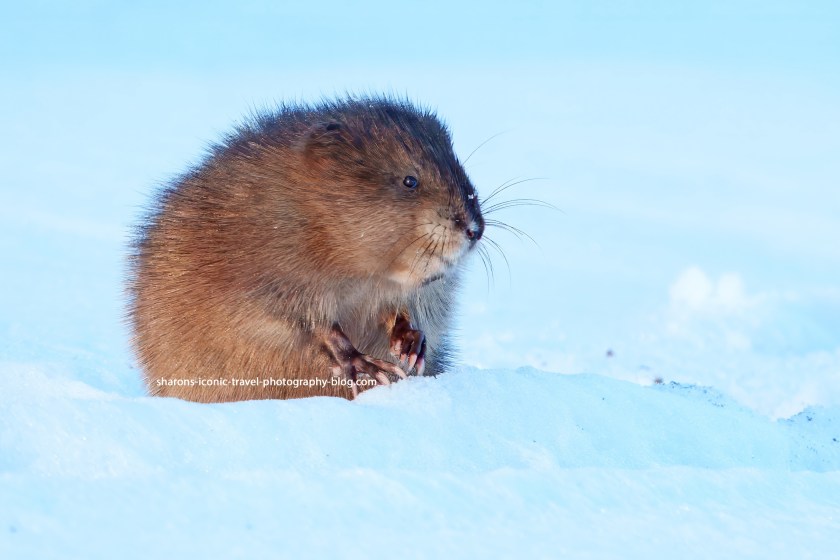
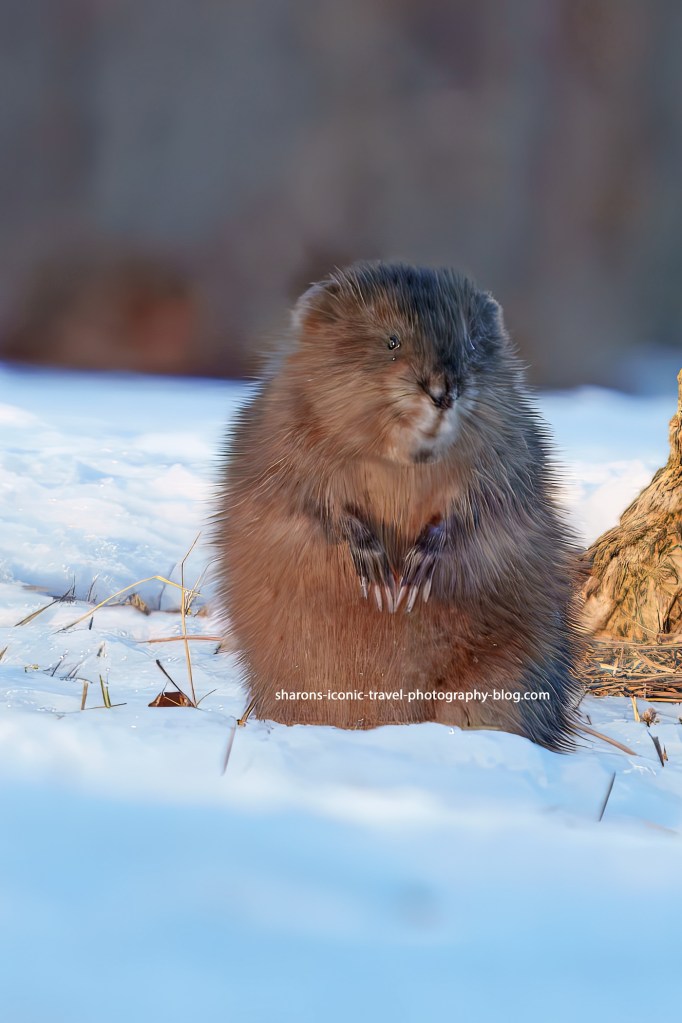
How did muskrats get their name? Evidently they get the word musk because of the strong smelling odor they give off to mark territory and keep away intruders. I have never smelled anything when around them, but I do not get too close. The rat in their name is because their tail is said to resemble a rats. At one point they were known as musk beavers because of the flat tail.

Muskrats on Ice

This small pond has at least 5 muskrats. This is the first time I have seen the muskrats on ice in decent lighting conditions. When I arrived in the late afternoon I saw two.

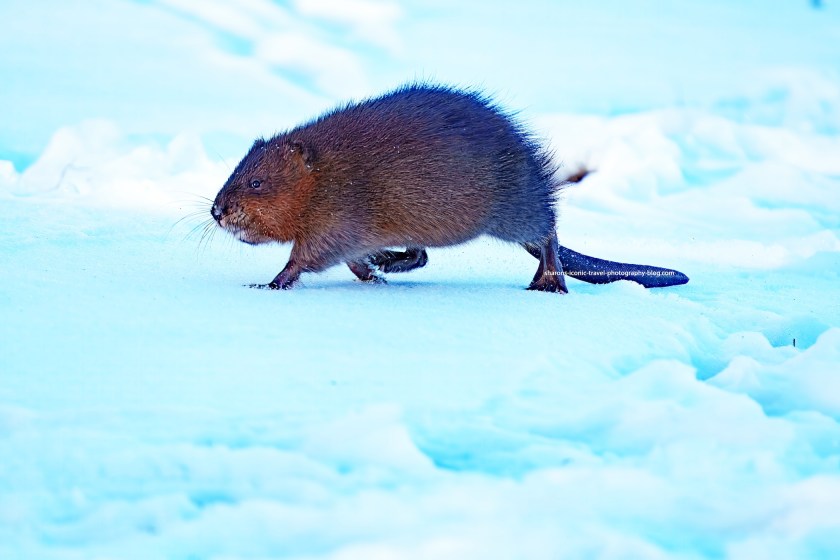
They keep the area on the pond where this one is clear of ice. Most of the pond is iced over, except the other spots they come up from the water. From this spot they scurry up the hill and get grass and other plants from areas they have cleared of snow.

Muskrats on Ice

Muskrats build lodges like beavers, or they build a tunnel from under a pond to a chamber above water on the bank of the pond. Because they may tunnel on a pond bank , it could cause bank destruction or collapse.

Have a great rest of your weekend!

Muskrats

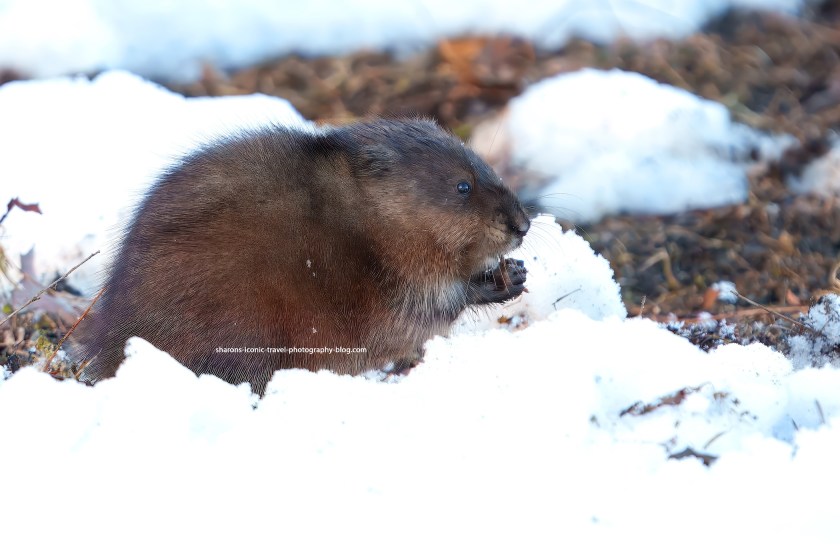
I know these creatures are in a little pond. They make sure there are holes in the ice to come up out of. I have only briefly seen them out of the holes near the pond. On the day of the photos I saw them scampering up the hill from the pond.

Muskrats – Digging in the grasses under the snow

They appeared to be moving snow and digging in the grass underneath. It appeared they were eating a lot of it there, but some they were carrying back down to the pond.

Muskrats- walking uphill from the pond
Muskrats – pausing to look at me
Muskrats- just out of the water

If you celebrate it- Wishing you a prosperous new year! 祝你新年快乐. 번영하는 새해를 기원합니다 chúc bạn một năm mới an khang thịnh vượng

Have a great rest of your week!

Red-Shouldered Hawk

I saw this while driving. I took the picture from a distance on the side of a road. This bird was in the woods and seemed to stay within it. I believe it is a red-shouldered hawk.

Red-Shouldered Hawk -This one I added colour to.
Red-Shouldered Hawk- This one I did not add colour.

I had one person look at the back of the camera and he thought that is what it was. Also, that is the first choice the Merlin App gives for it. The second choice was a broad-winged hawk. The lighting was not great and it was taken from quite a distance. The photo is also heavily cropped and lightened. The colours may not be totally accurate. It appears to be an immature. Enjoy the rest of your weekend!

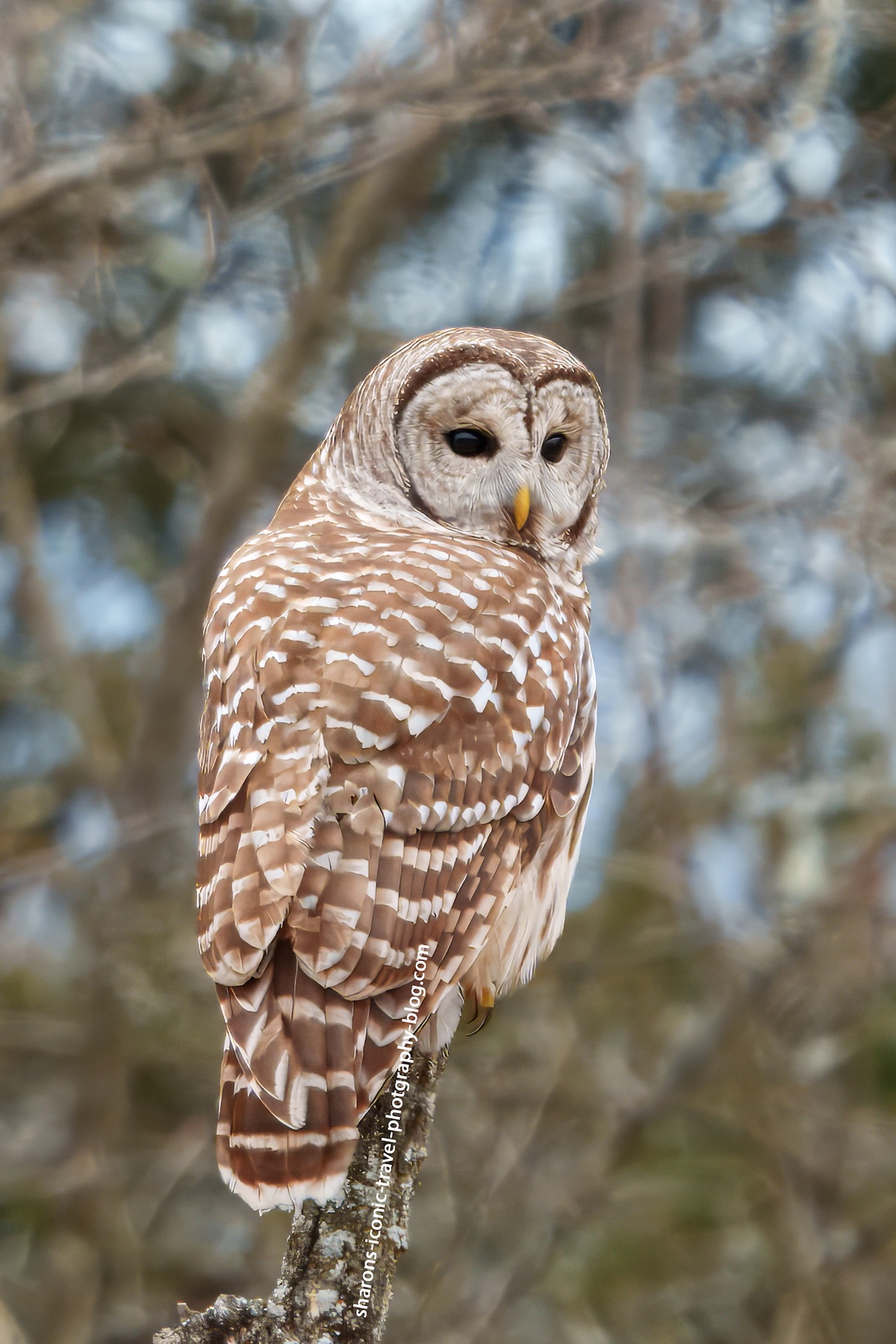
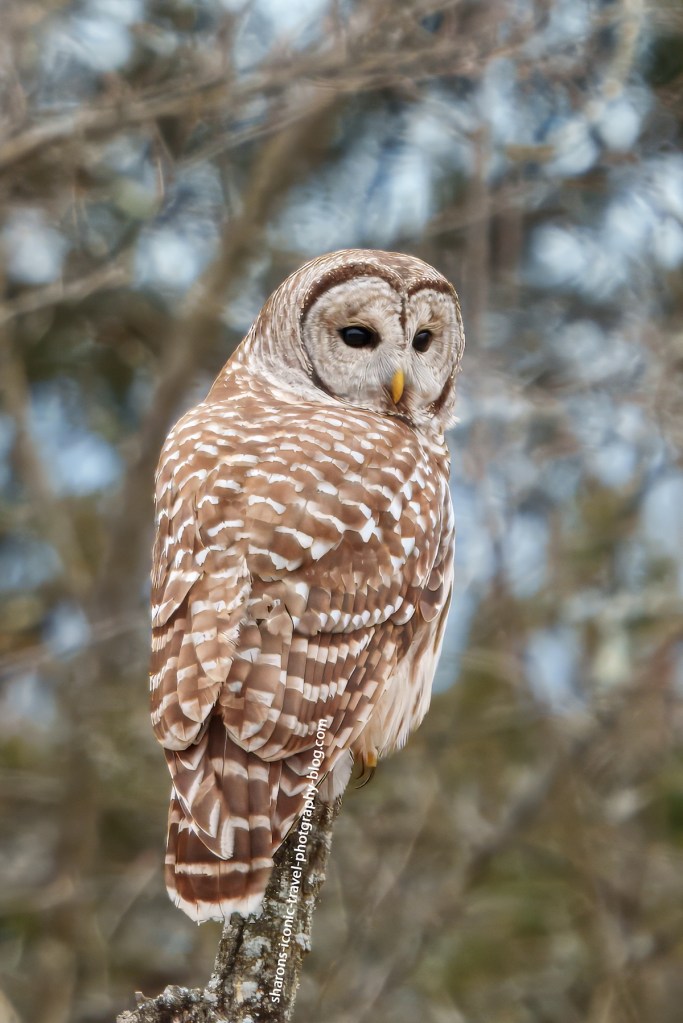
Barred Owl January 2025

I usually only see owls deep in the woods and not in open areas. This is a barred owl. I was lucky enough to take a lot of pictures of it in a short time period from the road.

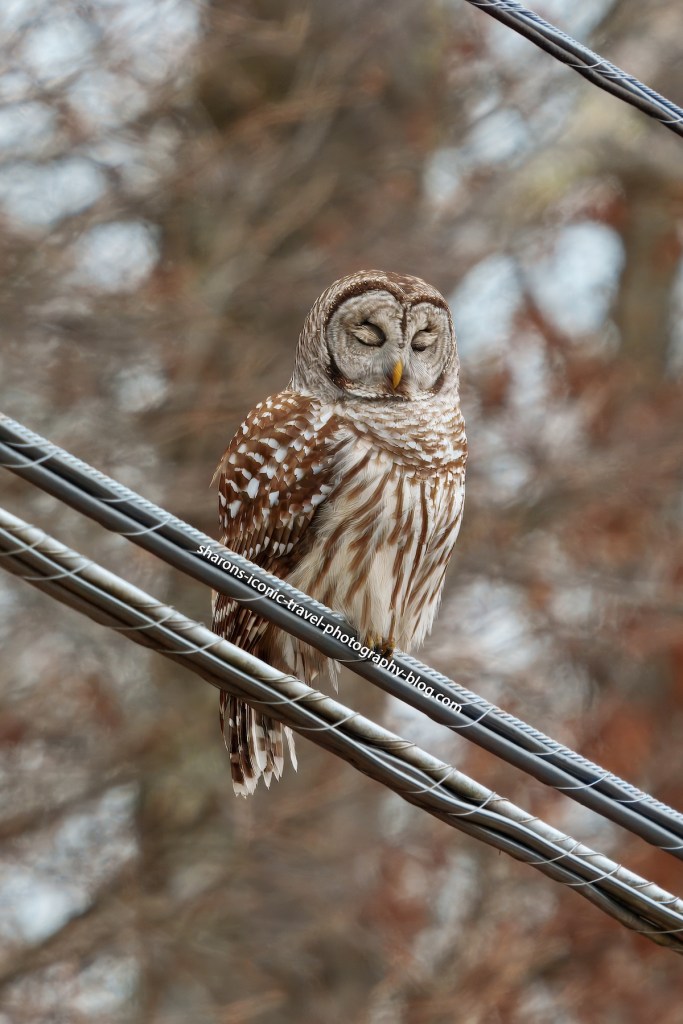
Barred Owl January 2025– Short rest on the power lines

It was on private property. One of the local home owners said they see the owl on their property daily. It rested its eyes on the power lines for a short time. Sometimes they do that to fool the animals in the woods.

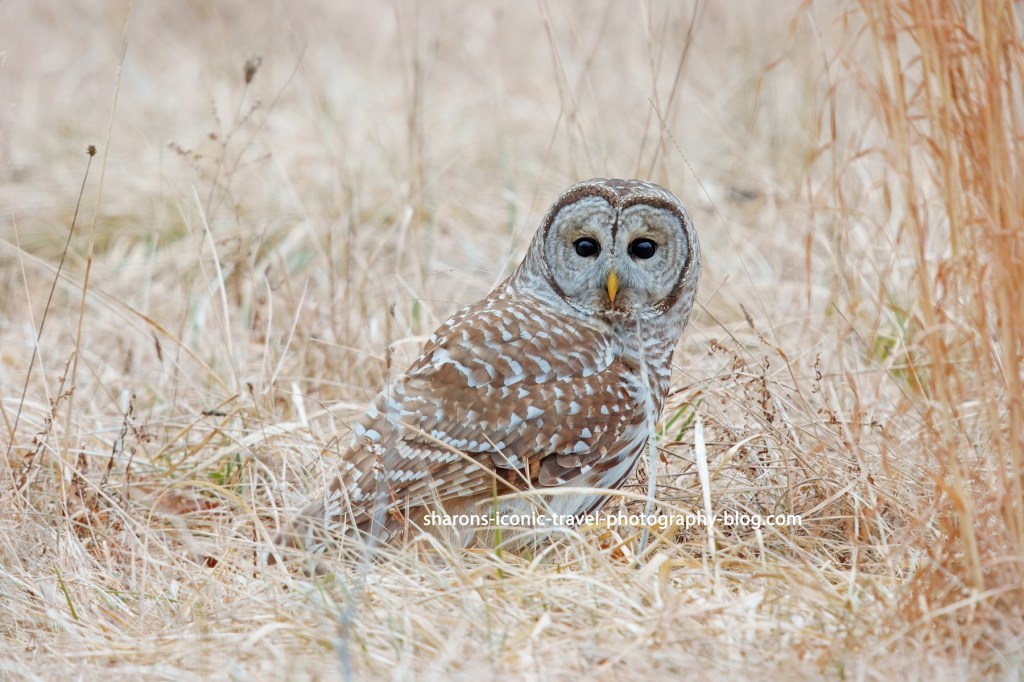
Barred Owl January 2025- unsuccessful hunt in the grass

It moved to different perches and was actively hunting while I was there. Two or three different times I saw it move from a perch to swoop down in the grass. It was unsuccessful each time. It was great seeing an owl out in the open, despite it being a dark and dreary day.

Barred Owl January 2025 – hunting from a perch

Off to another perch. I was very happy to come across this owl. A local had mentioned she had seen one here a few times when she passed by, so I checked it out. It is farther away than the two families I followed this summer, so I am sure they are not related.

Stay safe! Stay warm! Have a great rest of your week!

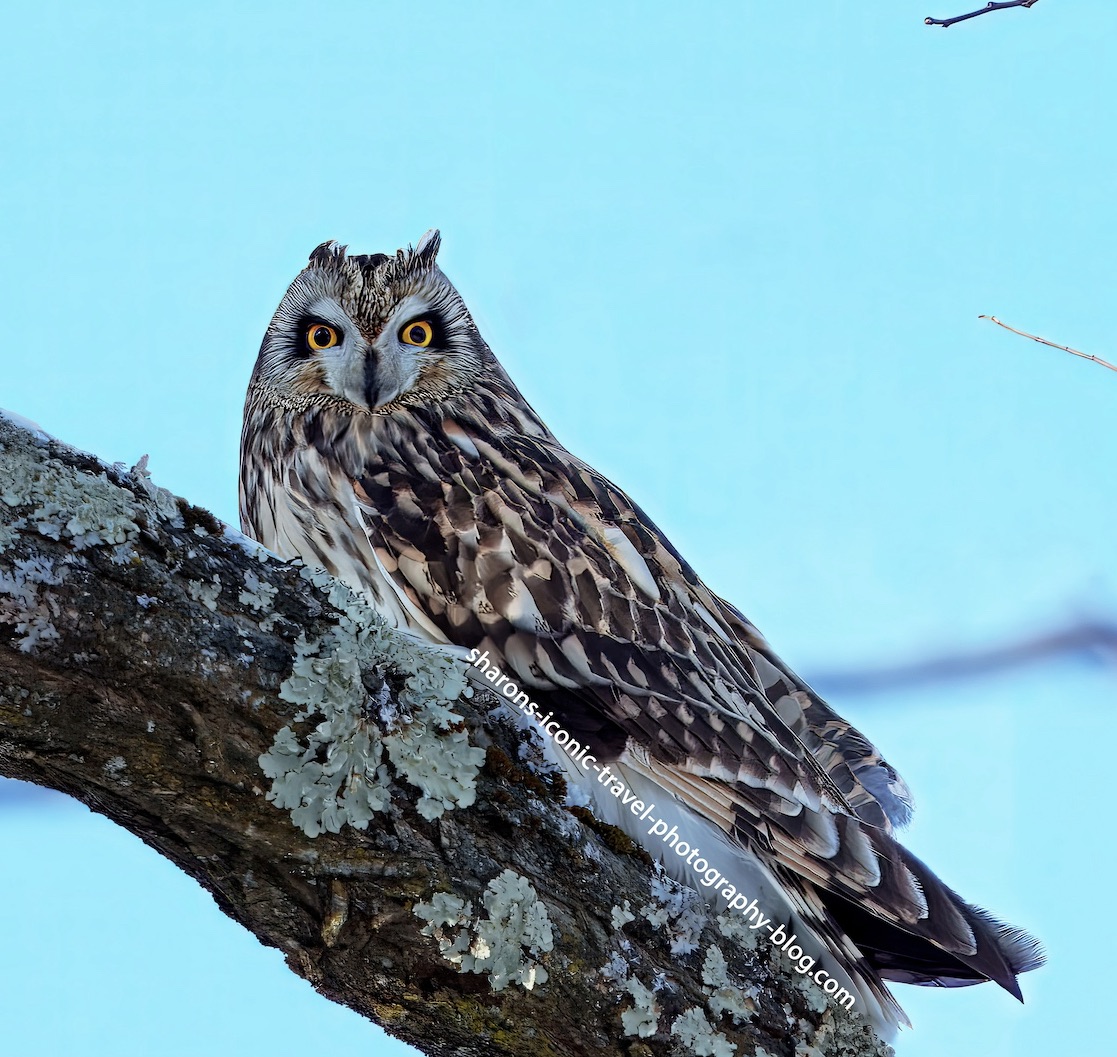
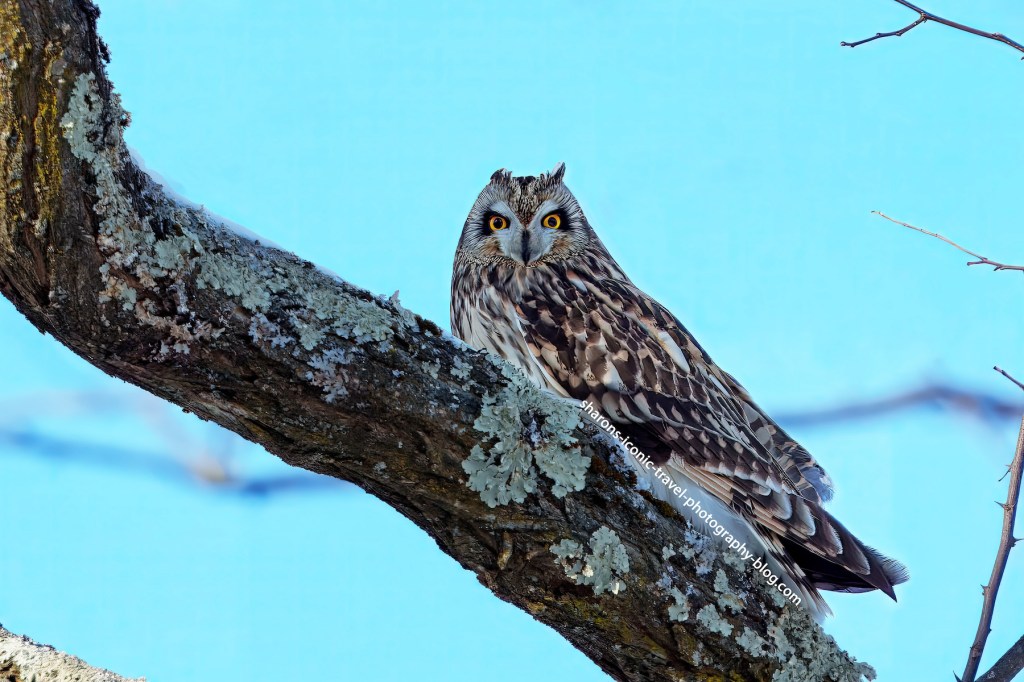
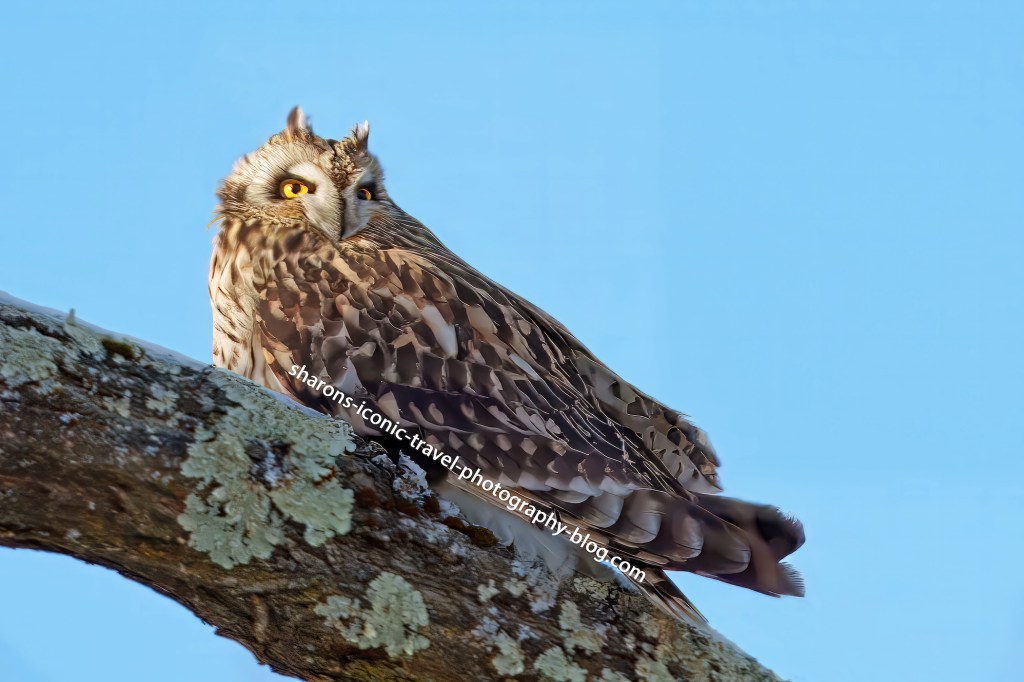
Short-Eared Owl in a Tree Jan. 2025

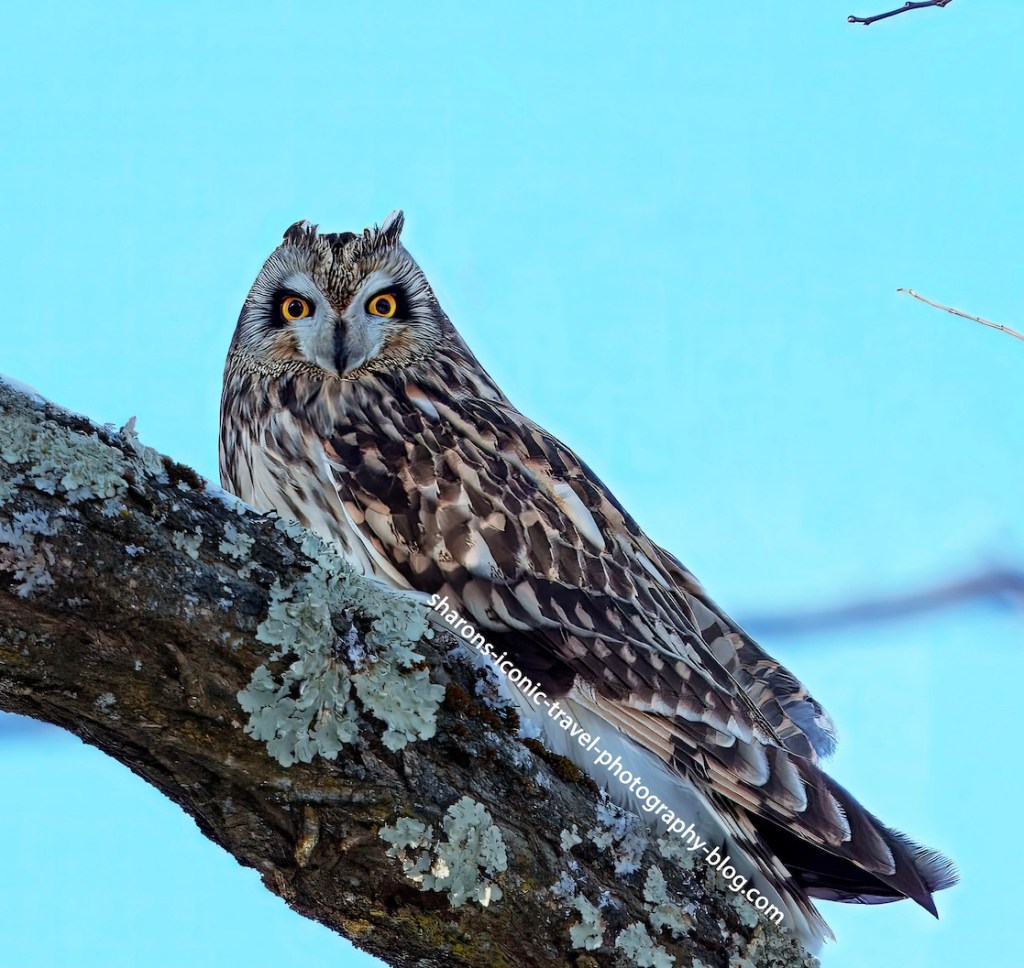
I have been catching every illness it seems coming into work since December. Therefore, I have not made any trips and have stayed close to home. If I can see an owl near a road I drive on, all the better. Luckily I have seen, two since December from a road. This short-eared owl was close to a road.

Short-Eared Owl in a Tree January 2025- sun was behind the clouds

It was near a bird feeder that was active and a lot of small birds were raising cain in the woods around the owl. I was wondering if it would go after birds visiting the bird feeder. Someone has told me they don’t, however by logic it would be a possibility as barred, great horned, and snowies will get a bird. According the the NYSDEC website:

Short-Eared Owl in a Tree January 2025- Looking towards the bird feeder ‘s direction.

Short-eared owls are the most diurnal (active during the day) of all the northeastern owls. They are most often observed in the late afternoon and at dawn or dusk. These birds eat primarily small mammals, but they occasionally take smallbirds, and the young sometimes eat insects. 

If it chooses to land on a tree in good sight of a bird feeder, it is watching the bird feeder, it is probably contemplating a bird for dinner.

You usually do not see the ear tufts on the short-eared owl. I thought it could have been because of the wind, however, according to National Park Service website:

“The ear tufts of the short-eared owl (Asio flammeus, family Strigidae) are inconspicuous until the owl becomes defensive or curious, at which point the whole facial expression changes: feathers around the nose may flatten and eyes narrow slightly.”

Short-Eared Owl in a Tree January 2025- Sun behind the clouds

It seemed to be both curious about the bird feeder and defensive as many little birds nearby were expressing their displeasure at its presence. Have a great week!

Red-Tailed Diva

This hawk wants all the attention. She flies close to people. Sometimes she flies by us with her catch. Sometimes she lands near us to catch vole. Other times she brings her catch to a post or tree close to where people are allowed to stand so we can admire her hunting ability. It is a red-tailed diva.

Red-Tailed Diva Flying from a bird house on the hunt.
Red -Tailed Diva – This time it caught a bird. Goldfinch?

She flew from the top of a bird house to an area with short grasses and had a bird. I did not see her catch it. Not sure if she caught it in mid-air or what. Yes, different kinds of hawks will stalk bird feeders.

Red-Tailed Diva- She flew to a post with her catch faced the photographers and let us get a good view of her catch. This one is facing us.
Red Tailed Diva- Then she posed and gave us a side view.

Do any animals act like divas around you? This one seems to be a diva for camera clicks. Enjoy your weekend.

Icelandic Gull

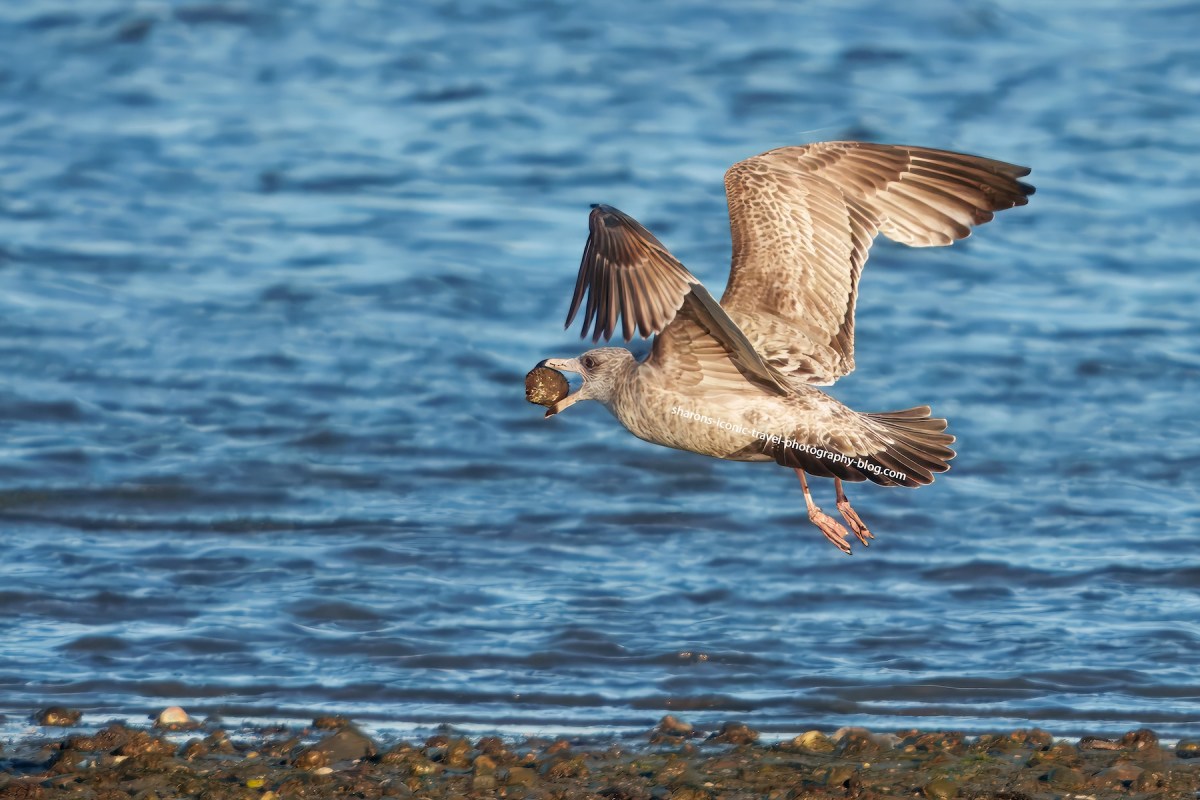
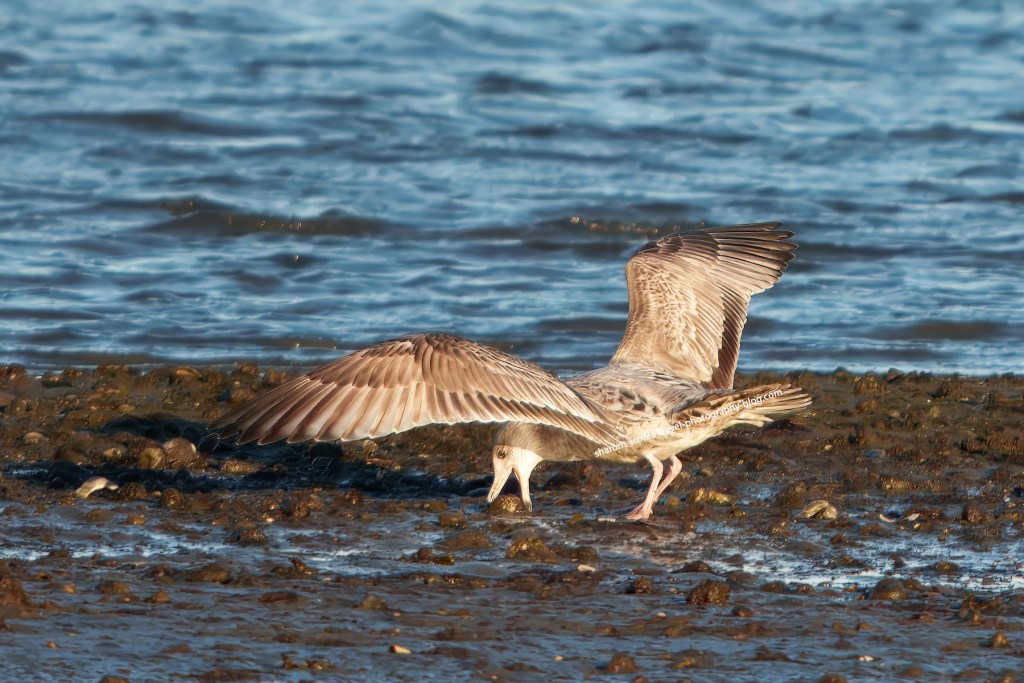
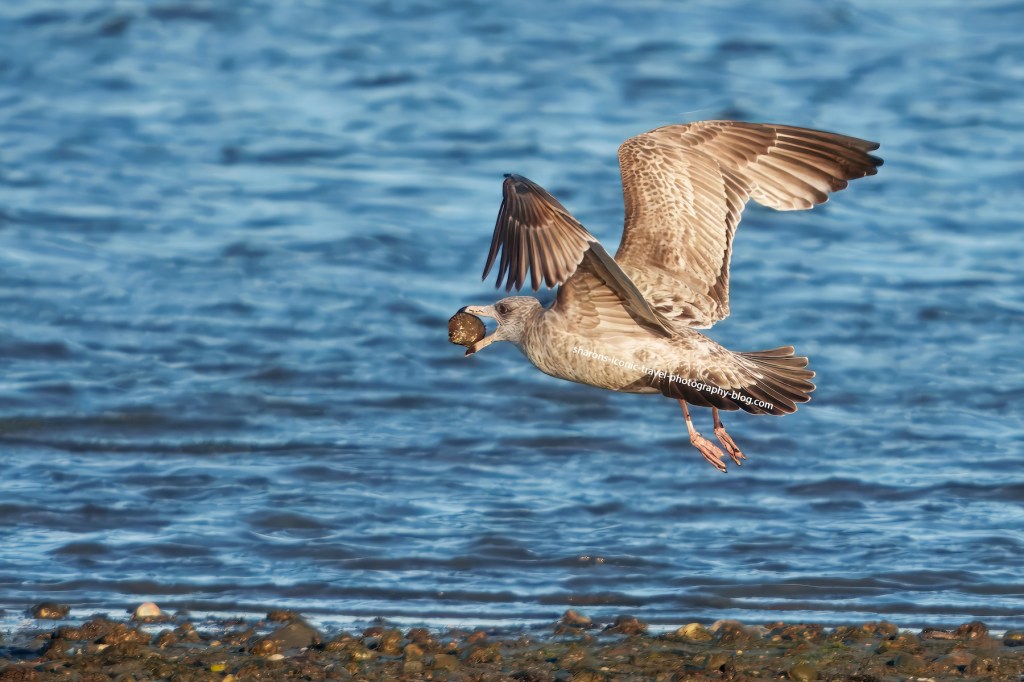
One very windy Sunday morning I went down to see if I could spot loons wintering near one New England Beach, which they usually do. No luck spotting any, however, I saw this gull which appeared to be picking up a rock, but I am sure it is a shell.

Icelandic Gull

Merlin gives three choices for this gull. The first one is an Icelandic Gull. If I am wrong, let me know. The other two to me do not look that close to this one. It is hard to tell with the early morning light, but it appears to be an immature. The east coast of the northern US is within the range for the non breeding gulls. Only some of the gulls migrate south for the winter. Many stay in the arctic all year.

Icelandic Gull- flying off towards the jetty

The gull appeared to be heading in the direction of the jetty. Possibly it would try to crack the shell open there? Have a great weekend.

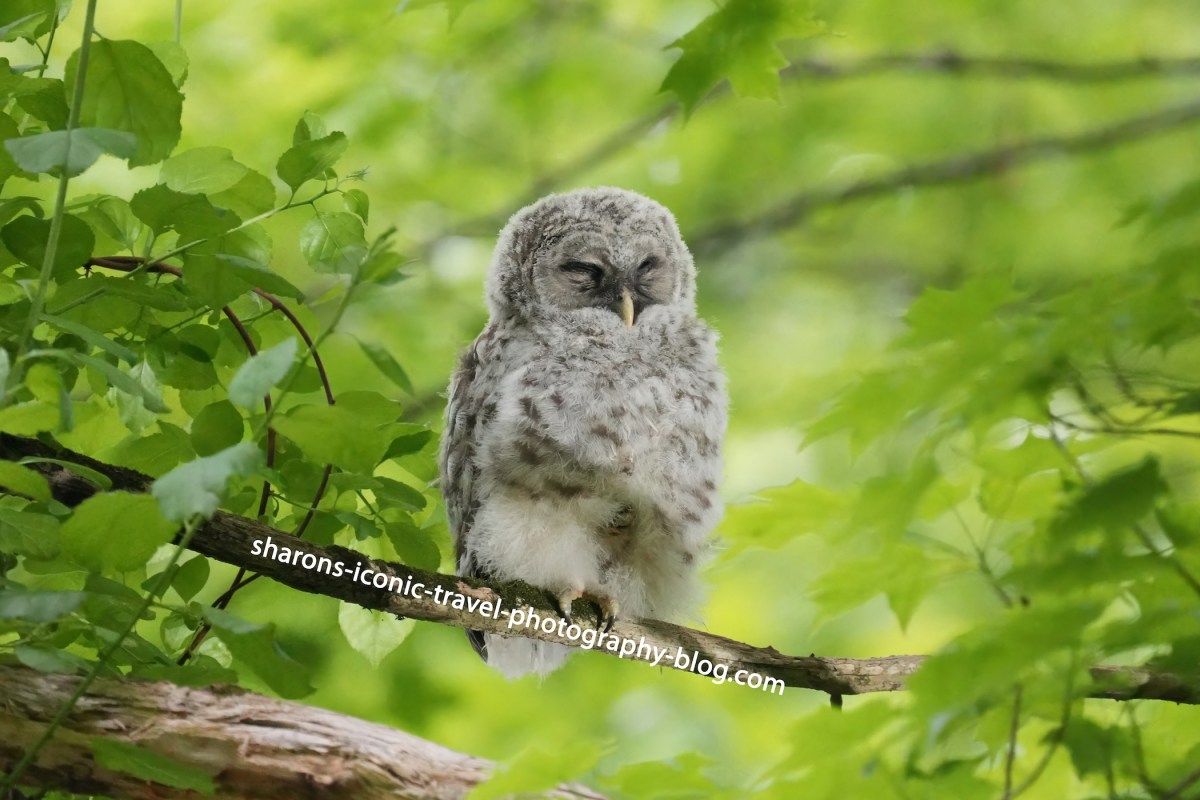
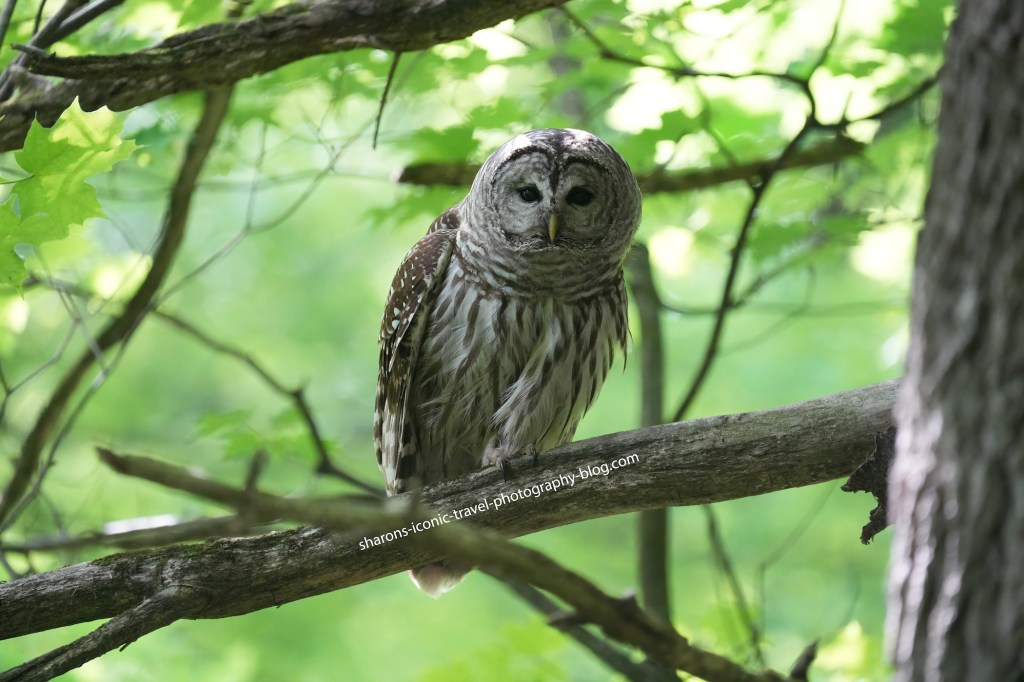
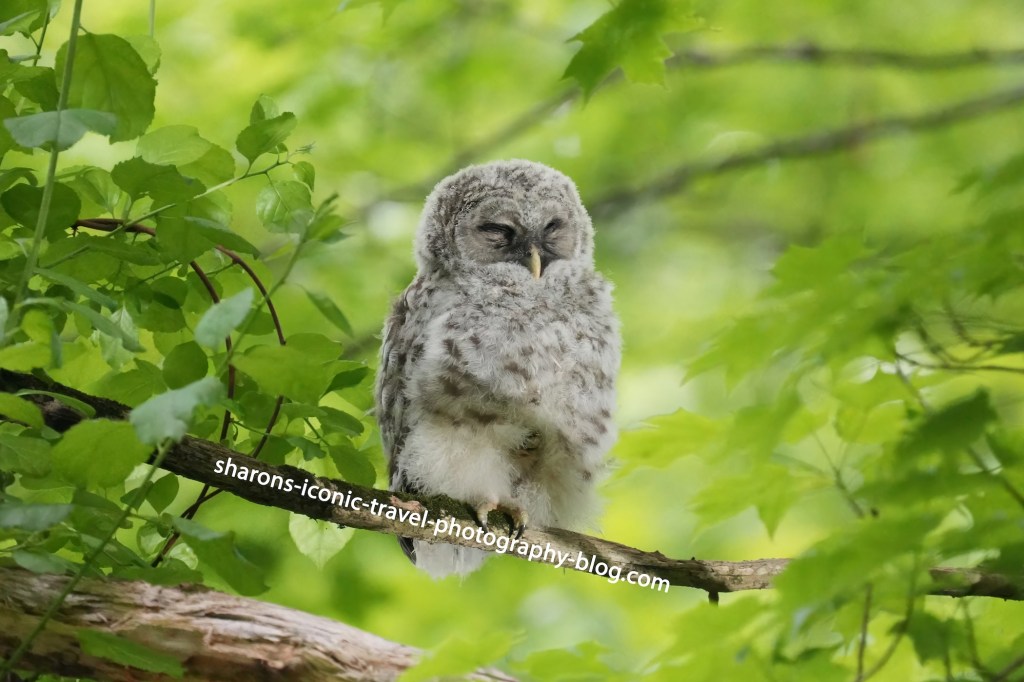
Barred Owl Family Number 2

I found two barred owl families this spring/ summer. The first family had three owlets and they were making the hissing like noise they make when hungry while inside the tree. This second family, in another location, had one owlet.

Barred Owl Family Number 2- most likely the mom

The first family had a great horned owl family come into its territory. Either the parents moved the owlets farther away onto private land, or the great horned owls got them, which they will do. I saw the second family’s baby for several days, then saw it no longer. To be fair, it was very close to private land when I saw it. Owls will have the baby move around, although it seems no further than about a 1/4 of a mile from the nest, when it is still relying on parents for food. I am hoping the story on this one is they moved to private land.

Barred Owl Family Number 2– they had one owlet

The parents are savvy and hide in the shade. The owlet seems to relish the light from the sun. Enjoy your week!

Red-Tailed Star 2

The short-eared owls do not always come up during good light. So what do you do? We can watch the accommodating Red-Tailed Hawk.

Red-Tailed Star 2 – landing on a post

This hawk stays close to where the photographers and other visitors are allowed to stand. She goes between a roof, chimney, posts, trees etc. She provides us all ample opportunities to see her. She even lands on the railing of the photography platforms while people are on it.

Red-Tailed Star 2 – with a vole

Sometimes she brings the voles she catches to a post to sit on and eat in full view.

Red-Tailed Star 2 – with a vole- close up

I walk this location in warmer months when all the trails are open. You can stop anywhere on the trails around this place and hear a vole moving around in the grass. I think all the owls and hawks do not have to worry about competition or their food supply.

Red-Tailed Star Two- Flying Up to a Post
Red-Tailed Star 2- Actively Hunting From a Post

Wildlife is fun to watch, especially when they are so accommodating. Have a great rest of your week.