
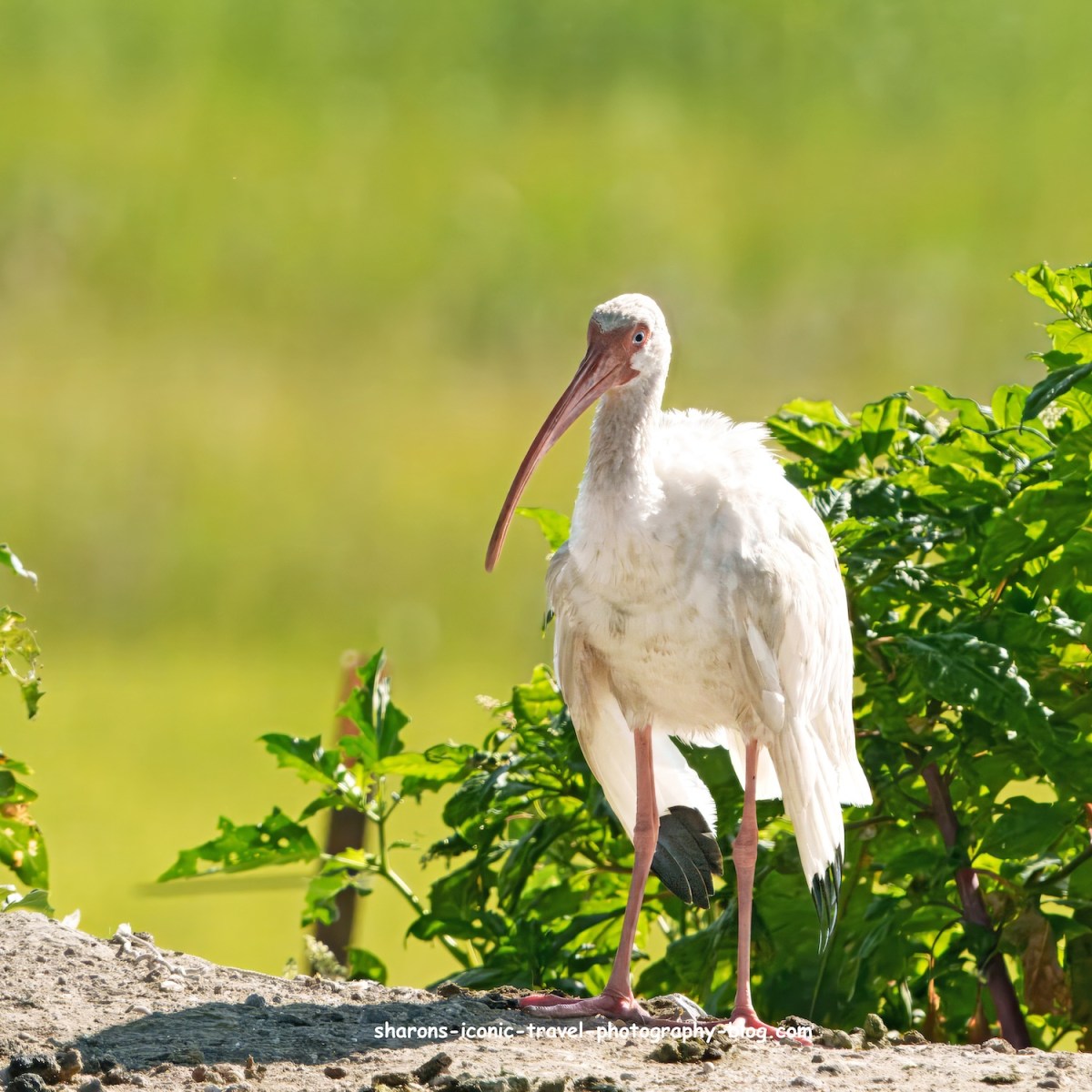
I think maps need to be updated. This is another bird that is out of its breeding range. Their breeding area according to All About Birds is mostly in the deep south of the US, except a small swath of Delaware and Maryland. It’s year round range is in the states that border the Gulf of Mexico near the gulf.
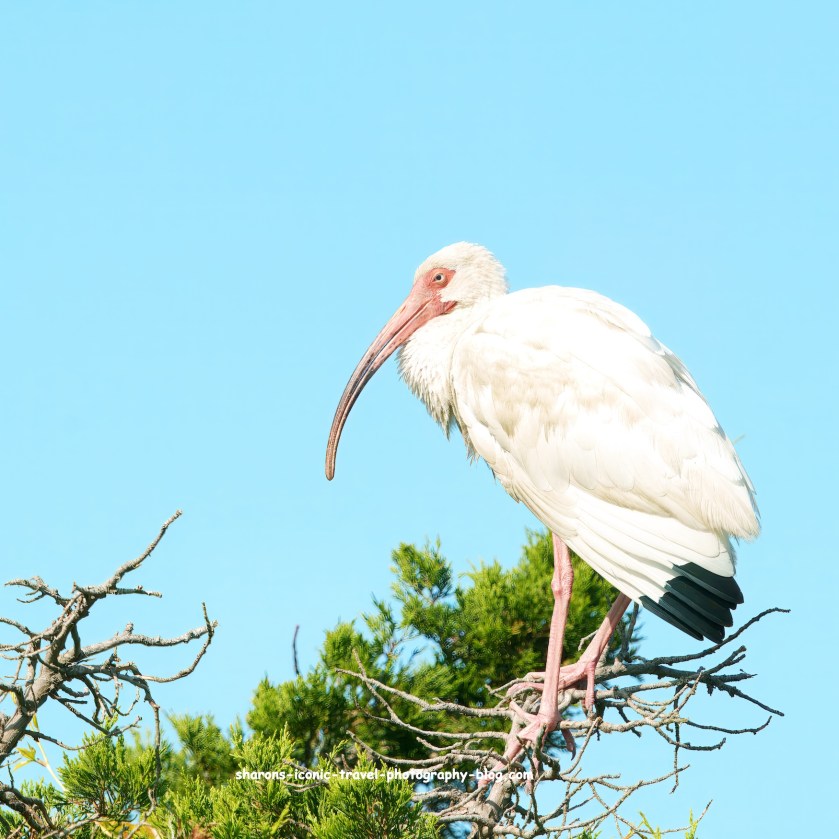
I spotted this with a group of others who were nesting in trees with other birds such as herons etc. in New Jersey.
White Ibis are large wading birds who live in wetlands or near the coast. The information says they tend to hang out in large groups. I did see them in large groups from afar with what appeared to be Glossy Ibis in one location. I also saw one or two hunting for food a short flight from their nesting area with herons and ducks.
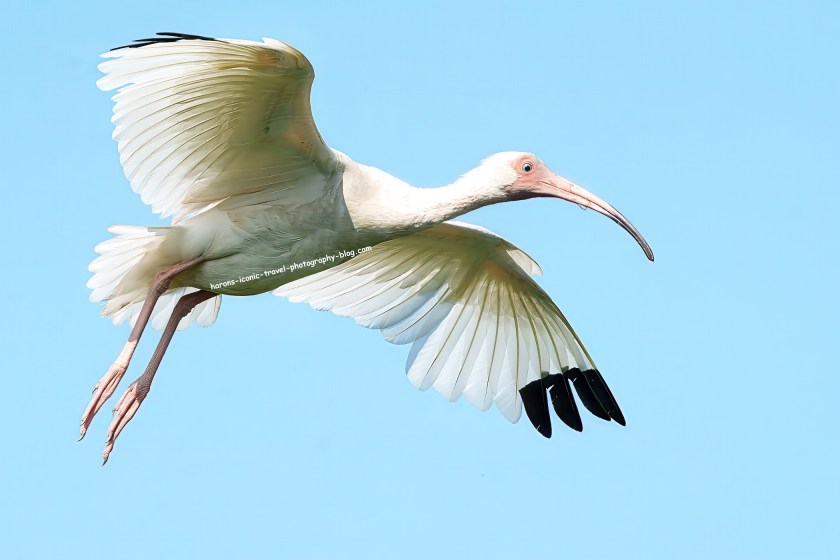
White Ibis fly awkwardly in for a landing in trees.
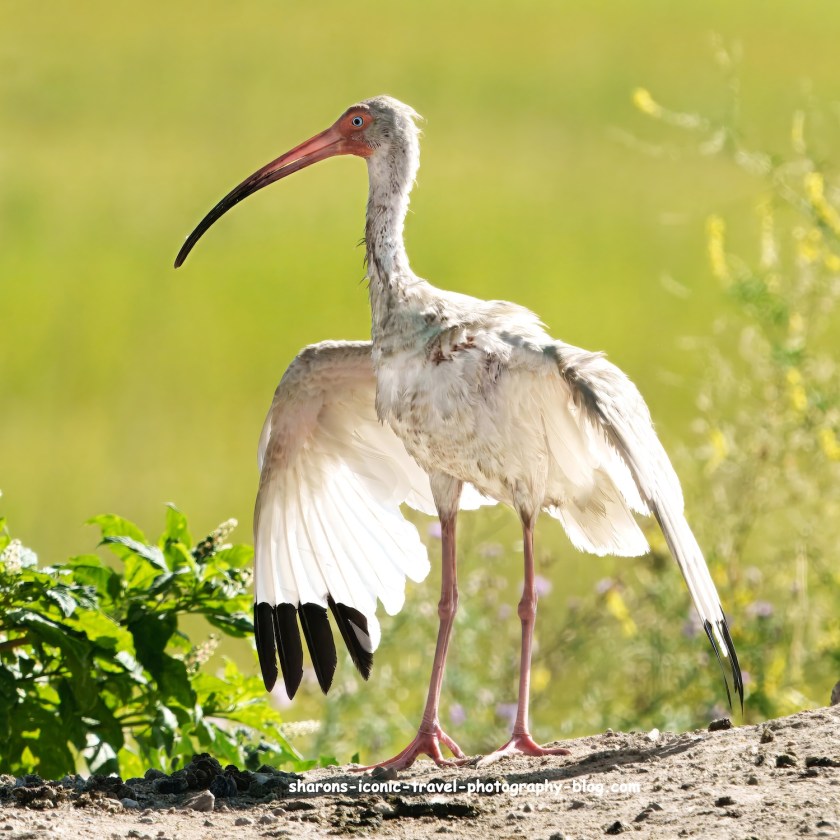
Juvenile
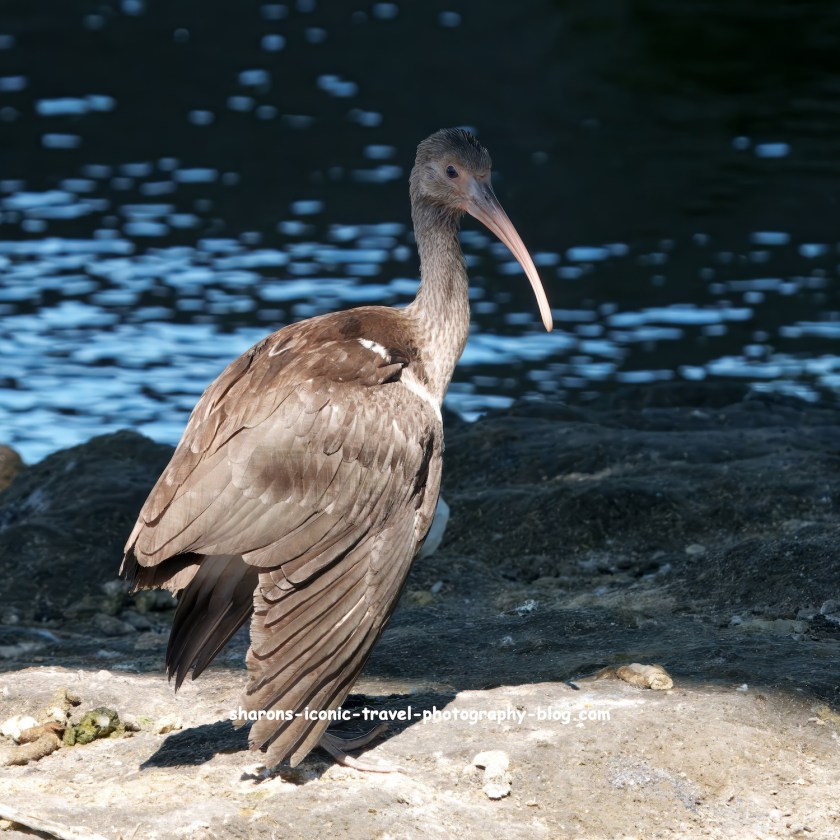
According to All About Birds ” Parents feed the chicks for 40–60 days after they leave the nest (but before they leave the colony) until they can forage by themselves. ”
This baby followed an adult to a body of water to forage.
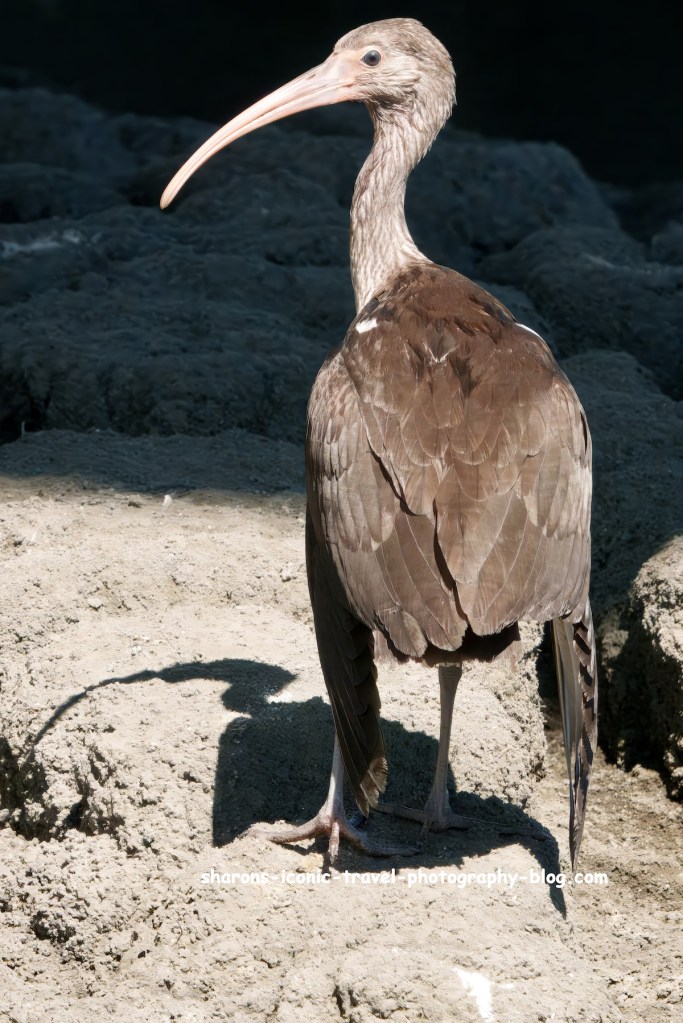
This juvenile looked like it might be on its own soon. Have a happy Sunday!
 Sharon's Iconic Travel Photography Blog
geourgous! Can’t wait for airshow photos!
LikeLike
Posted the parachute pictures.
LikeLike
Wonderful photos. I hope the Jersey birds don’t stay for the winter. The juvenile Ibis is absolutely adorable.
LikeLiked by 1 person
I guess the Farmer’s Almanac is predicting a cold winter for the Northeast. There was what I am guessing even younger juvenile ibis there still nesting last time I went. Another time I will post some pictures of them.
LikeLike
We are all confused by this weather. This had to be the hottest summer in Chicago I have ever seen. And I look forward to all your photos. 🙂
LikeLiked by 1 person
Although we had some hot days, it was not the hottest in NY. This week it’s quite cool at night. Too many bugs this year and the ticks are it sounds having a banner year. We need a cold winter to curb the bug population.
LikeLike
It was 90 and up for almost the whole summer. Too hot to do anything, with the humidity making things worse and the air index was awful. But now, it’s beautiful. Humidity is gone and it’s in the low 70s. We all feel so much better and people are outside again.
LikeLike
I have been saying the exact same thing about Cornell’s region maps. In my opinion, I prefer using their Sightings Map option (tab just to the right of their default Range Map). I think it gives a much better visual of what is really out of region and what is just less common. That juvenile is still pretty young, hasn’t developed its true juvenile white/brown morph yet. Nice shots.
LikeLiked by 1 person
I have pictures of ones younger than this as well. Ones that were still nesting then without fledging yet. They were taken around the same time frame on my last visit.
LikeLiked by 1 person
We have been seeing a lot that are not supposed to be here in New York or New Jersey. In the spring I saw whistling ducks in New York that are only supposed to be in Central an south America and the borer region of the US. We had some ducks that are usually in Canada who stayed well south of the border during the first year of bad Canadian wildfires.
LikeLiked by 1 person