
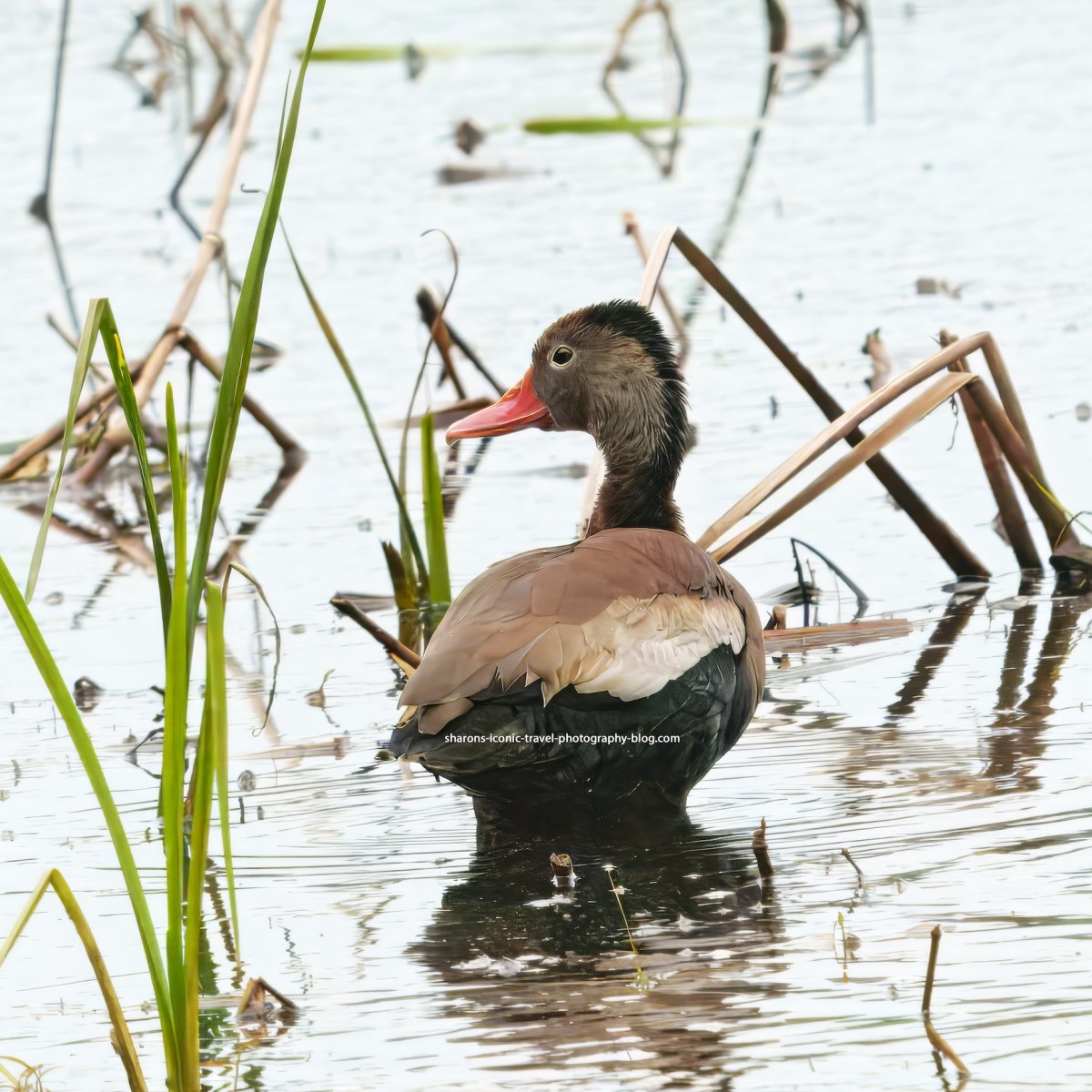
The black-bellied whistling-duck lives along the coasts of Mexico, Central and South America and small slivers of Texas and Arizona. Which location did I see this duck? None of the above. I saw this in New York.
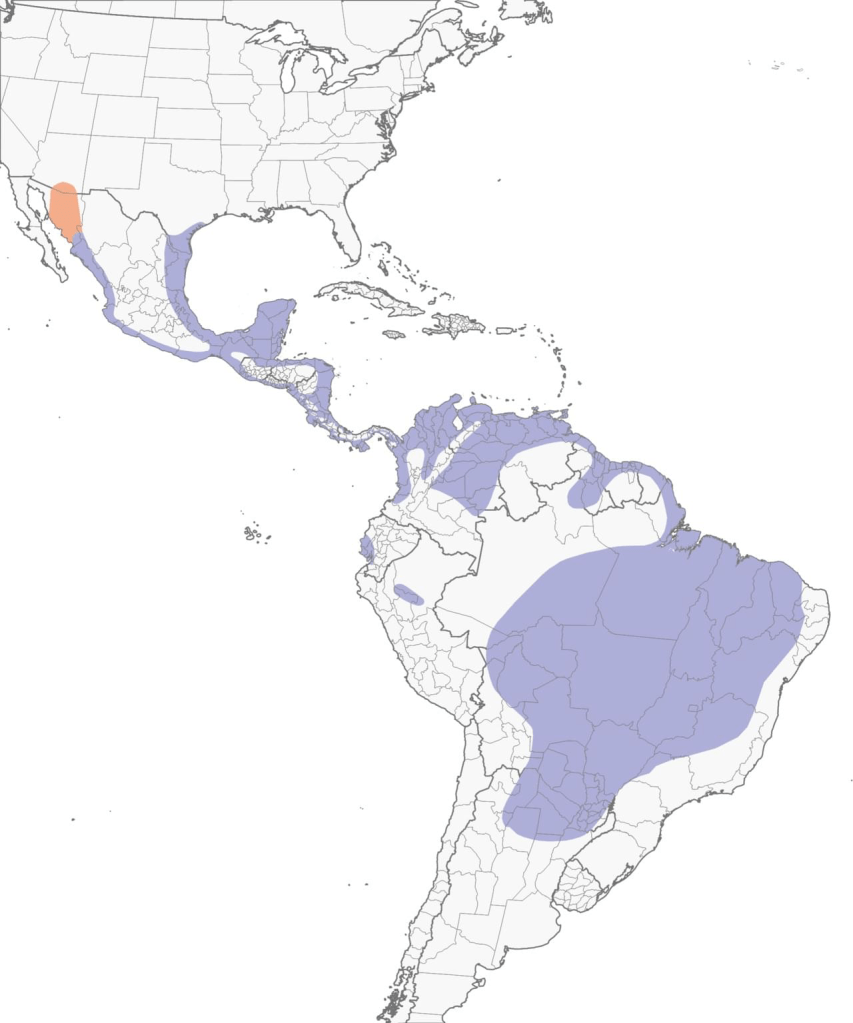
According to All About Birds these are the locations these ducks should be in the shaded areas of the map.
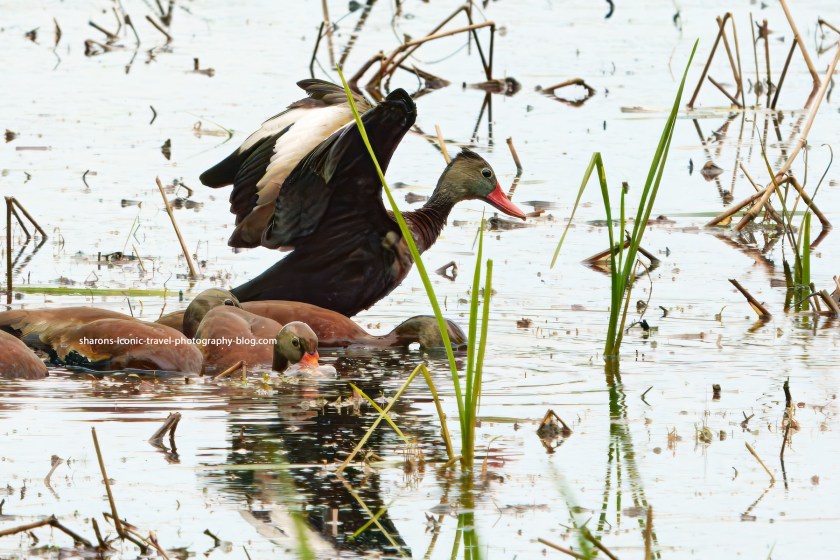
It is going back and forth between a river and a pond like area. It is not alone but with a few others of its kind. Why is it here? Did a storm blow it all the way up here? Is this a result of a dwindling food in its normal spots? Are birds loosing their directional sense? Do they have wanderlust? Is it getting too hot in the areas they normally are? Did someone capture these or buy them to have in the US and they successfully staged a group escape? It is a mystery.
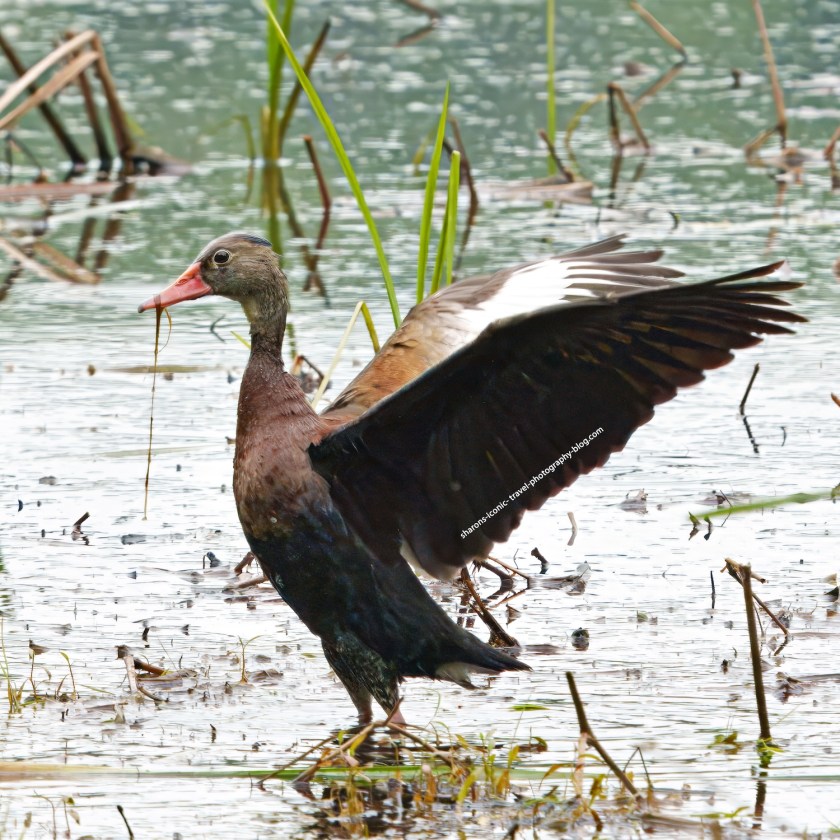
If they nest up here, nest predators would be raccoons and rat snakes. Great horned owls could take the adults. There maybe a great horned owl family nearby and I almost stepped on a what looked to be a black rat snake. Being near a river, there are bald eagles close by.
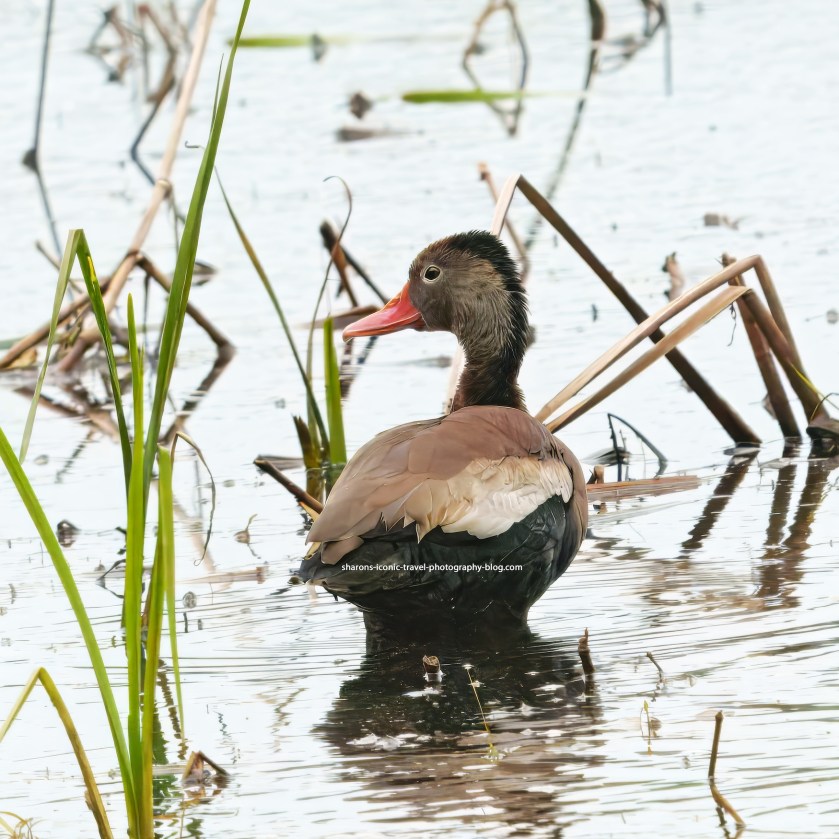
These pictures were taken from a road with a zoom lens and were cropped. I will not go where I am not supposed to be. I do not go on private land without permission. It was a cloudy, dark day. We have had a lot of those. Maybe in the future if these creatures are still there, I can capture them in better light. Expect the unexpected. Happy Thursday!
 Sharon's Iconic Travel Photography Blog
Hi Sharon, lovely pics as always. I hope the bird stays safe. The impact of global warming on wildlife (and human populations in the global south who contribute the least to it) makes me so sad.
LikeLiked by 1 person
They have experienced pollution problems down there as well. Also the the massive cutting of trees. They will look for tree cavities to nest among other places.These could also be contributing factors.
LikeLike
I record my sightings on BirdTrack, a UK based app which our Trust for Ornithology uses and I often records butterflies, dragonflies etc. Now and again I record something out of its normal areas, like your duck and some of the apps then query it, hence I try to add photos as often as I can 🙂
LikeLiked by 1 person
We have the Merlin app put out by Cornell University. The problem is there are too many that would flock there and not stay to the road causing issues. People have told me not to post. I already met one such person who admitted he went in the area he should not have to take pictures.
LikeLiked by 1 person
I know what you mean Sharon, I reported a scarce bird early in the year but only a few turned up to get it.
LikeLiked by 1 person
Lucky. Most photographers here are ethical. The some that aren’t would show up here.
LikeLiked by 1 person
Cornell also runs Ebird. A lot of people report finds there.
LikeLiked by 1 person
I use Merlin when I’m out if I need a sound ID
LikeLiked by 1 person
I use it for the same thing and also I take pictures of bird images I put on my computer screen and it tells me what it is. Cornell has a bird hospital. They took in a local eaglet two years ago and treated it. After it left the nest it could not fly. It was successfully released almost a year later after being in a wildlife rescue.
LikeLike
Nice find, Sharon. Well, dare I say it? There is no accounting for idiots. They are just that and don’t seem to care. One can only hope Karma bites hard when it bites back. Not nice, but then, I guess I just don’t care.
LikeLiked by 2 people
I’ve seen it with people this winter where I watched short eared owls. They close most of the trails as soon as they arrive to protect the birds as they sleep on the ground. I had a weekday off and someone was standing and walking within the tall grasses in an area not near a trail you were allowed to be on. There is a reason for rules. They protect the wildlife. You are right some do not care.
LikeLike
While it’s always exciting to see birds outside their expected range, it also makes me a little sad because I wonder if those birds will survive. But maybe this group of ducks will survive, and eventually migrate back to where they are supposed to be. Fingers crossed.
LikeLiked by 1 person
It is puzzling. At least it is not one by itself, but a small group of them. They seemed to be getting things to eat in the water. It sounds like they may have been here a week or two already. They were somewhere else previously.
LikeLiked by 1 person