
What aircraft is stealth, has great agility, and replaced the F-15 fighter jet? It is the F-22 Raptor. At the New York Air Dot Show we were treated to seeing the Air Force F-22 Raptor. It was very loud when it passed over head.
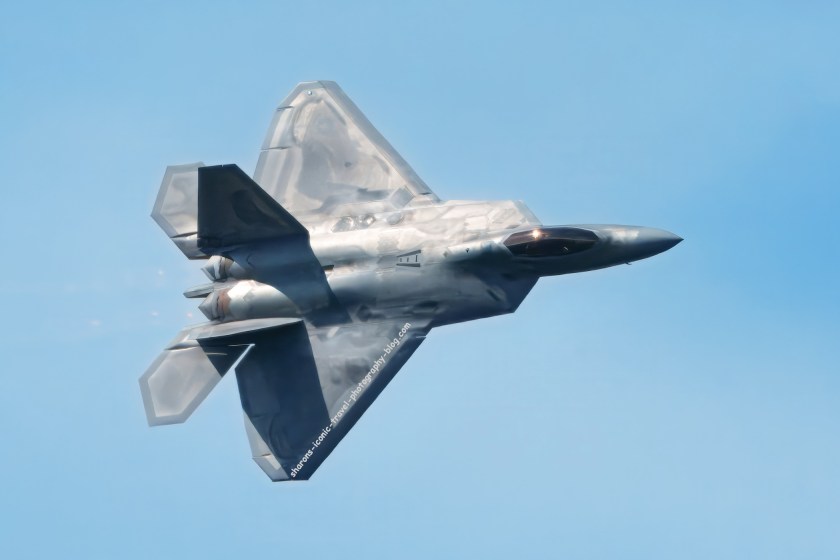
The F-22 has two Pratt & Whitney F119-PW-100 turbofan engines. Together they put out 70,000 pounds of thrust, which is more than double of some other plane engines.
Afterburners
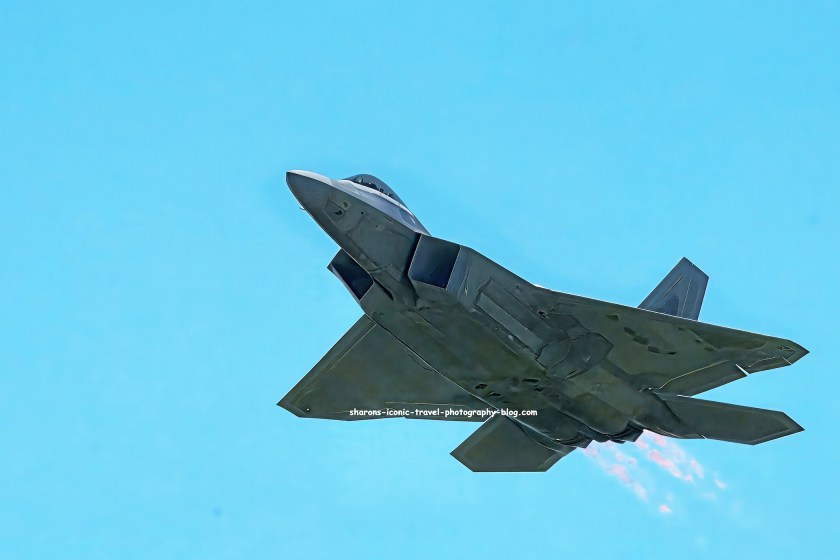
Afterburners are long parts at the end of the engine of the F-22. Afterburners allow the combination and ignition of oxygen and fuel, allowing for a burst of speed. It is kind of like a blowtorch shooting through a nozzle at the back of the engine. It provides a hard kick of extra speed. The downside is they can use up to three times more fuel than when afterburners are not used.
The F-22 can go in supercruise mode. The F-22 has the ability to fly faster than the speed of sound, and not use fuel-guzzling afterburners. It also can maintain stealth when not using afterburners while going at Mach 1.5.
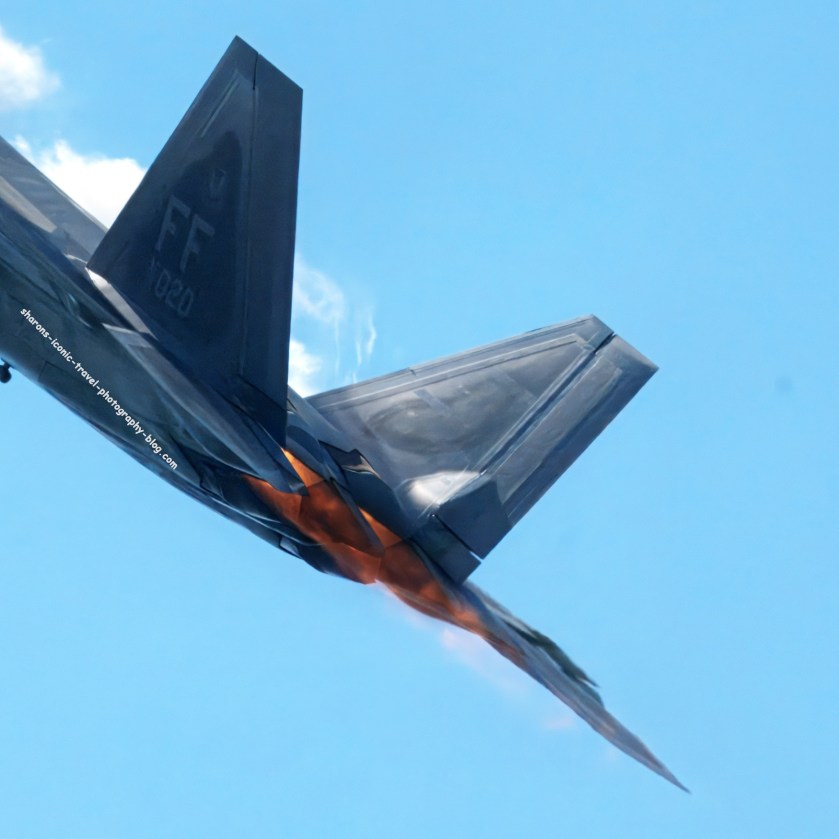
I am told by someone from Pratt and Whitney that very low pressure during hard G manoeuvres causes the condensation on top of the wings.
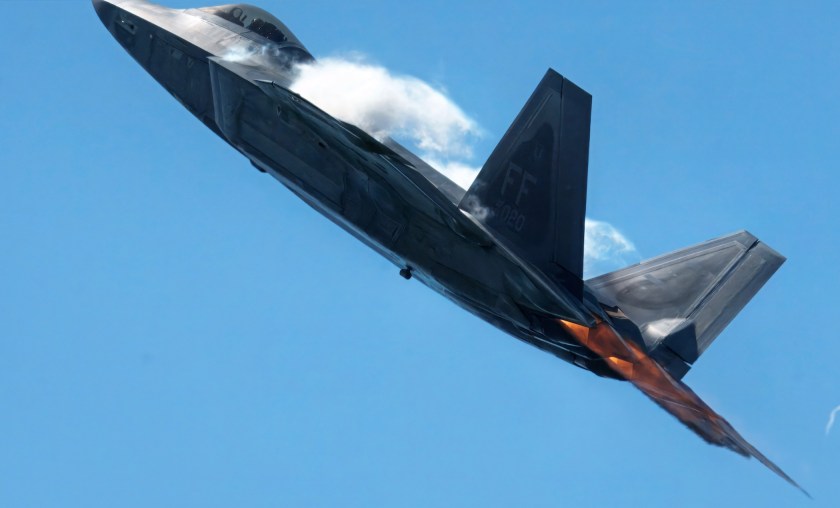
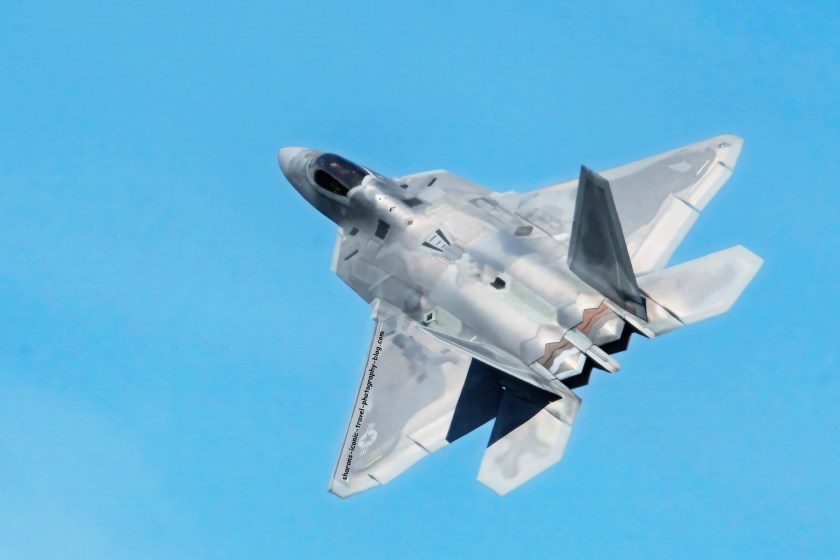
The F-22’s angles, skin composition and paint scheme make it nearly invisible to radar’s electronic eye.
This plane can manuever like no other.This includes climbing, spinning, rolling. It can also loop faster, tighter and more smoothly than any other fighter jet in the world.
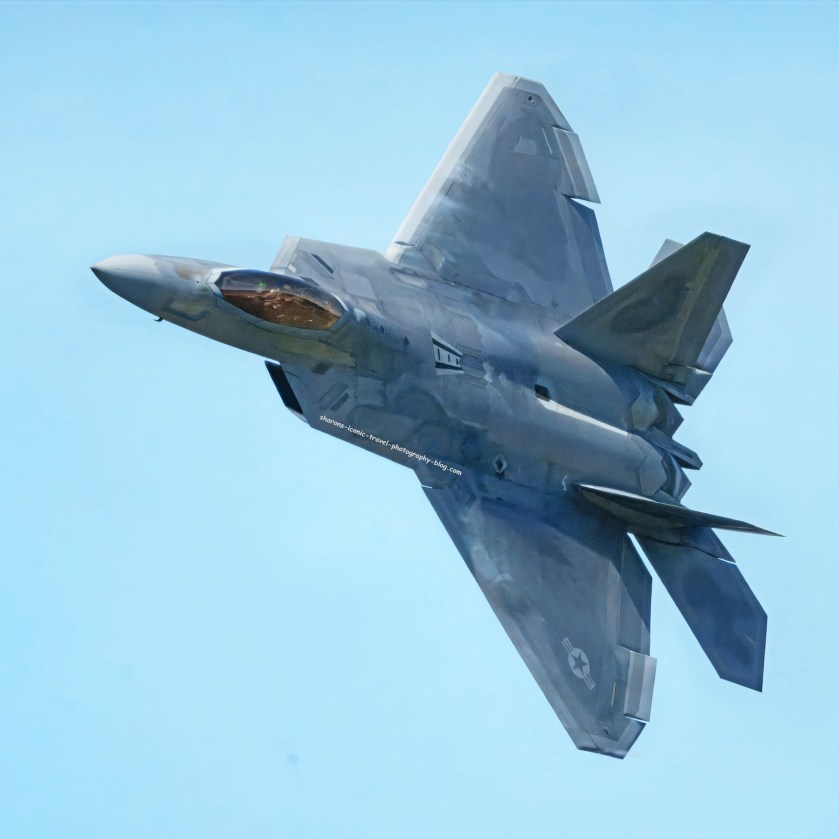
This plane can see a long way. The F-22 has a sensor suite that allows the pilot to track, identify, shoot and kill air-to-air threats before anyone can detect it.
Heritage Flight Formation
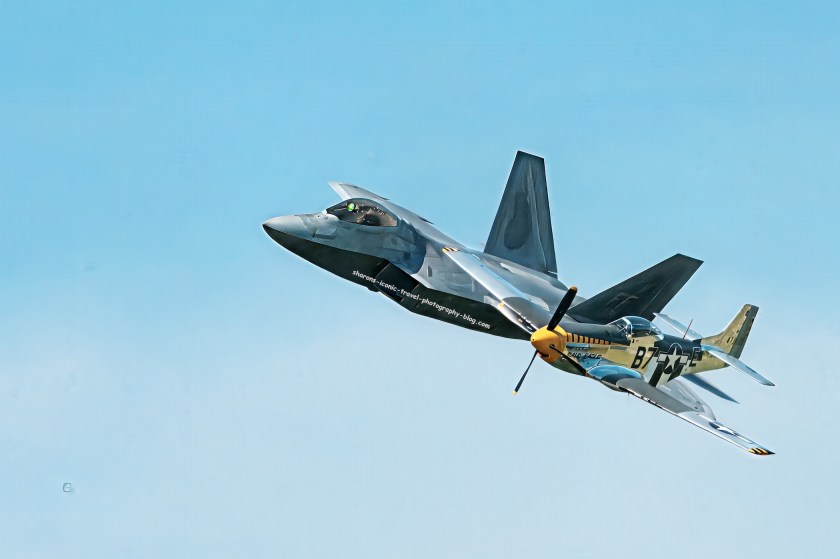
These two aircraft showed off the evolution of Air Force planes. The F-22 Raptor, a current fighter plane, is seen flying in tight formation with a P-51 Mustang. The Mustang was used in WWII, the Korean War and other situations. If you ever get a chance to see the F-22 in action, take advantage.
For more information about the plane read more at:
https://www.slashgear.com/1411908/f-22-afterburning-turbofan-overview/
https://www.smithsonianmag.com/air-space-magazine/how-things-work-afterburners-18481403/
 Sharon's Iconic Travel Photography Blog